How much power kitchen appliances draw, and what your breaker actually allows
A standard 15 amp, 120 volt kitchen circuit can carry 1,800 watts at its absolute maximum, and continuous loads should stay near 80 percent of that, about 1,440 watts. Most portable induction hobs and large countertop ovens are built right up against that 1,800 watt ceiling, which is why running two of them on the same circuit is the most common cause of a tripped breaker in a home kitchen.
Most of the appliances on this site cluster at or near 1,800 watts because that number is not arbitrary: it is what a 15 amp circuit at 120 volts can carry before it stops being safe. A 1,800 watt induction hob by itself is already near the practical limit of a standard kitchen outlet, so the real risk is not any single appliance, it is two of them sharing one circuit at the same time. Separately, a handful of appliances draw far less power but run for far longer, and that combination of low wattage and long duration is a cost question rather than a breaker question. Both numbers matter, and they matter for different reasons.
Why do so many countertop appliances land at exactly 1,800 watts?
A standard North American kitchen circuit is rated for 15 amps at 120 volts. Multiply those together and the ceiling is 1,800 watts, which is the largest continuous draw the wire and the breaker are built to carry at all. Manufacturers design induction hobs, countertop ovens and portable burners to sit right at that number because it is the most power they can offer without requiring a heavier 20 amp circuit or a dedicated line, which most kitchens do not have spare.
- A single portable induction cooktop and its stainless bodied sibling are both rated at 1,800 watts
- A single degree induction hob built for holding a precise temperature is also rated at 1,800 watts
- Large countertop ovens with a convection element, such as a full size Element iQ oven, run close to the same ceiling on their highest setting
The National Electrical Code adds a second number on top of the 1,800 watt maximum: a continuous load, defined as anything running for three hours or more, should not exceed about 80 percent of a breaker's rating. Eighty percent of 15 amps is 12 amps, which works out to 1,440 watts. That is the comfortable ceiling for a long cook, not the 1,800 watt figure printed on the appliance itself.
| Appliance | Typical draw |
|---|---|
| Portable induction hob, single zone (example) | 1,800 W |
| Double induction hob, both zones combined (example) | 1,800 W total |
| Large countertop oven or air fryer oven (example) | Up to 1,800 W |
| Full size sous vide circulator (example) | 1,100 W rated |
| Compact sous vide circulator (example) | 750 W rated |
| High power countertop blender (example) | 1,400 W |
| Stainless tray food dehydrator (example) | 600 W |
Does running both zones on a double induction hob use more total power?
No, and this is the detail that surprises people the first time they try to sear on one side of a double induction cooktop while simmering on the other. The unit is rated at 1,800 watts total, not 1,800 watts per burner, so the two zones share one power budget rather than each getting a full allotment. Push both zones toward a high setting at the same time and each one receives roughly half the wattage it would get running alone, which is why two pans on a double hob heat up more slowly together than either one does by itself.
This is not a defect. It is the same 15 amp, 1,800 watt ceiling from a single circuit, split between two heating elements instead of delivered to one. A single zone induction hob and a double zone hob plugged into the same wall outlet draw the same maximum current; the double unit just has to divide it.
Why do two appliances on the same circuit trip the breaker?
Because their wattages add together on the same wire. A kitchen circuit does not know or care how many outlets an appliance is plugged into, only how much current is flowing through the breaker that protects the whole circuit. An 1,800 watt induction hob already sits at the edge of what a 15 amp circuit can carry by itself. Plug a blender, a toaster, or a second hot appliance into another outlet on that same circuit and the combined draw climbs past the 15 amp rating almost immediately, and the breaker trips to protect the wiring from overheating.
This is the single most common wiring complaint in a kitchen that has grown a countertop full of appliances over several purchases: two of them working at once, on outlets that turn out to share one breaker, is enough to trip it even though neither appliance is faulty. The fix is usually to move one appliance to an outlet on a different circuit, not to replace anything.
How much does a long, low power cook actually cost to run?
This is a cost question rather than a breaker question, because none of these appliances come close to 1,800 watts. A circulator holding a bath overnight or a dehydrator running most of a day draws modestly at any given moment, but it does so for a long time, and the arithmetic for electricity cost cares about both numbers together, not just the wattage on the label.
The formula is straightforward: kilowatt hours equal watts multiplied by hours, divided by 1,000. Cost equals kilowatt hours multiplied by the price your utility charges per kilowatt hour. Take a 600 watt food dehydrator running for 20 hours to finish a batch of jerky: 600 times 20 divided by 1,000 is 12 kilowatt hours. At 30 cents per kilowatt hour, a high but real rate in several states, that cook costs about $3.60, which is a meaningful fraction of the cost of the meat itself in a small batch.
A circulator tells a similar story from the other direction. A circulator rated at 1,100 watts does not draw that continuously once the bath is up to temperature: the element only cycles on to replace heat lost through the container walls, so the average draw across a 24 hour hold is commonly a small fraction of the rated maximum, often somewhere in the range of 100 to 150 watts. At 125 watts average for 24 hours, that is 3 kilowatt hours, or roughly 90 cents at 30 cents per kilowatt hour, for an entire overnight cook.
Is it ever safe to run one of these appliances on an extension cord?
Only on a heavy duty cord rated for the load, and never on the light, thin cords sold for lamps or small electronics. Extension cords carry an amperage rating printed on the packaging or molded into the plug, and a cord built for a low draw device will heat up, soften, and become a fire hazard under a 1,800 watt appliance long before the breaker ever notices a problem. A cord that must be used should be a short, heavy gauge one rated for at least 15 amps, run fully uncoiled, since a coiled cord traps heat.
A breaker that trips once with two appliances running is expected behavior, and the fix is usually to separate the appliances onto different circuits. A breaker that trips repeatedly with a single appliance, or that trips with nothing unusual plugged in at all, is a different situation entirely: that is a question for a qualified electrician, not something to work around with a heavier cord or a different outlet.
Gear that fits these numbers
Everything mentioned on this page

Duxtop Double Induction Cooktop 9620LS
Two zones on one plug, which means the total wattage is shared. Running both hard at once is slower than running either alone.
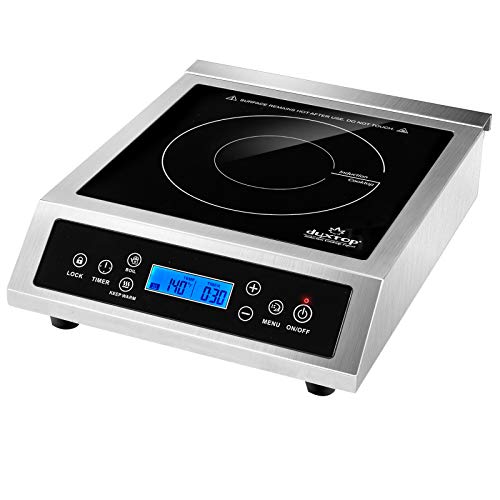
Duxtop Professional Portable Induction Cooktop P961LS
The stainless bodied professional version, built to be wiped down daily rather than stored in a cupboard.

Nuwave Pro Chef Induction Cooktop
Single degree control across a wide range, which is the closest a portable hob gets to the behaviour of a dedicated temperature controller.
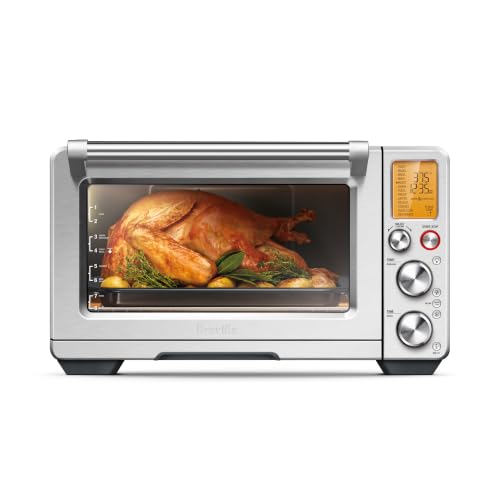
Breville Smart Oven Air Fryer Pro
The countertop oven that behaves like a real oven: element control front to back rather than one heat setting, and enough interior to roast for four.

Anova Precision Cooker 3.0
The default full size circulator: enough wattage to bring a 12 quart bath up quickly and hold it, with app control for long overnight cooks.

Anova Precision Cooker Nano 2.0
The cheapest way to find out whether you actually like sous vide. Slower to come up to temperature, and it holds a set point just as well once it gets there.

Ninja Professional Plus Blender
Enough blender for smoothies and ice cream bases at a fraction of the Vitamix price. It will not make silky nut butter.

Magic Mill Pro Food Dehydrator, 7 Trays
Six hundred watts behind a rear fan, which is more drive than most machines in this price band.
Prices when last checked. They change often.
Frequently asked questions
What is the safe continuous wattage limit for a standard 15 amp kitchen circuit?
A 15 amp circuit at 120 volts carries 1,800 watts at its absolute maximum, but the National Electrical Code treats a continuous load, anything running three hours or more, differently: continuous loads should stay near 80 percent of the breaker's rating. Eighty percent of 15 amps is 12 amps, which works out to 1,440 watts. An induction hob or countertop oven run near its full 1,800 watt rating for a long cook exceeds that comfortable ceiling even if the breaker never actually trips.
Why does a double induction hob feel slower than two single hobs would?
Because both zones share one power budget rather than each getting a full allotment. A unit like a double induction cooktop is rated at 1,800 watts total, not per zone, so pushing both burners toward a high setting at once splits that wattage roughly in half between them. Two pans on a double hob each receive less heat than they would running alone, which is why searing on one side while simmering on the other takes longer than doing either job by itself.
Why do two appliances on the same circuit trip the breaker more often than one?
Because their wattages add together on the shared wire, regardless of which outlets they are plugged into. An 1,800 watt induction hob already sits near the practical limit of a 15 amp circuit by itself, so adding a blender, a toaster, or a second hot appliance on an outlet fed by the same breaker pushes the combined draw past what the wire is rated to carry, and the breaker trips to protect it.
How do you calculate what an appliance actually costs to run?
Multiply watts by the hours it runs, divide by 1,000 to get kilowatt hours, then multiply by the electricity rate charged per kilowatt hour. A 600 watt dehydrator running for 20 hours uses 12 kilowatt hours. At 30 cents per kilowatt hour, a realistic rate in several states, that single cook costs about $3.60, which is worth knowing before starting a batch of jerky made from a modest amount of meat.
Is it the wattage or the running time that matters more for electricity cost?
Running time matters more for appliances that hold a temperature rather than actively heating the whole time. A circulator rated at 1,100 watts rarely draws that much for more than a few minutes at a stretch, because the element cycles on only to replace heat lost through the container walls, so its average draw across a long hold is a fraction of the rated wattage. A dehydrator or a slow appliance left running most of a day adds up in hours far more than it does in watts.
Can a high draw kitchen appliance be plugged into a regular extension cord?
Not a light duty one. A thin extension cord rated for lamps or small electronics can overheat and become a fire hazard under an 1,800 watt load. Use a heavy duty cord rated for at least 15 amps, fully uncoiled, if an appliance has to reach an outlet farther away. If a breaker trips repeatedly no matter what is plugged in, that is a wiring question for a qualified electrician, not something to route around.
Sources
Published figures, quoted as published. We do not generate our own time and temperature data.
How we research: we compare manufacturer specifications, owner manuals, published USDA and FSIS figures and recurring themes in verified owner reviews. We do not cook test batches or run instruments, and nothing here is professional food safety advice. When a figure is not published by a source we trust, we say so rather than estimate one.