
Anova Culinary
Anova Precision Cooker 3.0
The default full size circulator: enough wattage to bring a 12 quart bath up quickly and hold it, with app control for long overnight cooks.
Medium rare beef is 129 F to 134 F at the core, while the USDA safe minimum internal temperature for whole muscle beef is 145 F with a 3 minute rest. A doneness band is a texture preference; it only becomes a safety statement at or above the published figure, or after a hold time taken from the FSIS lethality tables.
The formula
bath temperature = target core temperature USDA safe minimum internal temperatures: poultry, all 165 F ground beef, pork, lamb 160 F whole muscle beef, pork 145 F + 3 minute rest fish and shellfish 145 F egg dishes 160 F
In a water bath the food cannot exceed the water, so the bath temperature and the target core temperature are the same number. That is the whole appeal of the technique and it is why a two degree change is visible on the plate.
Gear that fits these numbers
A circulator sets the bath, but the only way to know what the food actually reached is a fast instant read. At these temperatures a two degree error is the difference between two doneness bands.
The default full size circulator: enough wattage to bring a 12 quart bath up quickly and hold it, with app control for long overnight cooks.

One second and half a degree. On a page about pasteurization that accuracy is not a luxury, it is the difference between a figure meaning something and not.
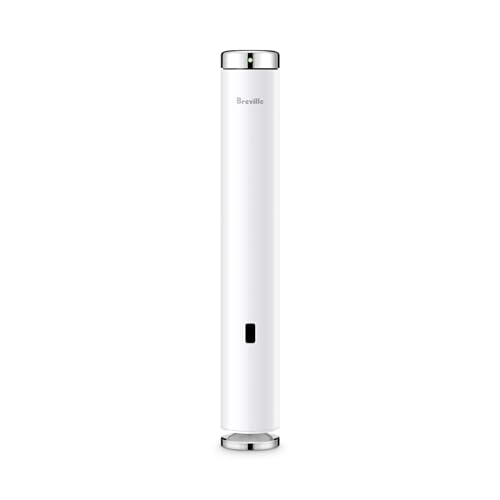
Small enough to live in a drawer and strong enough for a full bath, with the tradeoff that there is no display on the device: the phone is the interface.

A lid cut for a circulator is the single upgrade that makes long cooks practical: it stops evaporation, which is what drops the water line and trips a low water alarm at hour nine.

Slim probes leave a smaller hole, which matters more in a vacuum bag than it does in a roast.

The cheapest way to find out whether you actually like sous vide. Slower to come up to temperature, and it holds a set point just as well once it gets there.
Prices when last checked. They change often.
In a conventional oven the outside of a steak is far hotter than the inside, and you pull it early so that carryover heat finishes the job. In a water bath nothing is hotter than the water, so once the core has come up it cannot go further. That is what makes a two degree difference reproducible and it is the reason this technique exists.
Every temperature on this page is a texture preference until it meets a published figure. The USDA numbers in the results panel are the published figures, quoted with their source. Below them, safety comes from time at temperature rather than from temperature alone, and those times live in the FSIS Appendix A tables, which vary by product, fat content and salt level. We will not compress that into one number. Read {{/guides/how-sous-vide-pasteurization-works/|how sous vide pasteurization works}} before deciding.
Between 129 F and 134 F at the core for beef and lamb. Because the water bath cannot exceed its set point, that is also the temperature you set the circulator to. The USDA safe minimum internal temperature for whole muscle beef is 145 F with a three minute rest, so a 131 F bath is a deliberate choice below the published figure.
People do, and it produces a very different texture from roast chicken. It is not covered by the USDA safe minimum internal temperature of 165 F for poultry, and its safety depends entirely on holding the core at 145 F long enough to reach the required log reduction. Those hold times come from the FSIS Appendix A tables, which we do not reproduce.
The USDA revised its guidance for whole muscle pork to 145 F with a three minute rest, on the basis that the rest period delivers equivalent lethality to the older instantaneous figure. The rest is not optional garnish, it is part of the standard, and quoting 145 F without it reports half a rule.
No. Temperature is temperature regardless of thickness. What changes with thickness is how long the core takes to get there, which is a separate calculation. A three inch roast and a half inch steak held at 131 F end up at the same doneness, several hours apart.
Only if you are willing to watch it constantly and pull at a core reading, which throws away the main advantage of the method. A higher bath does come up faster, but the food then keeps climbing past your target instead of parking at it, and you are back to the timing problem a water bath exists to remove.
How this calculator works: it applies the formula above to the numbers you enter. Where a figure is published by the USDA or FSIS we quote it and name the source. Where a figure is derived from a physical model we say so and state the assumptions. Where we have no defensible figure the calculator returns nothing and tells you why, rather than guessing. This is researched general information, not professional food safety advice.