duxtop
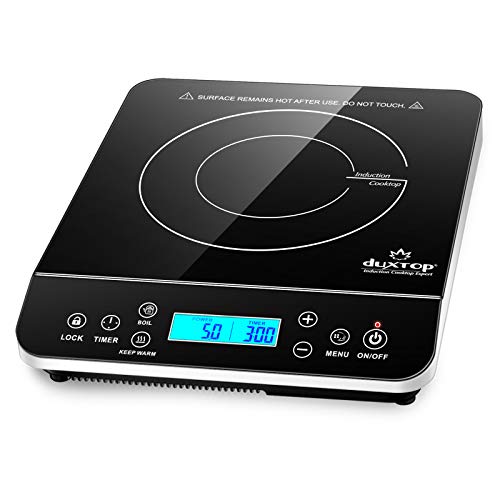
Duxtop Portable Induction Cooktop 9600LS
Twenty steps rather than the usual ten, which is what makes it usable for holding a temperature rather than just boiling.
An induction power level is a percentage of maximum wattage, not a temperature. Level 5 of 10 on an 1,800 watt hob averages about 900 watts, and on most consumer units it delivers that by cycling full power on and off rather than running steadily at half.
The formula
average watts = max watts x (level / max level) A power level sets ENERGY DELIVERED, not temperature. The temperature of the pan is whatever results from that energy minus what the pan loses to the room and the food.
Most consumer induction hobs below the professional tier achieve intermediate power by duty cycling: full power for part of a cycle, nothing for the rest. That is why a low setting can still scorch a thin sauce, and why the "temperature" settings on the same dial are an estimate rather than a measurement unless the unit has a real probe.
Gear that fits these numbers
Ten power steps is coarse for anything you want to hold. Twenty steps, or single degree control with a probe, is the difference between a hob that boils and a hob you can cook a custard on.
Twenty steps rather than the usual ten, which is what makes it usable for holding a temperature rather than just boiling.

Single degree control across a wide range, which is the closest a portable hob gets to the behaviour of a dedicated temperature controller.
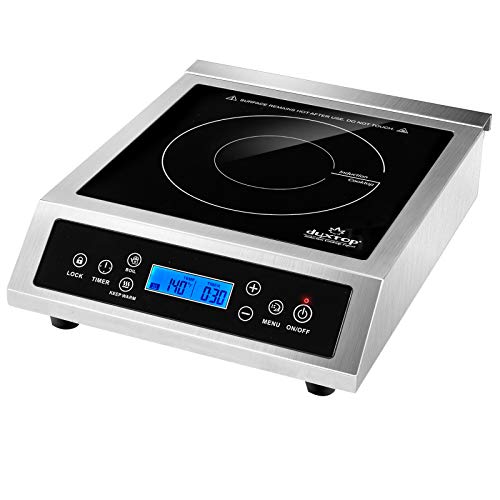
The stainless bodied professional version, built to be wiped down daily rather than stored in a cupboard.

One second and half a degree. On a page about pasteurization that accuracy is not a luxury, it is the difference between a figure meaning something and not.
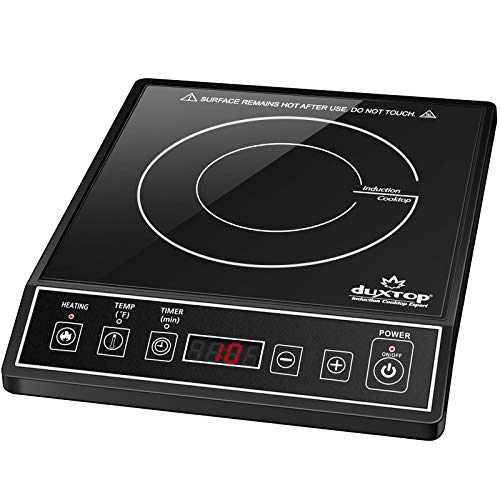
The cheap workhorse. Good for boiling and searing, coarse for anything that needs a held temperature.

Two zones on one plug, which means the total wattage is shared. Running both hard at once is slower than running either alone.
Prices when last checked. They change often.
Induction heats the pan directly by inducing currents in it, which is fast and efficient. What the control sets is how much energy goes in per unit time. The temperature the pan then reaches is whatever balances that input against everything the pan loses: to the food, to the air, to evaporation. Put a heavy cast iron pan and a thin aluminium one on the same setting and they will sit at very different temperatures.
Most consumer hobs cannot run their coil at arbitrary intermediate power. Instead they pulse: full power for two seconds, off for eight. The average is right, but the peak is not gentle, and a thin sauce or a milk-based custard can catch during the on phase. Professional units with true continuous power modulation, or units with a genuine temperature probe in a feedback loop, do not have this problem, and that is a large part of what the price difference buys.
On a 1,800 watt hob with ten levels, level 5 averages about 900 watts. On most consumer units that average is achieved by cycling full power on and off rather than running steadily, so the instantaneous power during the on phase is still the full 1,800 watts. That is why delicate sauces can scorch on a low setting.
No. The level sets how much energy enters the pan, and the resulting temperature depends on the pan mass, the pan material, what is in it and how fast heat escapes. Two different pans on the same setting reach different temperatures. Any temperature markings on a power dial are an estimate unless the unit has a real probe reading the pan.
Because it is duty cycling to achieve intermediate power. The coil runs at or near full output and the controller switches it on and off, so the average over a cycle matches the level you selected. Hobs with true continuous modulation do not do this, and it is one of the clearest differences between consumer and professional units.
Ten is enough for boiling, frying and most everyday cooking. Twenty steps make a real difference for anything you want to hold steady, such as a custard, a confit or tempering chocolate, because the gap between adjacent levels is half as large. Single degree control with a probe is a different class of tool again.
Only for how fast it can boil. Most domestic circuits cap a portable unit at 1,800 watts anyway, and a double hob usually shares that total between two zones, so running both hard at once is slower than running either alone. Control resolution at the low end matters more than peak wattage for precision cooking.
How this calculator works: it applies the formula above to the numbers you enter. Where a figure is published by the USDA or FSIS we quote it and name the source. Where a figure is derived from a physical model we say so and state the assumptions. Where we have no defensible figure the calculator returns nothing and tells you why, rather than guessing. This is researched general information, not professional food safety advice.