How induction cooking actually works, and why a power level is not a temperature
An induction power level is a percentage of maximum wattage, not a temperature, and most portable hobs reach an intermediate level by duty cycling, running at full power then cutting off, dozens of times a minute. That is why a low setting can still scorch a delicate sauce, and why two different pans on the identical setting can sit at two different temperatures.
Induction cooking heats the pan directly, by inducing electrical currents in the metal itself, rather than heating a burner or coil and then transferring that heat into the pan by contact. A power level on the dial is a percentage of the unit's maximum wattage, not a temperature reading, and most consumer hobs including the Duxtop 9100MC achieve an intermediate level through duty cycling: running at full power, then cutting off entirely, over and over, dozens of times a minute, so the pan spends part of every cycle at full heat and part of it coasting. That is the honest reason a low numbered setting can still scorch a delicate sauce, and why two different pans sitting on the identical setting can settle at two different actual temperatures.
How does induction actually heat a pan, mechanically?
A coil under the cooking surface generates a rapidly alternating magnetic field, and that field induces electrical currents directly inside a ferromagnetic pan sitting on top of it. Those currents meet resistance in the metal, and that resistance is what generates heat, inside the pan itself rather than in a separate element underneath it. This is why induction only works with cookware that is magnetic, cast iron and most stainless steel, and does not work at all with pure aluminum, copper, or glass unless the base has been bonded to a magnetic layer. It is also why induction responds almost instantly to a setting change compared with a coil or gas burner: there is no separate heating element that needs to warm up first, since the pan is the heating element.
If a power level is not a temperature, what is it?
A power level, whether numbered 1 through 10 or 1 through 20 depending on the unit, is a percentage of the hob's maximum wattage output, not a reading of how hot the pan actually is. The Duxtop 9600LS offers 20 power steps rather than the more common 10, which gives finer control over that percentage, but it is still controlling watts delivered, not degrees. Two pans of different material, thickness, and contents will reach two different actual temperatures on the identical percentage setting, because the same wattage input produces a different temperature rise depending on how much mass is absorbing it and how much surface area is losing heat to the air. A thin pan with a small amount of sauce in it will run hotter on setting 6 than a heavy pot half full of stock on the same setting 6.
Why does duty cycling explain a scorched sauce on a 'low' setting?
Most portable induction units achieve anything below their maximum power by duty cycling: running the coil at full power for a fraction of a second, cutting it off completely, then repeating, dozens of times each minute. A setting described as 30 percent power is not delivering a gentle, continuous 30 percent of maximum heat; it is delivering full power roughly 30 percent of the time and zero the rest, and the pan itself smooths that on and off cycle into something that feels steady to the touch. A thin layer of sauce sitting directly against the pan surface during the full power portion of that cycle can scorch locally even while the average heat delivered over a full minute looks moderate on paper, which is the real reason a sauce that should be safe at a low number still catches at the bottom.
| Setting | What the number means | What actually happens at the pan |
|---|---|---|
| Full power | 100 percent of maximum wattage | Coil runs continuously at full power |
| Half power | Roughly 50 percent of maximum wattage | Coil cycles full power on and off roughly half the time |
| Low power | Roughly 20 percent of maximum wattage | Coil is off more than it is on, still capable of local scorching during each on pulse |
How many watts does a portable induction unit actually have to work with?
Most domestic household circuits cap a portable induction unit at 1,800 watts, which is the figure listed for the Duxtop 9600LS, the Duxtop 9100MC, and most single zone units on the market. A double hob like the Duxtop 9620LS shares that same 1,800 watt total between its two zones rather than doubling it, so running both burners hard at once splits the available wattage and each pan heats more slowly than it would running alone at full power. This is the practical reason a double induction hob is convenient for keeping one pan warm while the other does the real work, and disappointing if you expect two pans to sear at full power simultaneously.
Is there any way to get real temperature control on an induction hob?
The Nuwave Pro Chef is built around a temperature probe and a control range of 100 F to 575 F in single degree steps rather than a percentage dial, which is the closest a countertop unit gets to behaving like a dedicated controller instead of a duty cycled percentage. Most other units, including the Duxtop P961LS, offer both a power mode and a rough temperature mode, but the temperature mode still works by duty cycling the coil to approximate the target rather than measuring the pan surface directly and modulating continuously. Where an actual number matters, checking the pan or the liquid with an instant read thermometer remains more reliable than trusting a temperature label on a dial that is still fundamentally a percentage of wattage underneath.
Gear that fits these numbers
Everything mentioned on this page
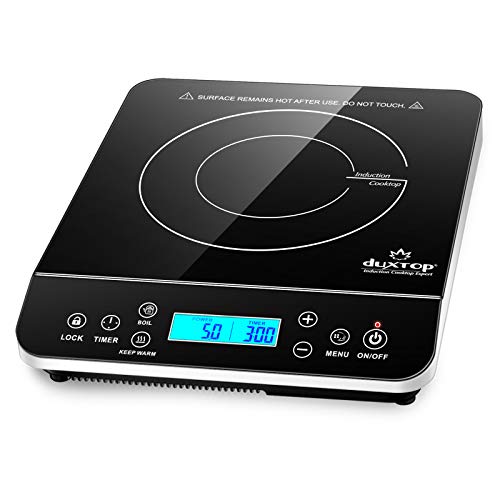
Duxtop Portable Induction Cooktop 9600LS
Twenty steps rather than the usual ten, which is what makes it usable for holding a temperature rather than just boiling.
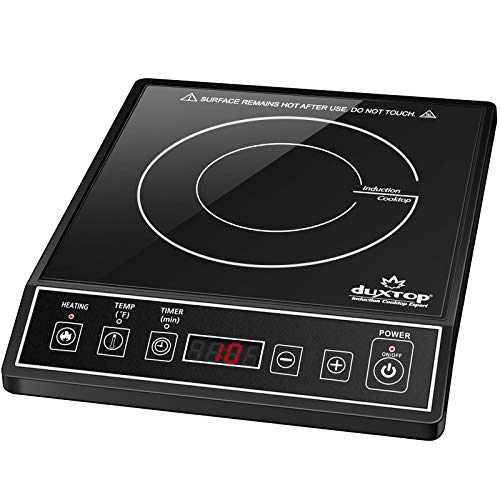
Duxtop Portable Induction Cooktop 9100MC
The cheap workhorse. Good for boiling and searing, coarse for anything that needs a held temperature.

Duxtop Double Induction Cooktop 9620LS
Two zones on one plug, which means the total wattage is shared. Running both hard at once is slower than running either alone.
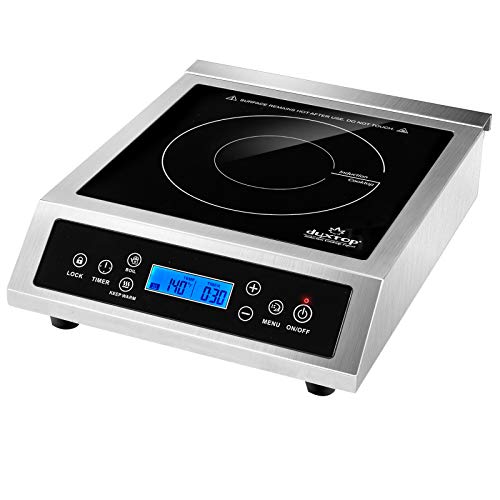
Duxtop Professional Portable Induction Cooktop P961LS
The stainless bodied professional version, built to be wiped down daily rather than stored in a cupboard.
Prices when last checked. They change often.
Frequently asked questions
Why won't my aluminum pan heat up on an induction cooktop?
Induction only works with cookware that responds to a magnetic field, and plain aluminum, copper, and most stainless steel with a fully non-magnetic base do not. A quick test is holding a refrigerator magnet to the bottom of the pan: if the magnet grips firmly, the pan will work on induction, and if it does not grip at all, the pan will not heat regardless of the power level selected. Many stainless pans marketed for induction have a magnetic disk bonded into the base specifically to solve this.
Does a higher power level number always mean a hotter pan?
In relative terms yes, a higher setting delivers a higher percentage of maximum wattage on average. It does not translate to a specific temperature, because the actual temperature a pan reaches also depends on the pan's material and thickness, how much food or liquid is in it, and how much surface area is losing heat to the surrounding air. The same numbered setting can produce noticeably different actual temperatures across two different pans.
Why does my food scorch on induction even on a low setting?
Duty cycling is the usual explanation: a low setting is still delivering full power during each on pulse, just less often, and a thin layer of food in direct contact with the pan surface during that pulse can scorch locally even though the average heat over a full minute is genuinely low. Stirring more frequently, using a heavier pan that spreads heat more evenly, or switching to a unit with a genuine temperature mode all reduce this, but none of them eliminate duty cycling entirely on most portable units.
Is induction actually faster than gas or electric coil cooking?
For bringing water to a boil, yes, generally, since the pan itself is the heating element and very little heat is lost warming a coil or diffusing through a flame before it reaches the pan. For holding a precise low temperature, that speed becomes a double edged advantage: the pan responds to setting changes almost instantly, which is good once you understand duty cycling, but it also means a pan can overshoot a target quickly if you are watching a percentage dial rather than an actual temperature reading.
Can I run two pans at full power on a double induction hob at the same time?
Not usually. Most double hobs share a single 1,800 watt total between both zones rather than giving each zone its own full 1,800 watts, so pushing both burners to maximum splits that wattage between them and each pan heats slower than it would running alone. If you need two pans genuinely searing at full power simultaneously, two separate single zone units on separate circuits will outperform one double hob.
Do induction cooktops work during a power outage?
No. Induction relies entirely on household electrical current to generate the magnetic field that heats the pan, so a portable unit is useless without power, unlike a gas burner that can often still be lit manually. This is worth factoring in for anyone treating a portable induction cooktop as their primary or only cooking method rather than a countertop addition to an existing range.
Sources
Published figures, quoted as published. We do not generate our own time and temperature data.
How we research: we compare manufacturer specifications, owner manuals, published USDA and FSIS figures and recurring themes in verified owner reviews. We do not cook test batches or run instruments, and nothing here is professional food safety advice. When a figure is not published by a source we trust, we say so rather than estimate one.