Dehydrating basics: thickness, airflow, and how to actually tell when food is done
Dehydrating time scales roughly with slice thickness, so doubling a slice from 6 mm to 12 mm roughly doubles the drying time, and a humid kitchen adds around 25 percent on top of that because the air carries away less moisture per pass. Cool a test piece completely before judging it, since warm food always feels drier than it actually is.
Dehydrating is mostly a matter of getting three things right: slicing evenly, accounting for humidity, and testing doneness properly instead of guessing from a warm piece straight out of the machine. A rear or horizontal fan dehydrator such as the Cosori 6 tray or the Excalibur Performance Series dries every tray at close to the same rate, which is why neither one asks you to rotate trays partway through a run the way older stacked round dehydrators do. Everything else on this page, thickness, humidity, and the doneness tests, applies to any dehydrator regardless of shape.
How long does dehydrating actually take?
It depends mainly on slice thickness, and the relationship is close to linear: a slice cut twice as thick takes roughly twice as long to dry, all else equal. This is why a recipe's stated time range, whether it comes from a machine like the Excalibur Select Series or any other dehydrator, is only useful if your slices match the thickness it was written for. A manufacturer's baseline range assumes a specific slice thickness in a dry kitchen; thinner slices finish faster, thicker ones take proportionally longer, and everything scales from there.
| Slice thickness | Time relative to baseline |
|---|---|
| 3 mm | About half the baseline time |
| 6 mm | Baseline |
| 9 mm | About one and a half times the baseline |
| 12 mm | About double the baseline |
Does a humid kitchen actually change how long drying takes?
Yes, by a meaningful amount. A humid kitchen adds around 25 percent to a drying run, because the air already carries more moisture and has less capacity to pick up additional moisture from the food on each pass through the machine. This is true regardless of how good the dehydrator is: airflow moves moisture away from food by absorbing it into the surrounding air, and air that starts closer to saturated simply cannot absorb as much per pass. If a kitchen runs humid, plan for the longer end of any time range from the start rather than checking at the shorter end and being surprised.
Do I need to rotate trays partway through a run?
Not on a machine with a rear or horizontal fan. That airflow layout pushes air across every tray at close to the same rate, which is exactly why models like the Cosori 5 tray, the 10 tray version, and the Magic Mill Pro never ask you to swap trays top to bottom during a run. Older stacked round dehydrators pull air vertically through a column of trays, and the tray closest to the fan dries measurably faster than the one furthest away, which is the specific problem tray rotation exists to fix. If a dehydrator has a rear or horizontal fan, that problem simply does not apply to it.
How do I actually tell when something is dry enough?
Cool a test piece completely before judging it. Warm food always feels softer and less dry than it actually is, because heat keeps the surface moisture mobile and the texture flexible; the same piece cooled to room temperature will feel noticeably firmer and drier within a few minutes. Once it is cool, judge by texture: properly dried fruit is leathery and bends without snapping, while vegetables should be brittle enough to snap cleanly rather than bend. For anything you plan to store for more than a few days, seal a small amount in a jar and leave it a full day: condensation on the inside of the glass means there is still too much moisture left, and the batch needs more time before it goes into long term storage.
| Test | What it tells you |
|---|---|
| Cool completely, then bend a fruit piece | Leathery and bends without snapping means done |
| Cool completely, then bend a vegetable piece | Brittle and snaps cleanly means done |
| Seal a small amount in a jar for a day | Condensation on the glass means it goes back in the dehydrator |
What is case hardening, and how do I avoid it?
Case hardening happens when the drying temperature is set too high for what is being dried, and the outer surface dries into a hard shell before the moisture inside has had a chance to migrate out. That shell then traps the remaining moisture underneath it, so the food looks and feels dry on the outside while staying wet in the center, which is exactly the kind of hidden moisture that leads to spoilage in storage. The fix is temperature discipline rather than more time: running a lower temperature for longer gives moisture time to move from the center to the surface before the surface seals over, while cranking the heat to finish faster is the single most common way to cause it.
What temperature should I actually use, and does it depend on what I am drying?
Herbs want a notably lower temperature than fruit or vegetables, around 95 F, because their flavor comes from volatile oils that break down and evaporate at higher heat, and drying them too hot leaves a dull, flat herb with much of its aroma gone. Fruit and vegetables tolerate more heat than herbs without the same loss, which is part of why a single dehydrator setting is rarely right for everything you might dry in it. Whatever the setting, silicone sheets with raised edges are worth adding to the tray any time the food being dried is pureed or very wet, since raised edges are what keep a fruit puree from running off the tray before it firms up into leather.
Gear that fits these numbers
Everything mentioned on this page

Cosori Food Dehydrator, 6 Stainless Trays
A rear mounted fan dries every tray at the same rate, which is why you do not have to rotate trays the way stacked round dehydrators demand.
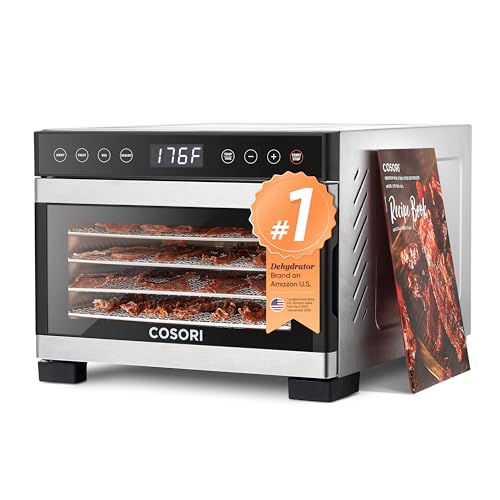
Cosori Food Dehydrator, 5 Stainless Trays
The small one, and still stainless trays rather than plastic, which matters at the 160 F jerky temperature.
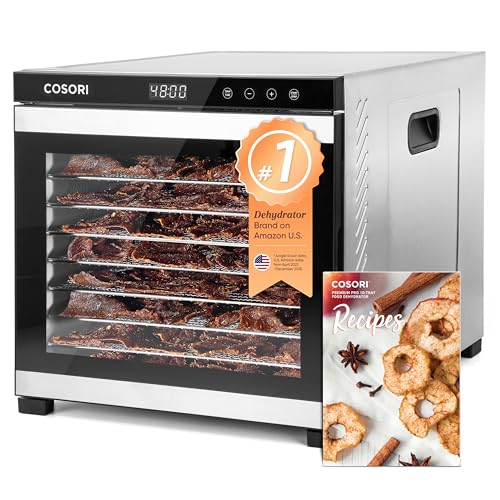
Cosori Food Dehydrator, 10 Stainless Trays
Sixteen square feet of tray, which is a harvest sized machine rather than a jerky sized one.

Magic Mill Pro Food Dehydrator, 7 Trays
Six hundred watts behind a rear fan, which is more drive than most machines in this price band.

Excalibur Select Series Food Dehydrator
The cheaper Excalibur, with the same horizontal airflow that makes the brand worth the premium in the first place.
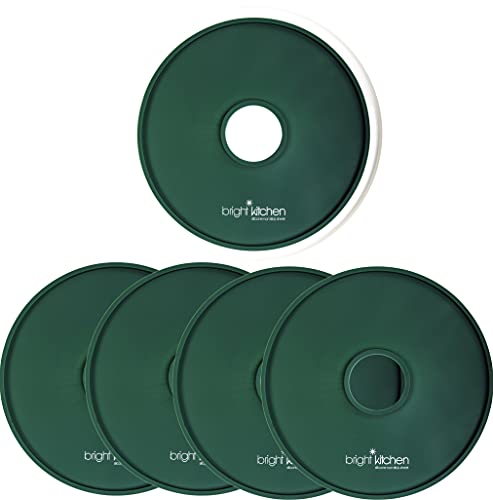
Fruit Leather Silicone Dehydrator Sheets, 4 Pack
Raised edges are the difference between fruit leather and fruit puree in the bottom of your dehydrator.
Prices when last checked. They change often.
Frequently asked questions
Can I speed up dehydrating by turning the temperature up?
Not without a real tradeoff. Raising the temperature can dry the outer surface faster than moisture from the center can migrate out to meet it, which seals the surface into a hard shell while the inside stays wet, a problem called case hardening. That trapped moisture is exactly the kind of thing that leads to spoilage later even though the food looks dry. Running a lower, appropriate temperature for a longer time is the more reliable way to finish a batch correctly.
Why is my dehydrator taking longer than the time listed for a recipe?
Two variables usually explain it: slice thickness and kitchen humidity. Drying time scales roughly with slice thickness, so slices even a little thicker than a recipe assumed will take noticeably longer, and a humid kitchen adds around 25 percent to any drying run because the air can absorb less moisture per pass. Check both against the recipe's assumptions before concluding anything is wrong with the machine.
Do I need to slice everything to exactly the same thickness in one batch?
Yes, as close as reasonably possible. Because drying time scales with thickness, mixed thicknesses in the same load finish at different times: thinner pieces are done and starting to over-dry while thicker ones in the same tray are still wet in the center. Slicing consistently, even if it means a mandoline or a slicing attachment instead of a knife, is worth the extra step for an even finished batch.
Is drying jerky the same process as drying fruit or vegetables?
The airflow and thickness principles are the same, but jerky carries an additional food safety requirement that fruit and vegetables do not: raw meat needs to reach a safe minimum internal temperature at some point in the process, either before or after drying, and drying alone does not accomplish that on its own. See the dedicated jerky safety guide for the temperature specifics before drying meat in any dehydrator.
What is the actual benefit of a horizontal airflow dehydrator over a round stacked one?
A horizontal or rear fan layout pushes air across every tray at roughly the same rate, so all the trays finish close to the same time with no rotation needed. A round stacked dehydrator pulls air vertically through the whole stack, and the tray nearest the fan dries measurably faster than the one furthest away, which means those machines need trays swapped top to bottom partway through a run to finish evenly.
How should I store food once it actually tests dry?
Run the jar test first: seal a small amount in a sealed jar for a full day, and check for condensation on the glass. If the jar stays clear, the batch is dry enough for longer term storage in an airtight container, kept out of direct light. If condensation appears, the batch needs more time in the dehydrator before it goes into storage, since trapped moisture in storage is what leads to mold later.
Sources
Published figures, quoted as published. We do not generate our own time and temperature data.
How we research: we compare manufacturer specifications, owner manuals, published USDA and FSIS figures and recurring themes in verified owner reviews. We do not cook test batches or run instruments, and nothing here is professional food safety advice. When a figure is not published by a source we trust, we say so rather than estimate one.