Choosing a kitchen thermometer, and where to actually measure
Accuracy and read time are the two specifications that actually matter in a kitchen thermometer: the Thermapen ONE reads in about one second to within half a degree Fahrenheit, while the cheaper ThermoPop 2 takes two to three seconds to within about 0.9 F. A thermometer that needs four seconds to settle will read high if you pull it after two, which is why read time is part of the accuracy, not a separate convenience feature.
Choosing a kitchen thermometer comes down to two specifications, accuracy and read time, and almost nothing else matters as much once those two are solid. The Thermapen ONE reads in about one second to within half a degree Fahrenheit, which is the standard the rest of the category gets measured against. The ThermoPop 2 takes two to three seconds to settle within about 0.9 F, at roughly a third of the price, and is the right first thermometer for most kitchens. Read time is not a convenience feature bolted on top of accuracy, it is part of accuracy: a thermometer that needs four full seconds to settle will read high if you pull it out after two, because it never reached the true temperature before you looked at the display.
Why do accuracy and read time matter more than any other spec?
A kitchen thermometer only has one job, telling you the true temperature at a specific point, and every other feature is secondary to how well it does that one job. Accuracy is how close the reading sits to the real temperature; read time is how long the probe takes to reach and settle at that real temperature after you insert it. Both matter together, because a thermometer with excellent long term accuracy that takes eight seconds to settle will still hand you a wrong number if you read it at second three, and a fast probe with poor accuracy hands you a wrong number instantly instead of slowly. For indoor precision cooking specifically, sous vide baths, air fryer baskets, combi ovens, roasts, and custards, both specifications matter because the margin between a good result and a ruined one is often only a few degrees.
How do the Thermapen ONE and ThermoPop 2 actually compare?
The Thermapen ONE and the ThermoPop 2 come from the same company and share a family resemblance, but the internal difference is real. The ONE settles in about one second to within half a degree Fahrenheit, fast enough that opening a combi oven door or an air fryer basket to check a temperature barely lets any heat escape before you close it again. The ThermoPop 2 takes two to three seconds to settle within about 0.9 F, which is still a genuine upgrade over almost anything sold at a grocery store checkout, at close to a third of the price of the ONE. The Classic Thermapen sits between the two on price and slightly behind the ONE on both speed and accuracy, and is worth considering mainly when found discounted against the newer model.
| Model | Read time | Accuracy | Price |
|---|---|---|---|
| Thermapen ONE | About 1 second | Plus or minus 0.5 F | $125.00 |
| ThermoPop 2 | 2 to 3 seconds | Plus or minus 0.9 F | $47.00 |
| Classic Thermapen | About 3 seconds | Plus or minus 0.7 F | $105.00 |
Why does a slow thermometer read high, not just late?
A probe does not report a temperature the instant it touches food; it reports the temperature of its own sensor, and that sensor needs a moment to reach thermal balance with whatever it is touching. Pull it before that balance finishes and you get a number partway between where the probe started and where the food actually is, and if the probe started closer to a nearby heat source, such as a hot pan wall, a bone, or the residual warmth of your hand on the handle, an early reading skews toward that warmer influence. A thermometer rated to settle in four seconds and read at two seconds has only closed part of that gap, and the reading that results tends to run high rather than simply being unfinished. This is exactly why checking doneness on a fast instrument removes a source of error that a slower thermometer cannot avoid no matter how carefully you use it.
Where should you actually put the probe?
Insert the probe at the thickest part of whatever you are checking, since that is the last point to reach a safe or target temperature and therefore the point that actually decides doneness. Keep the tip away from bone, which conducts heat differently than muscle and gives a reading that belongs to the bone rather than the meat around it, and away from the pan or dish wall, which runs hotter than the food itself and will pull a nearby reading upward. The most reliable technique is to push the probe all the way through past the center point, then withdraw it slowly while watching the display, noting the lowest number it shows along the way; that lowest reading is the actual core temperature, while numbers on either side of it reflect points closer to the surface that have already been exposed to more heat.
Do wireless probes belong in this kind of kitchen?
Wireless multi probe thermometers such as the Typhur Sync 2 probe or the CHEF iQ Sense are marketed heavily around outdoor smokers, and that is not the use case here. Indoors, the genuine benefit is running several probes at once inside a closed combi oven or a sous vide bath, watching several cuts finish at different rates without opening the door repeatedly to check each one with an instant read. The MEATER Pro Duo and the Typhur and CHEF iQ probes all work this way, reporting to a phone or a base station rather than requiring you to open the appliance at all. If long, slow, low temperature outdoor cooks and wireless probes built around that specific job are what you are actually shopping for, that territory belongs to smokercalc.com rather than an indoor precision kitchen, since the demands on cable length, range, and heat tolerance are different outdoors than they are in a countertop combi oven.
What is the safe minimum temperature for an egg based custard base?
An egg custard base for ice cream is a cooked egg dish, and the published USDA safe minimum internal temperature for egg dishes is 160 F, reached and held at the thickest part of the mixture as it cooks on the stove. This is not a texture preference the way a doneness band for steak is; it is the same published standard that applies to any dish built around raw eggs cooked into a liquid base. A fast, accurate thermometer such as the Thermapen ONE or the ThermoPop 2 is the practical way to confirm 160 F was actually reached in a pot of custard, where visual cues like thickening can lag behind or run ahead of the true temperature depending on how vigorously it was stirred.
Gear that fits these numbers
Everything mentioned on this page
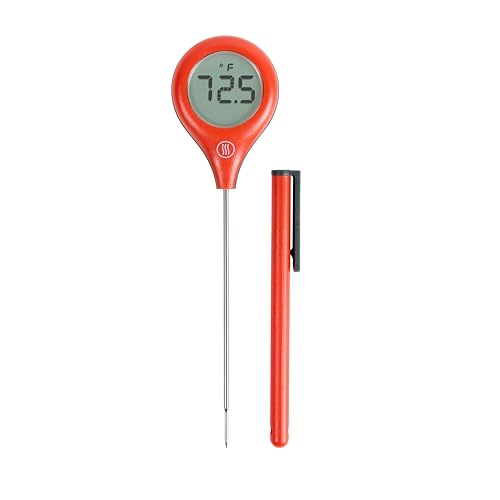
ThermoWorks ThermoPop 2
A third of the Thermapen price for most of the useful accuracy. The right pick if you are buying your first real thermometer.
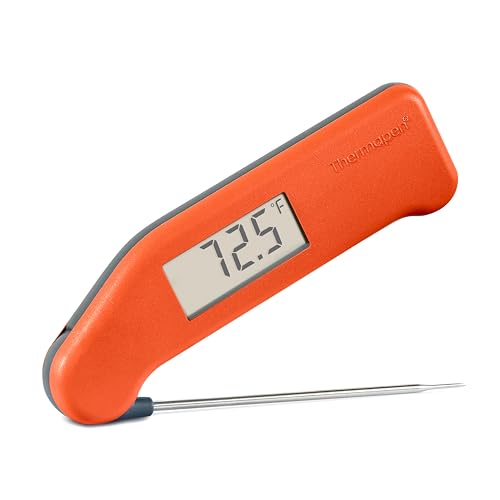
ThermoWorks Classic Thermapen
The older Thermapen, slower than the ONE and still more accurate than almost everything else on a kitchen counter.

Typhur Sync Gold Wireless Thermometer, 2 Probes
Slim probes leave a smaller hole, which matters more in a vacuum bag than it does in a roast.

CHEF iQ Sense Smart Wireless Thermometer, 3 Probes
Three thin probes and a WiFi hub, so you can leave the house during a long cook and still see the curve.

MEATER Pro Duo Wireless Thermometer
Fully wireless probes with no trailing cable, which is what you want in an air fryer basket or a closed combi oven.
Prices when last checked. They change often.
Frequently asked questions
Is a cheap thermometer from a grocery store good enough for sous vide or air frying?
Usually not, because the specification that matters most for those uses, read time, is exactly what cheap thermometers cut corners on. A bargain probe that takes eight to ten seconds to settle means holding an air fryer basket or an open combi oven door that long every time you check, losing heat the whole time, and a slow reading is also more likely to be interrupted before it settles, producing a number that is simply wrong. The ThermoPop 2 costs under fifty dollars and settles in two to three seconds, which is a meaningfully different tool for a similar price.
How often should I calibrate an instant read thermometer?
Check calibration every few months for a thermometer used often, using an ice water bath, which should read 32 F, or boiling water, which reads close to 212 F at sea level and slightly lower at altitude. The Thermapen ONE and ThermoPop 2 both hold calibration well over normal use, but any probe that has been dropped or used at temperature extremes is worth rechecking sooner. A thermometer reading consistently a few degrees off in an ice bath is telling you exactly how much to distrust every other reading it gives.
Why does my thermometer give different readings in the same piece of meat?
That is expected, not a malfunction. Temperature varies through a piece of food: the surface runs hotter than the interior during cooking, and the exact center of the thickest part is typically the coolest point until the cook finishes. Probing at several spots and noting the lowest reading, rather than trusting a single insertion, is the reliable way to find the true core temperature rather than an average of several different points at several different stages of heating.
Do I need a separate thermometer for candy making?
Not necessarily a separate unit, but candy work benefits from the same accuracy and speed that matter everywhere else, since sugar syrup temperatures move quickly once they climb past the soft ball stage and a slow reading can lag behind a syrup that is still climbing. An instant read thermometer rated to handle the higher temperatures candy syrup reaches, well above what a meat probe typically needs to read, works fine for both jobs as long as its range covers candy stage temperatures.
What is the actual difference between plus or minus 0.5 F and plus or minus 0.9 F in practice?
For most cooking, both are more than accurate enough, and the practical difference shows up mainly in borderline cases: a chicken breast probed right at 165 F on a thermometer accurate to 0.9 F could genuinely be anywhere from about 164.1 F to 165.9 F, a range that matters when you are deciding whether the published safe minimum was actually reached. A thermometer accurate to 0.5 F narrows that uncertainty by nearly half, which is the entire case for paying more for the faster, more accurate model.
Can I use the same thermometer for sous vide bath water and for the food inside the bag?
Yes, though they answer different questions. Checking the bath water itself confirms your circulator is holding the set temperature it claims to hold, which is worth spot checking occasionally rather than trusting blindly. Checking the food itself, through the bag or immediately after opening it, confirms the food's own core actually reached that temperature, which is the number that actually determines doneness and safety, since a bath at the right temperature does not guarantee every point inside a thick piece of food has caught up to it yet.
Sources
Published figures, quoted as published. We do not generate our own time and temperature data.
How we research: we compare manufacturer specifications, owner manuals, published USDA and FSIS figures and recurring themes in verified owner reviews. We do not cook test batches or run instruments, and nothing here is professional food safety advice. When a figure is not published by a source we trust, we say so rather than estimate one.