Whynter ICM-128 review: is a built in compressor worth $169.98
The Whynter ICM-128 is a 1.28 quart ice cream maker priced at $169.98 with a built in compressor that chills its own bowl as it churns, which means no pre-freezing before use and the ability to run a second batch immediately after the first finishes, unlike a frozen-bowl machine that needs 12 to 24 hours between batches.
The Whynter ICM-128 costs $169.98 and makes its entire argument in one sentence: it chills its own bowl with a built in compressor, so there is no pre-frozen bowl to plan around and no waiting between batches. That is the whole case for spending more than a basic frozen-bowl churn machine, and it is a genuinely good one for anyone who makes ice cream on impulse rather than on a planned schedule. We have not tested this unit in person. The specifications and churn behavior below come from Whynter's published listing and manual, checked against patterns that repeat across owner reviews.
What does $169.98 actually buy on the ICM-128?
The core of the machine is a built in compressor, the same category of refrigeration a small chest freezer uses, wired to actively chill the churning bowl while a paddle aerates the base inside it. That is a fundamentally different design from a frozen-bowl machine, which relies on a bowl pre-chilled in a home freezer for many hours and then loses its cooling capacity gradually as it churns. At 1.28 quarts the ICM-128 is sized for a household making a couple of pints at a time rather than a large batch, and it churns as a true aerating machine, not a shave-a-frozen-block machine like the Ninja Creami.
- Built in compressor chills the bowl directly, no pre-freezing required
- 1.28 quart capacity, enough for roughly a quart and a half of finished ice cream
- Can run a second batch immediately after the first, since the bowl never needs to be refrozen
| Specification | Value |
|---|---|
| Capacity | 1.28 qt |
| Chilling | Built in compressor |
| Pre-freeze | None required |
| Batches | Back to back, no wait between |
| Mechanism | Churns and aerates, unlike a shave-based machine |
| Price | $169.98 |
What does not needing a pre-freeze actually change in practice?
A frozen-bowl machine such as the Cuisinart ICE-30 requires the double-walled bowl to sit in a freezer for a minimum of 12 to 24 hours before it holds enough cold to churn a batch, and once that cold is used up mid-churn, the bowl needs to go back in the freezer for another full cycle before it can work again. That means planning ahead a day before making ice cream and being unable to make a second flavor the same afternoon. The ICM-128's compressor generates its own cold on demand, so there is nothing to pre-chill and nothing standing between deciding to make ice cream and actually starting. Running a second batch right after the first is limited only by cleaning the bowl and prepping the next base, not by a refreeze cycle.
How does a compressor machine compare to the Ninja Creami's approach?
These solve the same problem, homemade frozen dessert, with mechanically opposite methods. The Ninja Creami freezes a pint completely solid over 24 hours and then shaves the block with a blade, incorporating very little air in the process, which produces a dense result. The ICM-128 churns a liquid base continuously while its compressor keeps the bowl cold, whipping air into the mixture the entire time, a property called overrun that gives churned ice cream its lighter, softer texture. Neither machine is better in an absolute sense: the Creami wins on single-serving flexibility and mix-in variety since a pint can be flavored differently each time, while the ICM-128 wins on texture that reads closer to traditional churned ice cream and on the ability to make a full batch without a day of advance planning.
Is 1.28 quarts actually enough capacity for a household?
For two to four people eating dessert in one sitting, yes; 1.28 quarts finishes as roughly a quart and a half of churned ice cream once the overrun from aeration is accounted for. It is a smaller batch than Whynter's own 2.1 quart compressor model, which exists specifically for households or gatherings that go through more than that in one sitting. The back-to-back batch capability narrows that gap somewhat: a household that needs more than 1.28 quarts can run a second batch within the time it takes to prep another base, something a frozen-bowl machine cannot do at all without a full refreeze first.
Who should buy the Cuisinart ICE-30, the Whynter 2.1 quart, or a Creami instead?
Buy the Cuisinart ICE-30 at $99.94 instead if the budget is the deciding factor and pre-freezing the bowl a day ahead is not a real obstacle; it churns and aerates the same way the ICM-128 does, just without the compressor's convenience. Buy the Whynter 2.1 quart compressor machine at $309.99 instead if the household regularly goes through more than 1.28 quarts in one sitting and the extra capacity is worth roughly $140 more. Buy the Ninja Creami at $189.99 instead if single-serving portions, heavy mix-ins, and a dense rather than aerated texture matter more than churned texture, and a 24 hour planning window is not a problem. The ICM-128 is the right buy specifically for someone who wants churned, aerated ice cream without planning a day ahead for it.
Gear that fits these numbers
Everything mentioned on this page

Cuisinart ICE-30BCP1 Ice Cream Maker, 2 Quart
A true churner: it aerates as it freezes, which gives a lighter texture than the CREAMi, at the cost of a bowl that lives in your freezer.

Whynter Ice Cream Maker with Compressor, 2.1 Quart
The two quart compressor machine, which is where home ice cream starts behaving like a small gelateria.
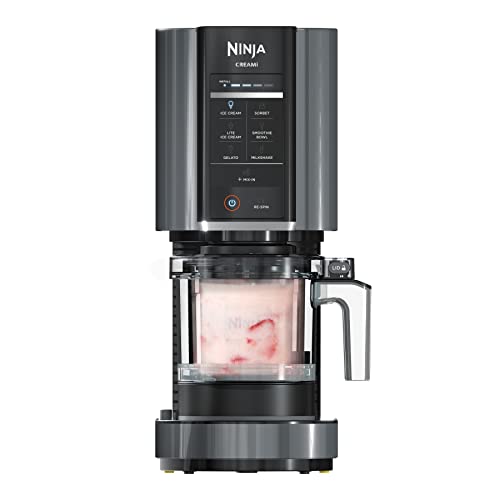
Ninja CREAMi 7-in-1 Ice Cream Maker
The original CREAMi. It does not churn: it freezes a pint solid, then shaves it, which is why the freeze step is 24 hours and not negotiable.
Prices when last checked. They change often.
Frequently asked questions
Does the Whynter ICM-128 really need no pre-freezing at all?
Correct. The built in compressor chills the churning bowl directly while it runs, the same way a small refrigeration unit works, so there is no bowl to pre-freeze in a home freezer before starting. This is the core difference from a frozen-bowl machine like the Cuisinart ICE-30, which needs its bowl frozen solid for 12 to 24 hours before every batch.
Can I really make a second batch of ice cream right after the first on this machine?
Yes, within practical limits. Because the compressor generates cold continuously rather than relying on a bowl that loses its stored cold as it churns, a second batch can start as soon as the bowl is cleaned and the next base is ready, with no refreeze cycle required. A frozen-bowl machine cannot do this at all without a full day back in the freezer.
Is ice cream from the ICM-128 the same texture as ice cream from a Ninja Creami?
No. The ICM-128 churns a liquid base continuously, whipping in air as it freezes, which produces a lighter, more aerated texture typical of traditional churned ice cream. The Creami freezes a pint solid and then shaves it, incorporating very little air, which produces a denser result at the same recipe. Neither is more correct; they are different mechanical processes.
How loud is a compressor ice cream maker compared to a frozen-bowl machine?
A compressor machine runs an active refrigeration unit in addition to the churning motor, which owner reviews repeatedly describe as noticeably louder than a simple frozen-bowl churner that only runs a motor. It is a reasonable tradeoff for the convenience of skipping the pre-freeze, but it is not a quiet appliance to run during a quiet evening.
Is 1.28 quarts enough for a family, or should I buy the larger Whynter model?
1.28 quarts suits two to four people eating dessert in one sitting. A larger household or one that regularly serves more than that should consider Whynter's own 2.1 quart compressor model instead, which trades a higher price for meaningfully more capacity per batch while keeping the same no-pre-freeze convenience.
Does a compressor ice cream maker need any maintenance a frozen-bowl machine does not?
A compressor unit is a sealed refrigeration system similar to a small freezer, and it has no user-serviceable parts beyond normal cleaning of the churning bowl and paddle. It has no bowl to store in a freezer between uses, which some owners count as less maintenance overall, though the unit itself is heavier and takes up more permanent counter or storage space.
Sources
Published figures, quoted as published. We do not generate our own time and temperature data.
How we research: we compare manufacturer specifications, owner manuals, published USDA and FSIS figures and recurring themes in verified owner reviews. We do not cook test batches or run instruments, and nothing here is professional food safety advice. When a figure is not published by a source we trust, we say so rather than estimate one.