The best ice cream maker
The Whynter ICM-128 ($169.98) is the best ice cream maker for most kitchens: a built-in compressor means no bowl to pre-freeze, so a second batch can start the same afternoon. The Cuisinart ICE-30 ($99.94) is the cheaper option if you are fine planning a day ahead to freeze its bowl first.
The best ice cream maker for most people who want real churned texture, not the Ninja Creami's shave-and-serve method, is the Whynter ICM-128 at $169.98. Its built-in compressor means there is no bowl to pre-freeze, so a second batch can start the moment the first one comes out, which a bowl churner simply cannot match without a spare bowl already sitting in the freezer.
The three tiers
Every roundup here is built as three genuinely different answers rather than one flat ranking, because that is how people actually shop: a first purchase, a considered upgrade, and a ceiling. The expert pick is not the best pick for most readers, and the section below says who should skip it.
Cuisinart ICE-30BCP1 Ice Cream Maker, 2 Quart
The Cuisinart ICE-30 is a true churner: it aerates the base as it freezes, which gives a noticeably lighter texture than a Creami's shaved pint, for $99.94.
Skip it if: Skip it if you want to make more than one batch in a day. The frozen bowl needs 12 to 24 hours back in the freezer before it can churn again.
Whynter Ice Cream Maker with Compressor, 1.28 Quart
The Whynter ICM-128 holds 1.28 quarts and needs no pre-frozen bowl at all, since the compressor does the cooling itself, for $169.98.
Skip it if: Skip it if counter storage space is tight. A compressor unit is heavier and bulkier than a simple frozen bowl machine.
Whynter Ice Cream Maker with Compressor, 2.1 Quart
The Whynter 2.1 qt steps up to 2.1 quarts with an LCD timer display, at $309.99, which is close to gelato shop batch sizes scaled down for a home kitchen counter.
Skip it if: Skip it if you rarely make more than a pint at a time. The smaller Whynter ICM-128 or a Ninja CREAMi uses far less counter space for a similar result.
Gear that fits these numbers
The three picks side by side

Cuisinart ICE-30BCP1 Ice Cream Maker, 2 Quart
A true churner: it aerates as it freezes, which gives a lighter texture than the CREAMi, at the cost of a bowl that lives in your freezer.

Whynter Ice Cream Maker with Compressor, 1.28 Quart
A compressor machine needs no pre-frozen bowl, so you can make a second batch immediately. That is the entire argument, and it is a good one.

Whynter Ice Cream Maker with Compressor, 2.1 Quart
The two quart compressor machine, which is where home ice cream starts behaving like a small gelateria.
Prices when last checked. They change often.
Churned ice cream vs the Ninja Creami: what is actually different
A churner like the Cuisinart ICE-30 or the Whynter ICM-128 spins air into the base while it freezes, which is what gives scooped ice cream its light, slightly fluffy texture. A Ninja CREAMi does the opposite: it freezes a pint completely solid over 24 hours, then a blade shaves that solid block into a soft, dense texture with almost no added air. Neither method is more correct, but they are genuinely different desserts made from a similar base, and neither one is a shortcut for the other if the texture you want is specific.
People who already own a Creami sometimes ask whether a churner is worth adding on top of it. The honest answer is that it depends on how much you value the aerated, softer-scoop texture a churner produces, since a Creami cannot replicate that no matter how it is re-spun. Our Creami vs churner comparison goes through the texture difference in more detail, and our Ninja Creami picks cover that machine on its own.
Why a compressor machine changes how you actually use it
Every machine that needs a pre-frozen bowl, including the Cuisinart ICE-30, forces a full day of planning between batches: freeze the bowl, churn once, then refreeze before trying again. A compressor machine like the Whynter ICM-128 or the Whynter 2.1 qt cools the mixture itself during the churn, so nothing needs advance freezing and a second flavor can go in as soon as the bowl is rinsed out. Our compressor vs Creami comparison covers the same tradeoff against the shave-and-serve method.
| Model | Price | Capacity | Pre-freeze required |
|---|---|---|---|
| Cuisinart ICE-30 | $99.94 | 2 qt | Yes, 12 to 24 hours |
| Whynter ICM-128 | $169.98 | 1.28 qt | No, built-in compressor |
| Whynter 2.1 qt | $309.99 | 2.1 qt | No, built-in compressor |
Getting the base ratio right before it ever reaches the machine
Fat and sugar both depress the freezing point of an ice cream base, which is why a low fat, low sugar mix churns harder and icier no matter which machine runs it. Our ice cream base ratio calculator and the overrun guide cover the ratios that make a base churn well in any machine on this page. If the base includes raw egg yolks for a custard style, cook it to 160 F on the stove first: a Cuisinart stick blender immersion blender smooths lumps right in the same pot, which is easier than transferring a hot custard to a countertop blender.
Noise, motor life and the maintenance a listing does not mention
A compressor machine like the Whynter ICM-128 or the Whynter 2.1 qt runs a small refrigeration unit for the length of the churn, which is audibly louder than a bowl churner like the Cuisinart ICE-30 spinning a quiet gear motor. Recurring owner reviews describe the Whynter line as closer to a small window air conditioner running for 20 to 40 minutes than a kitchen appliance, which matters if the machine sits on a counter near a living space rather than tucked in a pantry.
On the maintenance side, a bowl churner has almost nothing to fail beyond the motor and the paddle, since the bowl itself is just a sealed coolant jacket. A compressor machine has a real refrigeration system, with more that can eventually go wrong, though the tradeoff most owners report making peace with is not needing to plan a day ahead for the freezer.
How we chose
These picks came from manufacturer specifications, published capacities and features, and recurring themes in verified owner reviews about noise, batch size and how often a compressor machine actually gets used compared with a bowl churner left in the freezer. Nothing here was churned in person: treat the capacity and timing figures as the manufacturers' own numbers. Machines marketed as ice cream makers but built around a freeze-and-shave method, like the Ninja Creami line, were kept out of this roundup and covered on their own page instead, since the two categories solve a genuinely different problem for a shopper comparing them side by side rather than choosing between near-identical options.
Gear that fits these numbers
Everything mentioned on this page
Cuisinart ICE-30BCP1 Ice Cream Maker, 2 Quart
A true churner: it aerates as it freezes, which gives a lighter texture than the CREAMi, at the cost of a bowl that lives in your freezer.
Whynter Ice Cream Maker with Compressor, 2.1 Quart
The two quart compressor machine, which is where home ice cream starts behaving like a small gelateria.
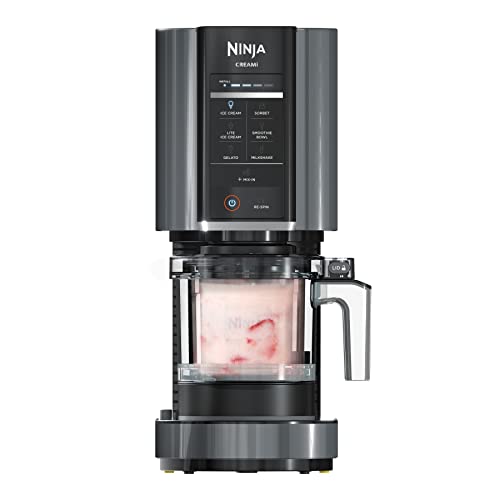
Ninja CREAMi 7-in-1 Ice Cream Maker
The original CREAMi. It does not churn: it freezes a pint solid, then shaves it, which is why the freeze step is 24 hours and not negotiable.

Cuisinart CSB-179 Smart Stick Hand Blender
For blending a custard base in the pot it was cooked in, which is exactly what an ice cream base wants and a countertop blender makes awkward.
Prices when last checked. They change often.
Frequently asked questions
Do I need to pre-freeze the bowl for every ice cream maker?
Only the ones without a compressor. The Cuisinart ICE-30 needs its bowl frozen solid for 12 to 24 hours before it can churn, and a bowl that has warmed even slightly in a crowded freezer will not chill the base properly. The Whynter ICM-128 and Whynter 2.1 qt have a built-in compressor that chills the mixture during the churn itself, so there is no bowl to plan around and no waiting between batches at all.
What is the difference between a churned ice cream maker and a Ninja Creami?
A churner spins air into the base as it freezes, producing a lighter, scoopable texture. A Ninja CREAMi freezes a sealed pint completely solid first, then shaves that block with a blade, which produces a denser result with far less added air. They start from similar bases and finish as genuinely different desserts, and owning one does not make the other redundant if you value both textures.
Can a low sugar or low fat base still freeze properly in a compressor machine?
It will freeze, but expect a harder, icier result. Sugar and fat both lower a base's freezing point, so a low sugar or low fat mix has less protection against forming large ice crystals. A splash of alcohol or added fat brings a lighter batch closer to a normal base's texture.
How long does a compressor ice cream maker take to churn one batch?
Most compressor machines, including the Whynter ICM-128 and the Whynter 2.1 qt, churn a batch in 20 to 40 minutes depending on the base's starting temperature and how much sugar and fat it carries. A base that starts already cold from the refrigerator churns noticeably faster than one poured in at room temperature, and a base straight from a warm stovetop custard will run at the long end of that range or a little longer still.
Is the Whynter 2.1 quart machine worth the jump over the 1.28 quart version?
Only if batch size is the limiting factor. The Whynter 2.1 qt holds enough for a party rather than a household, and it adds an LCD timer display. For a household making one or two flavors at a time, the smaller Whynter ICM-128 holds enough and takes noticeably less counter space.
What temperature should a custard style ice cream base reach before it goes into the machine?
160 F, which is the USDA safe minimum internal temperature for eggs. A custard base made with raw egg yolks needs to be cooked to that temperature on the stove first, since freezing does not pasteurize it. Bases without eggs, like a plain cream and sugar mix, do not carry this requirement.
Sources
Published figures, quoted as published. We do not generate our own time and temperature data.
How we research: we compare manufacturer specifications, owner manuals, published USDA and FSIS figures and recurring themes in verified owner reviews. We do not cook test batches or run instruments, and nothing here is professional food safety advice. When a figure is not published by a source we trust, we say so rather than estimate one.