
Ninja
Ninja CREAMi XL Deluxe 11-in-1
XL tubs hold 24 ounces against the standard 16, which is the difference between one dessert and four.
A balanced ice cream base runs around 16 percent fat and 16 percent sugar, giving roughly 42 percent total solids, which spins smooth on the first pass. Below about 32 percent total solids expect an icy or crumbly result and plan on a re-spin with a splash of milk.
The formula
fat grams = total x fat% / 100 sugar grams = total x sugar% / 100 MSNF grams = total x msnf% / 100 total solids% = fat% + sugar% + msnf% under 32% icy or crumbly, expect a re-spin 32 to 45% the range that spins smooth over 45% dense and slow, may never firm up
MSNF means milk solids not fat: the protein and lactose in dairy. It is what gives ice cream body rather than just cold sweetness, and it is the reason a base made from cream and sugar alone tastes thin.
Gear that fits these numbers
A Creami freezes a pint solid and shaves it. A traditional machine churns a liquid base and whips air in. Those are different mechanisms and they want different bases.
XL tubs hold 24 ounces against the standard 16, which is the difference between one dessert and four.
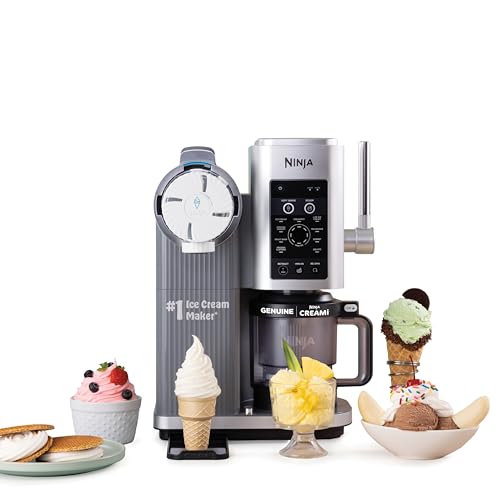
The top of the line: it dispenses soft serve as well as processing a hard pint, which is a genuinely different machine rather than a colour change.

Extra pints are what let you keep three bases frozen at once, which is the only way the 24 hour freeze stops being a bottleneck.

Tenth gram resolution across a full 11 pound range, which most precision scales give up.

A true churner: it aerates as it freezes, which gives a lighter texture than the CREAMi, at the cost of a bowl that lives in your freezer.

A compressor machine needs no pre-frozen bowl, so you can make a second batch immediately. That is the entire argument, and it is a good one.
Prices when last checked. They change often.
Fat coats ice crystals and stops them growing, which is what smooth means in practice, and it carries most of the flavour. Sugar depresses the freezing point so the finished product is soft enough to scoop straight from the freezer. Milk solids not fat supply protein and lactose, which give body: a base of cream and sugar alone tastes thin and cold rather than rich.
Total solids is the sum of the three and is the single number that predicts texture. Everything that is not solids is water, and water makes ice crystals.
A protein ice cream is the worst case for any machine: very little fat to coat crystals and very little sugar to keep it soft. The result is chalky rather than creamy, and no amount of extra freezing time helps, because the problem is composition rather than temperature. A tablespoon of milk and a re-spin is the actual fix, which is why {{/creami/protein-ice-cream-creami/|protein bases}} get their own page.
Around 16 percent fat and 16 percent sugar by weight is the classic balance, with roughly 10 percent milk solids not fat on top, giving about 42 percent total solids. Fat keeps ice crystals small, sugar keeps the finished product scoopable, and milk solids supply the body that stops it tasting thin.
Low total solids, almost always. A base short on fat and sugar has more free water, which freezes into a hard block the blade shaves into powder rather than cream. The remedy is a tablespoon of milk and a second spin using the re-spin program. Freezing it longer does not help, because the problem is composition.
Yes, and it is not a conservative estimate. The machine works by driving a blade down through a solidly frozen block, so a pint that is still soft in the middle will not process correctly and puts unnecessary load on the motor. Freeze it flat and level, because a sloped surface leaves the blade cutting air on one side.
Overrun is the air whipped into ice cream during churning, and commercial ice cream can be half air by volume. A traditional machine that freezes while stirring builds overrun as it goes. A Creami shaves an already frozen block, so it incorporates very little air, which is why its output is denser than a supermarket tub at the same composition.
Yes, and sugar then does the entire job of keeping it soft, which is why sorbet recipes run at 22 to 28 percent sugar against 16 percent for ice cream. Cut the sugar on a sorbet and you get a solid block of flavoured ice. Fruit with natural body, like mango or banana, behaves better than watery fruit.
How this calculator works: it applies the formula above to the numbers you enter. Where a figure is published by the USDA or FSIS we quote it and name the source. Where a figure is derived from a physical model we say so and state the assumptions. Where we have no defensible figure the calculator returns nothing and tells you why, rather than guessing. This is researched general information, not professional food safety advice.