Avid Armor USV20 review: the entry point where sealing liquids stops being a fight
The Avid Armor USV20 is a chamber vacuum sealer priced at $319.00 with an 11.5 inch seal bar, and because it evacuates the entire sealing chamber rather than sucking through the bag opening, it seals soup, brine, and marinated meat without pulling liquid into a pump the way an external sealer does.
The Avid Armor USV20 costs $319.00 and solves a problem no external sealer, wet mode or not, ever fully solves: sealing actual liquid without a mess or a ruined seal. It fits a kitchen where sous vide, batch cooking stock, or marinating meat before bagging has become a weekly habit rather than an occasional dinner. We have not tested this unit in person; the seal bar length, chamber capability and liquid handling described below come from Avid Armor's published listing and manual, checked against the patterns that repeat across owner reviews.
What does $319.00 actually buy on a chamber machine?
The core numbers are an 11.5 inch seal bar, wide enough to close a full-size bag rather than a narrow one, and a true chamber design where the entire open bag sits inside a sealed box during the vacuum cycle. That single design choice is what lets it handle liquids: air is pulled out of the box itself, not through the bag opening, so nothing inside the bag is being pulled toward an exit point the way it is in an external sealer.
| Specification | Value |
|---|---|
| Seal bar | 11.5 in |
| Type | Chamber |
| Liquids | Yes |
| Price | $319.00 |
Why does a chamber machine handle liquids and an external sealer does not?
The mechanism is worth understanding because it explains the whole category, not just this model. An external sealer clamps the bag opening and pulls air out through it with a pump, and anything inside the bag, liquid included, gets pulled toward that same opening because that is the direction the air is leaving. A chamber machine like the USV20 puts the whole bag, open end and all, inside a sealed box, then pulls air out of the box around it. The pressure drop is what pulls air out of the bag, not suction through the opening, so liquid inside has nowhere it is being drawn toward. That is why soup or stock and a marinating steak both need a chamber machine or a frozen block, and why no amount of wet mode tuning on an external sealer fully closes that gap.
- Chamber bags are smooth rather than embossed, since they do not need channels for a pump to pull through
- Smooth chamber film costs less per bag than the embossed roll stock an external sealer requires
- The tradeoff is size: a chamber machine's sealed box adds enough bulk that most owners leave it on the counter permanently
What maintenance does a chamber sealer need that an external one does not?
A chamber machine that regularly seals liquid will eventually need its seal bar and, on many designs, an internal oil reservoir checked or serviced, since the pump on some chamber machines runs through an oil bath that liquid vapor can contaminate over repeated wet cycles. An external sealer has no equivalent: only a gasket and a heat strip to keep clean. This is not a defect specific to the USV20, it is a structural feature of how chamber pumps work, and the chamber sealer maintenance guide covers the servicing pattern in more detail than the manual typically does on its own.
When should you buy the VEVOR or the Ultra version instead?
Buy the VEVOR 10.2 inch chamber sealer instead at $219.90 if the budget matters more than the extra inch of seal bar width, since it is the cheapest genuine chamber machine worth owning and the entry point at which sealing liquids stops being a fight at all, just with a narrower bar and less sealing power than the USV20. Buy the Avid Armor USV20 Ultra instead at $335.27 if the machine will seal liquids often enough that cleaning the seal bar becomes a routine task: the Ultra's removable bar is built specifically for that maintenance, which the standard USV20 does not offer as clearly. The roughly $16.27 gap to the Ultra is small relative to the $319.00 base price, so the removable bar is worth it primarily for households sealing wet food weekly rather than occasionally.
Is a chamber machine actually necessary, or is that overkill for most kitchens?
It depends entirely on how often liquids are part of what gets sealed. A household sealing dry cuts of meat and vegetables a few times a month is well served by an external sealer with a wet mode at a third of the price, and would not recoup the price difference in bag savings or convenience for years. A household batch cooking stock, sealing marinated meat weekly, or running sous vide as a regular part of dinner will earn back the price gap in bag cost within a year or two, since smooth chamber film costs less per bag than the embossed film an external sealer requires, on top of never fighting a ruined seal from liquid reaching the pump.
Does sealing liquid in a chamber machine change anything about food safety?
The chamber design solves a mess and a ruined-seal problem, not a food safety one. A vacuum bag, chamber-sealed or not, is an anaerobic environment, meaning it removes the oxygen that keeps many spoilage organisms in check, which is a genuine botulism consideration if the food inside was mishandled before sealing. That risk exists identically whether the bag was sealed on a $319.00 chamber machine or a $70.00 external one. Food sealed in the USV20 still needs to be cooled quickly, kept out of the 40 F to 140 F danger zone for no more than two hours total, and refrigerated or frozen promptly, exactly as covered in the liquids sealing guide.
What does day-to-day use actually look like compared with an external sealer?
The cycle itself takes noticeably longer than an external sealer's few seconds, since a chamber machine has to seal the box, pull the whole chamber down to its target vacuum level, then reseal the bag before releasing the pressure and opening the lid. Owner reviews describe this as a fair tradeoff once the alternative is fighting an external sealer over liquid, but it is a genuine change in workflow for someone used to a fast external sealer cycle, particularly when sealing many bags back to back in one session. Some chamber machines in this price range, such as the Vesta Precision 12 inch, add a settable vacuum time so a delicate item can get a shorter pull than a steak; check the full spec sheet for the USV20's own cycle behavior before assuming that level of control is included.
Who should actually buy the Avid Armor USV20?
Someone who cooks sous vide most weeks, batch cooks stock or soup, or regularly marinates meat before sealing it, and is tired of an external sealer fighting liquid every time. Pair it with Avid Armor's own chamber pouches since smooth chamber film is cheaper per bag than embossed roll stock and is the correct bag type for this machine, and check the full spec sheet before comparing it against the Ultra or VEVOR alternatives above.
Gear that fits these numbers
Everything mentioned on this page
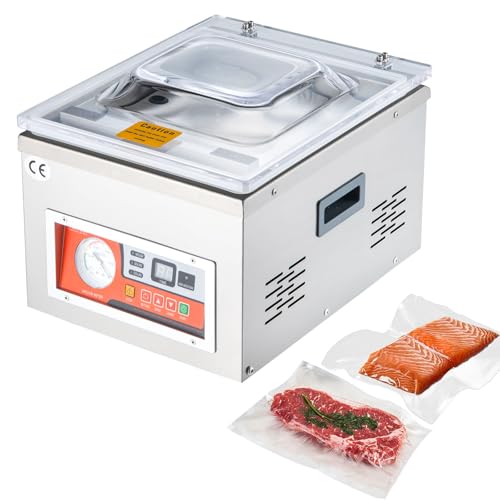
VEVOR Chamber Vacuum Sealer, 10.2 Inch
The cheapest genuine chamber machine worth owning, and the entry point at which sealing liquids stops being a fight.

Avid Armor USV20 Ultra Chamber Vacuum Sealer
The removable seal bar is the maintenance difference: a chamber machine that seals liquids will eventually need that bar cleaned, and on most units it is not designed to come out.

Anova Precision Vacuum Sealer Pro
A wet mode that pulls a shorter, gentler vacuum is what lets an external sealer handle a marinated steak without sucking liquid into the pump.

Avid Armor Chamber Vacuum Sealer Pouches, 3.5 mil
Chamber bags are smooth and cheaper per bag than embossed film, and they only work in a chamber machine. Mixing the two up is the most common first week mistake.
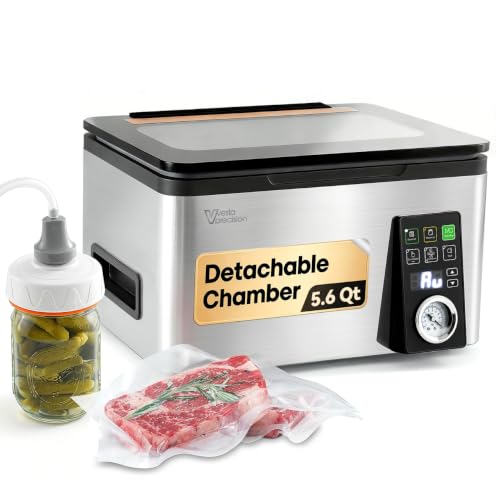
Vesta Precision 12 Inch Chamber Vacuum Sealer
Settable vacuum time rather than a fixed cycle, which is what you want when a delicate item needs a shorter pull than a steak.
Prices when last checked. They change often.
Frequently asked questions
Can the Avid Armor USV20 seal a bag of soup without leaking?
Yes, because it evacuates the whole sealed chamber rather than sucking air through the bag opening, so liquid inside the bag is never being pulled toward an exit point the way it is in an external sealer. This is the core reason chamber machines exist, and soup or stock is exactly the case where the difference between the two sealer types becomes obvious rather than theoretical.
What bags does the Avid Armor USV20 actually need?
Smooth chamber pouches, not the embossed roll stock external sealers require, since chamber bags do not need channels for a pump to pull air through. Embossed bags will technically work in a chamber machine but waste money, since the embossing that costs extra to produce serves no purpose once the whole chamber is doing the evacuating.
Does the Avid Armor USV20 need an oil change like some chamber sealers?
Many chamber sealers, this one included, use a pump that draws through an oil bath, and that oil can pick up moisture from repeated liquid sealing over time. Check the specific manual for the recommended oil change interval, since a machine sealing wet food often needs more frequent servicing than one used mostly for dry storage.
Is the USV20 worth it over an external sealer if I only seal liquids occasionally?
Probably not. The price gap between this chamber machine and a good external sealer with a wet mode is large enough that it mainly pays for itself through cheaper bags and reliable liquid sealing, and neither benefit matters much for someone sealing wet food only a few times a year. An external sealer with a wet mode covers occasional liquid sealing reasonably well at a much lower cost.
How much bigger is the USV20 than an external sealer, in practical terms?
Significantly. The sealed chamber box that makes liquid sealing possible also adds enough depth, height, and weight that most owners keep the USV20 permanently on the counter rather than storing it in a drawer, unlike most external sealers which are narrow enough to tuck away between uses.
Is the vacuum cycle on the USV20 slower than an external sealer?
Yes, noticeably. A chamber machine has to seal the box, pull the entire chamber down to its target vacuum level, then reseal the bag before releasing the pressure and opening the lid, which takes longer than an external sealer's simple pull-and-weld cycle at the bag opening. For someone sealing many bags in one session, this longer per-bag cycle is a real workflow tradeoff against the liquid handling the chamber design provides.
Does the USV20 come with any bags, or are they a separate purchase?
Bags are typically a separate purchase from the machine itself, though some bundle listings include a starter pack of pre-cut pouches. Since the USV20 requires smooth chamber bags rather than the embossed film an external sealer uses, budgeting for a supply of chamber pouches at the same time as the machine avoids being unable to use it the day it arrives.
Is a chamber-sealed bag any safer to store long-term than an externally sealed one?
No, the storage risk is identical. Both are anaerobic environments once sealed, which is a genuine botulism consideration if the food was mishandled before sealing, and both require the same cooling and refrigeration timing afterward. The chamber design changes whether liquids can be sealed cleanly, not the underlying food safety rules that apply once the bag is closed.
Sources
Published figures, quoted as published. We do not generate our own time and temperature data.
How we research: we compare manufacturer specifications, owner manuals, published USDA and FSIS figures and recurring themes in verified owner reviews. We do not cook test batches or run instruments, and nothing here is professional food safety advice. When a figure is not published by a source we trust, we say so rather than estimate one.