Vacuum sealing liquids: why soup boils in a chamber sealer
Warm liquid boils inside a chamber vacuum sealer because pulling a vacuum lowers the boiling point of water: at 95 percent vacuum the chamber sits near 38 mmHg and water boils around 92 F, well below a warm stock's temperature straight off the stove. Chill liquids to refrigerator temperature, around 38 F to 40 F, before sealing, or stop the cycle at a lower vacuum percentage, and freeze liquids solid before sealing them in an external machine, which cannot handle liquid at all.
The bubbling that shows up the moment a chamber sealer starts pulling on a bag of stock is not air escaping, it is the stock boiling. Vacuum lowers the temperature at which water boils, and the relationship is not a rule of thumb, it follows the Antoine equation: log10 of the pressure in mmHg equals 8.07131 minus 1730.63 divided by 233.426 plus the temperature in Celsius. Run that equation at 95 percent vacuum, which is roughly 38 mmHg, and water boils near 92 F, a temperature most soup sits well above straight off the stove. The fix is not a better machine, it is colder liquid or a shallower vacuum, and the Vesta Precision 12 inch chamber sealer is built around exactly that second option with a settable vacuum time.
Why does soup start boiling the second the vacuum starts pulling?
At sea level, water boils at 212 F because the atmosphere pushes down on it with about 760 mmHg of pressure. Pull a vacuum and that pushback drops, which means far less heat is required to turn liquid into vapor. The table below runs the Antoine equation, log10(P in mmHg) equals 8.07131 minus 1730.63 divided by (233.426 plus temperature in Celsius), across the vacuum levels a chamber sealer typically uses. Warm stock straight off the stove sits well above 92 F, so at a 95 percent vacuum it is already past its own boiling point before the cycle finishes, and what looks like foaming or violent bubbling at the seal bar is the liquid itself flashing to vapor, not trapped air working its way out.
| Vacuum level | Chamber pressure | Water boils at |
|---|---|---|
| 50 percent | 380 mmHg | 179 F |
| 70 percent | 228 mmHg | 157 F |
| 80 percent | 152 mmHg | 141 F |
| 90 percent | 76 mmHg | 115 F |
| 95 percent | 38 mmHg | 92 F |
| 99 percent | 8 mmHg | 45 F |
How cold does my liquid actually need to be before I seal it?
Cold enough to sit below the boiling point the machine is about to create. Refrigerator temperature, around 38 F to 40 F, stays well under the roughly 92 F boiling point at a typical 95 percent vacuum, which is why chilling a stock or a marinade overnight before sealing solves the problem outright rather than partially. A liquid pulled straight from a hot pot has nowhere near that margin, and even a liquid at room temperature has less margin than most people assume. If a job cannot wait for a full chill, the second option is a machine with a settable cycle, such as the Vesta Precision 12 inch chamber sealer's adjustable vacuum time, which lets you stop the pull at 80 or 85 percent instead of chasing a full 95, trading a slightly softer vacuum for a liquid that never reaches its boiling point in the first place.
What actually happens if liquid reaches the seal bar anyway?
Two different failures, and neither shows up immediately. Liquid that reaches the seal bar during the weld gets trapped inside the seam itself, which produces a weld that looks completely normal right out of the machine and then fails weeks later in the freezer, because the film never actually fused across the wet spot. Liquid that goes further, past the bar and into the pump intake, is a maintenance problem rather than a cooking one: it works its way toward the vacuum pump and, on an oil sealed machine such as the Gasbye chamber sealer, can contaminate the pump oil over repeated occurrences. A double seal, which the Gasbye also runs, gives a second weld line as backup if the first one fails, but it does not fix liquid that already reached the pump.
Can an external sealer handle liquids at all?
Not directly, and no wet mode fully solves it, because an external sealer pulls air through the bag opening and liquid travels the same direction the air does. The one workaround that reliably works is freezing the liquid solid first: pour stock, sauce or a marinade into a shallow container, freeze it into a flat block, then seal the frozen block in an external sealer the same way you would seal a piece of meat. Once it is solid, there is no liquid left to pull toward the nozzle. This only works for liquids you can freeze ahead of time; it does nothing for sealing a fresh marinade the same day you plan to cook it, which is the actual case for buying a chamber machine instead.
Does any of this change the food safety rules for a sealed liquid?
No, and it is worth saying plainly. A vacuum bag is an anaerobic environment, which is the condition Clostridium botulinum prefers, whether the bag holds a marinade, a stock or a solid steak. Cooling a liquid to seal it safely is the same cooling any hot food needs: out of the 40 F to 140 F danger zone within two hours total, then refrigerated or frozen promptly. Sealing warm stock and immediately setting it on the counter is not made safer by the fact that it survived the vacuum cycle without boiling over; the clock on time and temperature starts the moment it left the heat, not the moment it went into the bag.
Gear that fits these numbers
Everything mentioned on this page
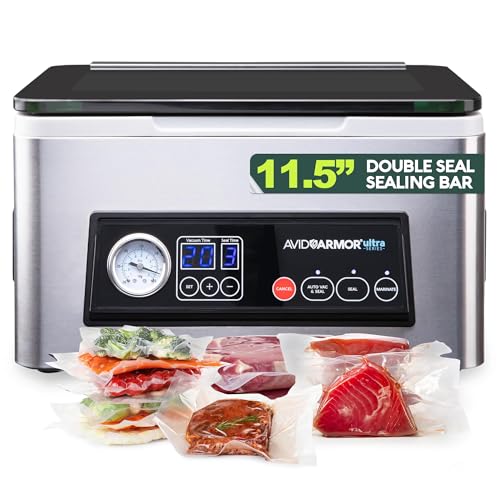
Avid Armor USV20 Chamber Vacuum Sealer
A chamber machine evacuates the whole box rather than sucking through the bag opening, which is the only way to seal soup, brine or a marinating steak without a mess.

Gasbye Chamber Vacuum Sealer, 5.3 Quart
Double seal and a replaceable bar. Double sealing matters most on liquids, where a single weld is the thing that fails weeks later in the freezer.

FoodSaver Vacuum Sealer with Automatic Bag Detection
The bag detection is the feature that earns its keep in daily use: you stop guessing at moist versus dry settings and stop wasting bags on a failed seal.

Avid Armor Chamber Vacuum Sealer Pouches, 3.5 mil
Chamber bags are smooth and cheaper per bag than embossed film, and they only work in a chamber machine. Mixing the two up is the most common first week mistake.

Wevac Pre-Cut Vacuum Sealer Bags, Quart, 200 Count
Pre-cut quart bags are the right default for single portions: cutting from a roll costs you a seal at each end and about four inches of film.
Prices when last checked. They change often.
Frequently asked questions
Is the bubbling in my chamber sealer dangerous?
No, it is the liquid boiling at a lower temperature than usual because of the drop in pressure, not a malfunction and not a safety issue in itself. The practical problem is mess and a ruined seal, not danger: boiling liquid foams up, can flood the seal bar, and in a bad case reaches the pump. Chilling the liquid first or using a shallower vacuum setting solves the foaming without changing anything about food safety.
Can I use a vacuum sealer to speed up boiling water for cooking?
Technically pulling a vacuum does lower water's boiling point, which is the same effect that makes stock foam in a chamber sealer, but a consumer chamber machine is not built as a pressure vessel for cooking and this is not how it is meant to be used. The boiling point drop here is a side effect to manage during sealing, not a cooking technique the machine supports.
Why does my marinade foam up even in an external sealer's wet mode?
Wet mode shortens the vacuum pull specifically to reduce this, but it is a gentler version of the same external mechanism, not a different one. If the marinade is anywhere near warm, or the wet mode still pulls close to a high vacuum, foaming can still happen. Chilling the marinade first works with either sealer type and removes most of the problem before the machine ever starts.
Does altitude change any of this?
Yes, in the same direction as vacuum does. At elevation the surrounding air pressure is already lower than the 760 mmHg used in the sea level table above, so water boils at a slightly lower temperature even before a sealer pulls any vacuum on top of it. In practice this shifts the boiling points in the table down by a few degrees at real world kitchen elevations, which makes chilling liquids before sealing even more worthwhile rather than less.
Is a settable vacuum time worth paying more for?
If liquids are a regular part of what you seal, yes. A machine with a fixed, maximum vacuum cycle gives you exactly one option when a liquid starts to foam: pull the bag and start over cold. A settable cycle, like the one on the Vesta Precision 12 inch chamber sealer, lets you stop at a lower vacuum percentage on purpose, trading a slightly less firm seal on delicate or liquid heavy bags for one that finishes without a mess.
Can I seal alcohol based marinades the same way?
Treat them with more caution, not less. Alcohol boils at a lower temperature than water even at normal atmospheric pressure, so an alcohol containing marinade reaches its boiling point under vacuum at an even lower temperature than the water only figures above. Chill it further than you would a plain stock, and expect foaming at vacuum levels that would leave a similar amount of plain water untouched.
Sources
Published figures, quoted as published. We do not generate our own time and temperature data.
How we research: we compare manufacturer specifications, owner manuals, published USDA and FSIS figures and recurring themes in verified owner reviews. We do not cook test batches or run instruments, and nothing here is professional food safety advice. When a figure is not published by a source we trust, we say so rather than estimate one.