Chamber vacuum sealer maintenance: seal bar, gasket and oil
A chamber vacuum sealer needs its seal bar and gasket wiped after every liquid heavy cycle, and its oil reservoir checked on any model that uses an oil sealed rotary vane pump, typically every few dozen hours of use per the manufacturer manual. A machine with a removable seal bar such as the Avid Armor USV20 Ultra takes minutes to clean; a fixed bar takes a lot more patience and a lot more cotton swabs.
A chamber sealer needs more upkeep than an external sealer, and the maintenance load scales directly with how often it seals liquids. The gasket that seals the lid, the seal bar that welds the bag, and on many machines an oil filled vacuum pump all sit downstream of whatever gets pulled into the box during a cycle. The Avid Armor USV20 Ultra addresses the biggest pain point directly with a removable seal bar built for wet food, which turns a ten minute cleanup into something closer to two. A machine without that feature is not broken, it just asks more of the owner, and skipping that upkeep is how a seal bar starts leaving weak welds months into ownership.
How often does the seal bar actually need cleaning?
After any cycle that sealed something wet, ideally the same day. Liquid that reaches the seal bar during a cycle, whether from a marinade, a stock or a bag that was overfilled, leaves a residue on the heating element that bakes on the next time the bar heats up. That baked residue is what causes an otherwise fine machine to produce welds that look sealed and fail later, because the heat is not transferring evenly through a bar with dried film on it. On a removable bar, that means lifting it out and wiping it down at the sink. On a fixed bar like the one in the VEVOR 10.2 inch chamber sealer, it means a damp cloth and a cotton swab reaching into the corners while the machine is unplugged and the bar is cool.
What is the gasket for, and how do I know it needs replacing?
The gasket is the rubber seal that lets the whole box, not just the bag, hold a vacuum, and every chamber sealer depends on it completely: a torn or hardened gasket means the box never reaches full vacuum no matter how long the pump runs. Wipe it after every session, keep it away from oil and solvents that were not made for rubber, and replace it as soon as it looks glazed, cracked or permanently compressed rather than waiting for a seal failure to prove the point. A spare gasket is inexpensive relative to the machine, on units like the Gasbye chamber sealer or the Vesta Precision 12 inch chamber sealer, and keeping one on hand avoids a machine sitting idle while a replacement ships.
Does my chamber sealer need its oil changed like a car?
Only if it uses an oil sealed rotary vane pump, which most consumer chamber machines do. The oil in that pump does two jobs: it lubricates the moving vanes and it helps the pump hold a deep vacuum. Sealing liquids or moist food regularly lets vapor condense into that oil over time, which is exactly the maintenance difference a chamber machine carries that an external sealer never will, since an external sealer has no oil reservoir at all. Check the level against the sight glass on the pump housing on the schedule the manual gives, commonly every few dozen hours of active use, and change it sooner rather than later if a machine that used to reach a strong vacuum starts finishing cycles early.
What is different about a removable seal bar?
The bar itself does the same job either way, welding the film shut while the vacuum holds. What changes is access. A fixed bar asks you to clean around wiring and a heating element without removing anything, which is fine for a machine that mostly seals dry food and only occasionally sees a marinade. A removable bar, the feature the Avid Armor USV20 Ultra is built around, comes free of the machine entirely for a real rinse, which matters a lot more once liquids are a regular part of the routine rather than an exception.
| Fixed seal bar | Removable seal bar | |
|---|---|---|
| Cleaning after liquids | Cotton swabs and a damp cloth in place | Lift out and rinse or wipe fully |
| Example | VEVOR 10.2 in chamber | Avid Armor USV20 Ultra |
| Best for | Mostly dry sealing with occasional liquid | Households that seal soup or brine often |
What actually happens if I skip maintenance for months?
The failures show up gradually and then all at once. A dirty gasket loses a little vacuum depth each session until a bag that used to pull tight barely evacuates at all. A neglected seal bar starts producing welds that look fine off the machine and separate weeks later in the freezer, because a residue coated bar cannot transfer heat evenly across the full width of the seam. An oil pump running on contaminated oil works harder for a weaker vacuum and shortens its own life. None of this happens overnight, which is exactly why it gets ignored until a batch of frozen stock turns out to have been sitting in ordinary air for weeks.
Gear that fits these numbers
Everything mentioned on this page
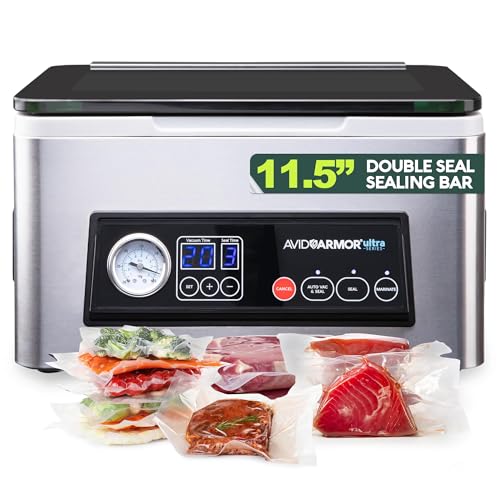
Avid Armor USV20 Chamber Vacuum Sealer
A chamber machine evacuates the whole box rather than sucking through the bag opening, which is the only way to seal soup, brine or a marinating steak without a mess.
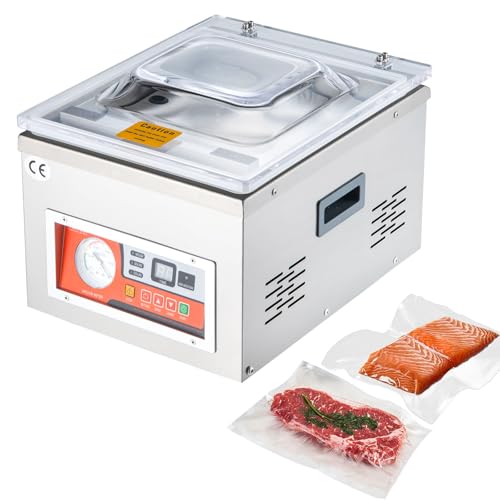
VEVOR Chamber Vacuum Sealer, 10.2 Inch
The cheapest genuine chamber machine worth owning, and the entry point at which sealing liquids stops being a fight.

Gasbye Chamber Vacuum Sealer, 5.3 Quart
Double seal and a replaceable bar. Double sealing matters most on liquids, where a single weld is the thing that fails weeks later in the freezer.
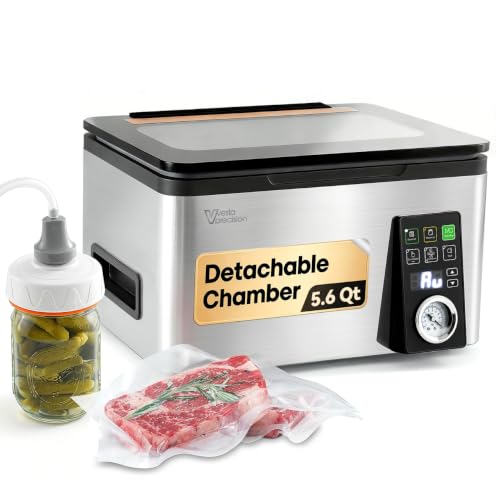
Vesta Precision 12 Inch Chamber Vacuum Sealer
Settable vacuum time rather than a fixed cycle, which is what you want when a delicate item needs a shorter pull than a steak.

Avid Armor Chamber Vacuum Sealer Pouches, 3.5 mil
Chamber bags are smooth and cheaper per bag than embossed film, and they only work in a chamber machine. Mixing the two up is the most common first week mistake.
Prices when last checked. They change often.
Frequently asked questions
Can I run my chamber sealer without ever cleaning it if I only seal dry food?
You can go longer between cleanings, but not indefinitely. Dry sealing still deposits crumbs and dust in the gasket channel and on the seal bar over time, and a gasket with debris trapped in it will not seat properly even if nothing wet ever touched it. Wipe the gasket and bar every few sessions regardless of what you are sealing, and treat any cycle that sealed something moist as an immediate cleaning trigger rather than waiting for a schedule.
My chamber sealer smells like hot oil during a cycle. Is that normal?
A faint warm smell from an oil sealed rotary vane pump during normal operation is typical, since the pump does run warm under load. A strong burning smell, smoke, or a smell that gets worse over successive cycles is not normal and usually means the oil is old, contaminated, or low, which increases friction inside the pump. Check the oil level and condition against the manual before running another cycle.
How do I know if my seal is actually airtight or just looks sealed?
Press gently on the bag after it cools. A properly sealed bag stays rigid and will not deflate further, and the film should be pulled tight against the food with no pocket of air anywhere. A bag that softens, develops a soft spot near the seal line, or shows any film that did not draw down tight against the food likely has a weak weld, usually from residue on the seal bar or liquid that reached the bar during the cycle.
Is it safe to use food grade mineral oil instead of the manufacturer's pump oil?
Only if the manufacturer specifically approves it for that pump. Vacuum pump oil is formulated for viscosity and vapor pressure at the pump's operating temperature, and a substitute with the wrong viscosity can reduce vacuum depth or damage the vanes over time. Check the manual for the specific pump in your machine, such as the one inside the Gasbye chamber sealer, before substituting anything.
Do chamber bags need any special storage to stay usable?
Keep them flat, away from direct sunlight and away from anything sharp that could puncture the film before it is even used. Smooth chamber film such as Avid Armor's chamber pouches has no embossing to protect a fold line the way some embossed rolls do, so a bag creased hard in storage can develop a weak point that shows up as a pinhole leak after sealing.
Does a chamber sealer's vacuum level need to be recalibrated over time?
Most consumer chamber machines set vacuum depth by time rather than by a pressure sensor, so there is nothing to recalibrate in the way a scale needs recalibrating. What changes over time is how deep a vacuum the pump can reach in that fixed time, which is exactly why oil condition and gasket integrity matter: a machine on a fixed thirty second cycle pulls a shallower vacuum with tired oil even though the timer never changed.
Sources
Published figures, quoted as published. We do not generate our own time and temperature data.
How we research: we compare manufacturer specifications, owner manuals, published USDA and FSIS figures and recurring themes in verified owner reviews. We do not cook test batches or run instruments, and nothing here is professional food safety advice. When a figure is not published by a source we trust, we say so rather than estimate one.