Freezer burn and vacuum sealing: what actually causes it
Freezer burn is sublimation plus oxidation: ice migrates from the food to the coldest surface inside the package while any exposed fat oxidizes and turns rancid. Vacuum sealing removes the air that both processes need, which is why sealed cuts commonly last two to three times longer at good quality in the freezer than the same cuts wrapped loosely, but it slows the clock rather than stopping it.
Freezer burn is not the food going bad, it is two separate physical processes running at the same time. Ice inside the food sublimates, meaning it turns straight from solid to vapor without melting first, and that vapor travels to the coldest surface it can find, which is usually the inside of whatever wrapping the food is in. At the same time, any fat left exposed to air oxidizes, which is the chemical reaction that turns freezer burned meat grey and gives it that stale, cardboard taste. A vacuum bag from an external sealer like the FoodSaver addresses both mechanisms at once, because there is far less air left inside the package to carry moisture away or to oxidize fat against. It does not stop either process outright, since a freezer is never a perfect vacuum and ice still moves at the margins, but it slows both dramatically.
What is actually happening inside a freezer burned package?
Sublimation is the key word. Ice inside meat, fish or vegetables does not need to melt to move, it can pass directly from a solid to a gas the same way dry ice does at room temperature, and inside a freezer that gas migrates toward whatever surface is coldest, typically the inner wall of the packaging or an air pocket left in a poorly wrapped bag. Once that ice leaves the food, the spot it left behind is drier, tougher and more porous than the surrounding tissue, which is the grey, leathery patch people call freezer burn. Removing the air around the food with a vacuum sealer removes most of the space that migrating moisture has to travel into, so the ice mostly stays where it started instead of relocating to a headspace pocket.
Why does the fat matter as much as the ice does?
Oxidation is the second half of the problem, and it needs oxygen the same way a fire does. Fat exposed to air in a freezer slowly reacts with the oxygen around it, and that reaction is what produces the stale, slightly rancid taste and the grey discoloration on the surface of freezer burned meat, independent of anything sublimation is doing to the ice. A vacuum bag removes the oxygen the reaction depends on along with removing most of the air that carries moisture, which is why the two problems get solved by the same fix rather than needing two different ones. A cut with more surface fat, like a fatty pork shoulder headed for a sous vide bath later, benefits more from vacuum sealing than a lean cut does, simply because there is more exposed fat for oxygen to react with in the first place.
How much longer does vacuum sealed food actually last in the freezer?
These are commonly published freezer quality windows, not food safety limits: a freezer holds food safely indefinitely at 0 F, and the ranges below describe how long it stays at its best before texture and flavor start to suffer. The multiplier vacuum sealing offers is not a fixed law of physics, it depends on how well a given seal held up and how consistent the freezer's own temperature was, but two to three times longer at good quality is a realistic, commonly cited range across most cuts.
| Food | Loosely wrapped | Vacuum sealed |
|---|---|---|
| Ground meat | 3 to 4 months | 1 to 2 years |
| Steaks and roasts | 6 to 12 months | 2 to 3 years |
| Chicken pieces | 9 months | about 2 years |
| Lean fish | 6 to 8 months | about 2 years |
| Blanched vegetables | 8 to 12 months | 18 to 24 months |
Does vacuum sealing stop freezer burn completely?
No, and it is worth being direct about that. A freezer is never a perfect vacuum, and a bag that traps even a small pocket of air during sealing gives ice somewhere to migrate to, just a much smaller somewhere than an unsealed package offers. A freezer that cycles in temperature, which most home freezers do every time the door opens or the compressor kicks on, still drives some ice movement inside a sealed bag over months, which is why even a well sealed cut of meat looks slightly different after a year than it did the day it went in. Vacuum sealing is a real, substantial extension of freezer life, not a way to stop the clock entirely.
Does vacuum sealing change anything about food safety in the freezer, or just quality?
Just quality, and that distinction matters. A vacuum bag is an anaerobic environment, which is the condition Clostridium botulinum prefers, and while a genuinely frozen freezer at 0 F stops bacterial growth outright, that protection depends on the food staying frozen. Items that get vacuum sealed and refrigerated rather than frozen, including fresh garlic, mushrooms and soft cheese, belong in the refrigerator or freezer specifically because the vacuum removed a natural barrier those foods relied on. Vacuum sealing before freezing is a quality tool; it is not a substitute for actually keeping the food at a safe temperature the whole time it is stored.
Gear that fits these numbers
Everything mentioned on this page
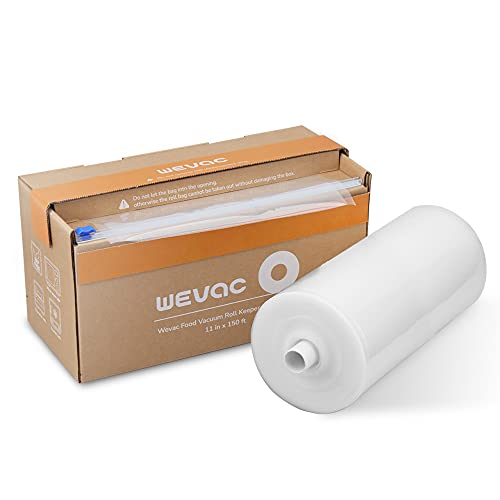
Wevac Vacuum Sealer Roll, 11 by 150 Inch
Buying roll stock by the 150 feet drops the per bag cost enough to change how freely you seal things.

Wevac Pre-Cut Vacuum Sealer Bags, Quart, 200 Count
Pre-cut quart bags are the right default for single portions: cutting from a roll costs you a seal at each end and about four inches of film.

FoodSaver Custom Fit Vacuum Sealer Rolls
The first party roll, worth the premium only if your machine is fussy about bag thickness.

EVERIE 12 Quart Sous Vide Container with Hinged Lid
A lid cut for a circulator is the single upgrade that makes long cooks practical: it stops evaporation, which is what drops the water line and trips a low water alarm at hour nine.
Prices when last checked. They change often.
Frequently asked questions
Can vacuum sealing bring back food that already has freezer burn?
No. Freezer burn is a physical change, moisture has already left the affected area and the fat there has already oxidized, and no amount of vacuum sealing afterward restores what sublimated or reacted away. Vacuum sealing before freezing prevents the problem from starting; it cannot reverse it once a package has already been sitting with air inside it for months. Trim the affected surface and use the rest, or accept the texture change.
Does double bagging help as much as vacuum sealing?
Not nearly as much. Regular bags, even stacked two or three deep, still trap air pockets directly against the food, and that trapped air is exactly what lets ice migrate and fat oxidize. A vacuum bag removes that air rather than just adding layers around it, which is the actual mechanism that slows freezer burn, so a single properly vacuum sealed bag outperforms several layers of ordinary bags around the same cut.
Why does my vacuum sealed bag sometimes get a little cloudy or frosty inside anyway?
A small amount of frost inside an otherwise well sealed bag usually means a tiny pocket of air survived the sealing cycle, often right at a fold in the bag, and that pocket is where migrating moisture is landing. It is a much smaller version of the same problem an unsealed package has, not a sign the seal failed outright. Check that the seal line itself is intact and continuous; if it is, the food underneath is still far better protected than it would be loose.
Is freezer paper or a good freezer bag good enough without a vacuum sealer?
It is better than nothing, since heavier freezer specific plastic does slow moisture loss compared with a thin sandwich bag, but neither removes the air pocket that sublimation and oxidation both depend on. A vacuum sealer's actual advantage is removing that air entirely rather than just wrapping it more tightly, which is the step that produces the two to three times longer quality window compared with any wrap that still leaves air against the food.
Do vacuum sealed bags need to be labeled with a date the same way regular freezer bags do?
Yes, and it matters more, not less, because a well sealed bag can look identical to fresh food for a lot longer than an unsealed one does. Write the contents and the date directly on the bag with a permanent marker before it goes in the freezer, since the whole point of extending quality life is losing the visual cues, like frost and discoloration, that normally remind you how long something has been sitting there.
Does vacuum sealing work the same way for raw meat and cooked leftovers?
The mechanism is identical, air removal slows sublimation and oxidation regardless of whether the food is raw or cooked, but cooked leftovers should be cooled to refrigerator temperature before sealing and freezing rather than sealed while still warm. Sealing hot food traps heat inside an airtight bag, which keeps the food in the 40 F to 140 F danger zone longer than it would take to cool openly, and that is a food safety issue separate from freezer quality.
Sources
Published figures, quoted as published. We do not generate our own time and temperature data.
How we research: we compare manufacturer specifications, owner manuals, published USDA and FSIS figures and recurring themes in verified owner reviews. We do not cook test batches or run instruments, and nothing here is professional food safety advice. When a figure is not published by a source we trust, we say so rather than estimate one.