Cuisinart CSO-300N review: the countertop steam oven most others get compared to
The Cuisinart CSO-300N Convection Steam Oven at $380.99 runs steam, convection, and a combined mode from a refillable water reservoir, and it remains the countertop combi oven most newer models get measured against for bread and roasting.
Cuisinart CSO-300N has been the reference point in home countertop steam ovens long enough that most newer combi ovens on this site get described by how they differ from it. At $380.99, it runs three distinct modes: steam only, convection only, and both together, drawing from a refillable water reservoir rather than a tray you fill by hand each cycle. This review is built from Cuisinart's published specifications and the pattern of feedback in verified owner reviews, not from time spent baking in the unit. It is the right buy for someone who bakes bread often enough to want real oven spring from injected steam, and the wrong buy for someone who mainly wants an air fryer with a steam feature bolted on, where Ninja Combi at $249.95 covers that job for less.
What does a combi mode actually add over a plain convection oven?
Injected steam early in a bake keeps the crust of a loaf soft long enough for the interior to expand fully before the surface sets, which is what produces real oven spring: the visible rise a loaf gets in the first several minutes of baking. A dry convection oven sets the crust almost immediately, capping how much the loaf can still rise. The how combi steam ovens work guide covers the mechanics in more depth, and it applies to this oven directly since Cuisinart CSO-300N injects steam rather than relying on a water tray that evaporates passively.
- Steam only: for reheating, proofing, and vegetables that dry out under dry heat
- Convection only: behaves like a standard countertop convection oven
- Combo: steam and convection running together, the mode that produces real bread crust
What do the published specifications say?
The core specification list is short and functional: three heat modes, a stainless body, and a refillable reservoir rather than a manual water tray that needs topping off mid-cycle.
| Specification | Value |
|---|---|
| Modes | Steam, convection, combo |
| Body | Stainless steel |
| Water system | Refillable reservoir |
| Price | $380.99 |
How does it compare to the Nuwave Combi and the Toshiba steam oven?
Nuwave Combi at $359.99 is the closest direct rival in price and mission, with a 16 quart interior and true injected steam rather than a passive tray, which puts it in the same functional category as the Cuisinart at a slightly lower price. Toshiba steam oven at $319.00 trades some capacity for a compact footprint and adds a dedicated low temperature ferment mode, which the Cuisinart does not have as a named setting. CIARRA steam oven at $239.99 is the budget option of the group, with a larger 25.4 quart interior and a built-in air fry mode, but twelve named modes on a budget unit usually means several of them share the same heating element at a different number rather than genuinely distinct behavior.
| Model | Notable feature | Price |
|---|---|---|
| CIARRA steam oven | 25.4 qt, includes air fry | $239.99 |
| Toshiba steam oven | Compact, dedicated ferment mode | $319.00 |
| Nuwave Combi | 16 qt, injected steam | $359.99 |
| Cuisinart CSO-300N | Steam, convection, combo modes | $380.99 |
What is the refillable reservoir actually like to live with?
A refillable reservoir means filling water once before a session rather than topping off a small tray mid-bake, which matters most on longer combo cycles where a shallow tray can run dry before the bake finishes. It also means the reservoir and the internal steam lines need periodic descaling, since mineral buildup from tap water is the most common cause of reduced steam output in any countertop steam oven over time. The steam oven uses at home guide covers descaling alongside the other everyday uses a combi oven earns its counter space with beyond bread.
Should bread and roasts be finished on time or on temperature?
On temperature for roasts, always: poultry to 165 F, whole muscle cuts to 145 F with a 3 minute rest, and ground meat to 160 F, regardless of which mode produced the heat. Bread is the one category where a probe reading is less useful than visual and tap tests, since a loaf's internal temperature at doneness varies more with recipe than with a fixed safety threshold. The doneness temperature calculator is built for proteins rather than bread for exactly that reason.
So who should actually buy this one?
Buy Cuisinart CSO-300N if bread is a regular project and you want the combi oven that set the standard other countertop steam ovens are still compared against. Choose Nuwave Combi if you want essentially the same category of performance for slightly less money and do not mind a newer, less established brand. Choose Toshiba steam oven if counter space is tight and a dedicated ferment mode matters more than the largest interior. If steam is a nice-to-have rather than the reason you are buying, and air fry is the feature you will actually use daily, Ninja Combi at $249.95 covers that combination for meaningfully less money.
Gear that fits these numbers
Everything mentioned on this page

Nuwave Combi Steam Oven, 16 Quart
Real injected steam rather than a water tray, at the price where combi cooking stops being a professional only technique.

Toshiba 6-in-1 Compact Steam Oven
A dedicated low temperature ferment mode, which is the cheapest reliable proofing box most kitchens can buy.
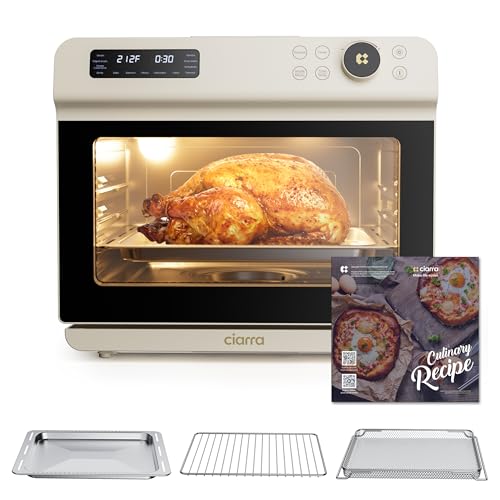
CIARRA 12-in-1 Countertop Steam Oven with Air Fryer
The cheapest way into steam plus convection in one box, with the usual caveat that twelve modes means several of them are the same element at a different number.

Ninja Combi 14-in-1 Multicooker and Air Fryer Oven
Ninja's indoor combi: steam and convection together in a countertop box, and the one Ninja to look at if you want steam rather than another basket fryer.
Prices when last checked. They change often.
Frequently asked questions
How often does the water reservoir need refilling on the CSO-300N?
It depends on the mode and cycle length, but the refillable reservoir is sized to cover a typical single bake or roast without needing a mid-cycle refill, which is the main advantage over a shallow water tray design. Longer combo sessions, such as a multi-loaf bread bake, may need a refill between batches. Checking the reservoir level before starting any cycle over an hour is the safest habit regardless of what the manual's stated capacity suggests.
Does the Cuisinart CSO-300N need regular descaling?
Yes. Mineral buildup from tap water is the leading cause of reduced steam output in any countertop steam oven, and the CSO-300N's internal lines and reservoir are no exception. Using filtered or distilled water slows scale buildup considerably compared to hard tap water, and following the manual's descaling schedule keeps steam output consistent over years of use rather than letting output quietly decline.
What does combo mode actually do differently from just convection?
Combo mode runs steam injection and convection heat at the same time rather than one after the other, which keeps the surface of food, especially bread dough, from setting too early. That delayed crust set is what allows a loaf to expand fully before it firms up, producing the visible oven spring a dry convection bake cannot replicate. Roasts also benefit, since the added humidity slows surface drying during longer cook times.
Is the CSO-300N worth the price over a cheaper steam oven like the CIARRA?
If bread baking or precise combo cooking is the primary use, yes, since the Cuisinart's reputation is built specifically on that performance and it remains the reference point buyers compare newer ovens against. If the appeal is mainly steaming vegetables or reheating leftovers with an occasional bake, the CIARRA at $239.99 covers those uses at a meaningfully lower price, with the tradeoff of less refined steam and convection interaction.
Can the CSO-300N replace a toaster oven entirely?
For most everyday toasting, reheating, and baking tasks, yes, since the convection-only mode functions like a standard toaster oven. It will not match a dedicated toaster's speed for a single slice of bread, since the larger cavity takes longer to heat up for small jobs. Most owners keep it as their primary countertop oven and skip a separate toaster entirely.
How is the CSO-300N different from the Ninja Combi?
The Ninja Combi at $249.95 is built around air frying with steam as a supporting mode, while the Cuisinart is built around steam and convection with air fry not offered at all as a named function. Someone who wants crispy air-fried food most nights and steam occasionally is better served by the Ninja; someone who bakes bread and wants combo steam-convection performance as the main event should buy the Cuisinart instead.
Sources
Published figures, quoted as published. We do not generate our own time and temperature data.
How we research: we compare manufacturer specifications, owner manuals, published USDA and FSIS figures and recurring themes in verified owner reviews. We do not cook test batches or run instruments, and nothing here is professional food safety advice. When a figure is not published by a source we trust, we say so rather than estimate one.