
ThermoWorks
ThermoWorks Thermapen ONE
One second and half a degree. On a page about pasteurization that accuracy is not a luxury, it is the difference between a figure meaning something and not.
The USDA safe minimum internal temperatures are 165 F for all poultry, 160 F for ground meat, 145 F with a 3 minute rest for whole muscle beef, pork, lamb and veal, 145 F for fish, and 160 F for egg dishes. Doneness bands below those figures are texture preferences, not safety statements.
The formula
pull temperature = target temperature - carryover carryover (roasts, dry heat): small cut, thin 2 to 3 F medium roast 5 to 8 F large roast 10 to 15 F carryover in a water bath: none. The food cannot exceed the water.
Carryover exists because the outside of a dry-roasted piece is much hotter than the middle, and that heat keeps moving inward after you take it out. In a water bath nothing is hotter than the target, so there is nothing to carry over, which is why sous vide pull temperatures and oven pull temperatures are different numbers for the same result.
Gear that fits these numbers
Every number here is only as good as the thermometer reading it. A one second, half degree instrument is the difference between two doneness bands being a decision and being luck.
One second and half a degree. On a page about pasteurization that accuracy is not a luxury, it is the difference between a figure meaning something and not.
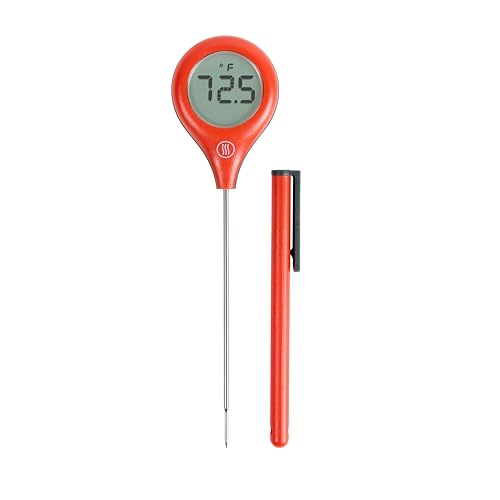
A third of the Thermapen price for most of the useful accuracy. The right pick if you are buying your first real thermometer.

Fully wireless probes with no trailing cable, which is what you want in an air fryer basket or a closed combi oven.

Slim probes leave a smaller hole, which matters more in a vacuum bag than it does in a roast.

Three thin probes and a WiFi hub, so you can leave the house during a long cook and still see the curve.
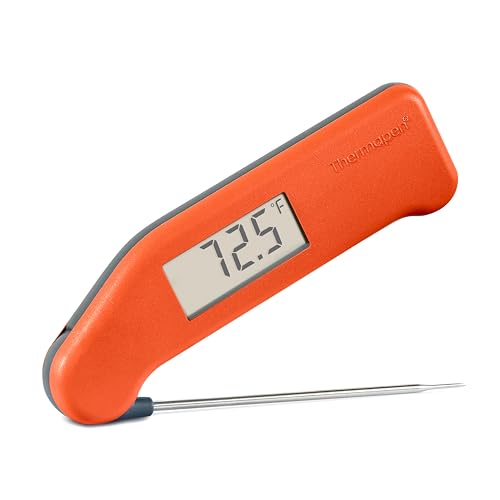
The older Thermapen, slower than the ONE and still more accurate than almost everything else on a kitchen counter.
Prices when last checked. They change often.
Measure at the thickest part, away from bone and away from the pan side. Push the probe through to the far side and draw it back slowly, watching for the lowest reading: that low point is the core, and it is easy to sail straight past it. A thermometer that takes four seconds to settle will read high if you pull it at two, which is most of the case for a fast instrument over a cheap one.
In an oven or a pan, the surface of the food is far hotter than the middle, and when you take it out that stored heat keeps travelling inward. A large roast can climb another twelve degrees on the counter, which is why pull temperature and target temperature are different numbers. In a water bath nothing in the system is hotter than the set point, so there is nothing left to move. Set the bath to the temperature you want and that is where it stops.
Poultry of all kinds is 165 F. Ground beef, pork, lamb and veal are 160 F. Whole muscle beef, pork, lamb and veal are 145 F followed by a three minute rest. Fish and shellfish are 145 F, and egg dishes are 160 F. These are published figures from the Food Safety and Inspection Service, measured at the thickest part.
Grinding moves surface bacteria throughout the meat. On a whole muscle steak, contamination is on the outside and is dealt with by searing, which is why the interior can safely be cooked to a lower temperature. Once ground, there is no longer an inside that was never exposed, so the whole mass needs to reach 160 F.
Roughly two to three degrees on a thin cut, five to eight on a medium roast, and ten to fifteen on a large one. The bigger the piece and the hotter the oven, the more heat is stored in the outer layers waiting to travel inward. In a water bath there is no carryover at all, because nothing in the bath is hotter than the target.
Into the thickest part, angled so the tip sits in the middle rather than passing through into the pan, and away from bone, which conducts heat differently from muscle. Push through past the centre and withdraw slowly while watching the display: the lowest number you see on the way out is the true core reading.
No. The USDA figure for whole muscle pork is 145 F with a three minute rest, and the two parts together deliver lethality equivalent to the older instantaneous 160 F standard. Quoting the temperature without the rest reports half a rule, and the rest is doing real work rather than just letting juices settle.
How this calculator works: it applies the formula above to the numbers you enter. Where a figure is published by the USDA or FSIS we quote it and name the source. Where a figure is derived from a physical model we say so and state the assumptions. Where we have no defensible figure the calculator returns nothing and tells you why, rather than guessing. This is researched general information, not professional food safety advice.