How combi steam ovens work: steam, convection and both together
A combi steam oven injects real steam alongside convection heat, and running steam only, convection only, or both together is what gives baked bread the oven spring a dry home oven cannot produce. Low temperature steam under about 100 F also works as the cheapest reliable proofing box in the kitchen, and it reheats leftovers without drying them the way a microwave or a dry oven does.
A combi steam oven does one thing a conventional oven cannot: it injects actual water vapor into the cooking chamber on demand, rather than relying on whatever moisture happens to be in the food itself. The Cuisinart CSO-300N runs three distinct modes, steam only, convection only, and both together, and that third mode is the one that matters most for bread, because injected steam keeps a loaf's crust soft and stretchy for the first several minutes in the oven, which is exactly the window a dough needs to expand before the surface sets. A tray of water sitting in the bottom of a regular oven cannot do this: it adds a little ambient humidity to the air, but nothing close to the volume of steam a dedicated injection system delivers directly onto the food.
What is different between injected steam and a pan of water in a regular oven?
Volume and delivery. A combi oven like the Nuwave Combi generates steam from a water reservoir and pumps it directly into the cooking chamber in a controlled, repeatable amount, which is why the same recipe produces the same result each time. A pan of water sitting on the bottom rack of a conventional oven only releases steam passively, as fast as the water happens to evaporate at whatever temperature the oven runs, and a conventional oven's door seal and vents are not built to hold that humidity in the chamber anyway. The two methods are often described the same way in casual conversation, but they are not close to the same amount of moisture reaching the food, and a water tray is not a substitute for a genuine combi function.
| Mode | What it does | Typical use |
|---|---|---|
| Steam only | Injects steam with no dry heat | Vegetables, fish, reheating, gentle proofing |
| Convection only | Fan assisted dry heat, like a standard convection oven | Roasting, browning, crisping |
| Steam plus convection | Both running together | Bread, whole roasts, anything that needs a moist interior and a browned exterior |
How do steam only, convection only, and combination mode each get used?
Steam only mode behaves like a countertop steamer built into the oven, gentle and moist with no browning at all, which is why it suits delicate fish or a tray of vegetables that would dry out under a fan. Convection only mode is a normal fan oven, dry heat circulated for even browning and crisping, the mode the Breville Combi Wave runs when it is standing in for a regular countertop oven. Combining the two is where a combi oven earns the extra cost: steam keeps the interior of a roast or a loaf from drying out while convection still browns the outside, a combination a single heat source cannot deliver on its own.
How does steam actually create bread oven spring?
By delaying the moment the crust sets. Bread dough keeps expanding in the oven for the first several minutes as trapped gas heats and grows, a stretch called oven spring, and that expansion only happens while the surface of the loaf is still soft enough to stretch. A dry oven starts firming that surface into a crust almost immediately, which caps how much the loaf can still grow. Injected steam from a combi oven like the Cuisinart CSO-300N keeps the crust soft and pliable for longer, buying the dough more time to expand before the surface locks in place, and it also condenses briefly on the surface of the loaf, which is what produces the glossy, blistered crust associated with steam baked bread.
Can a combi oven double as a proofing box?
Yes, and it is one of the more underused features on most of these machines. A warm, humid environment somewhere around 80 F to 100 F is close to ideal for proofing yeasted dough, and a combi oven's steam only mode at a low temperature setting delivers exactly that: gentle warmth plus real humidity, without drying the surface of the dough the way a dry oven's residual heat would. The Toshiba 6-in-1 compact steam oven builds this in directly with a dedicated ferment mode rather than making you improvise a low temperature steam setting, which is the cheapest reliable proofing box most kitchens have access to once the oven is already on the counter for other jobs.
Does steam reheating actually work better than a microwave?
For most leftovers, yes, and the reason comes back to moisture. A microwave heats water molecules directly, which drives moisture toward the surface and out of the food as steam escapes into the microwave's own dry air, leaving reheated food noticeably drier than it started. A combi oven's steam mode reheats by surrounding the food with moisture instead of pulling it out, so rice, pasta, roasted meat and pizza crust all come back closer to their original texture. The Tovala Smart Oven Pro and similar combi machines are built around this exact use case, treating reheating as steam's everyday job rather than an occasional trick.
Gear that fits these numbers
Everything mentioned on this page

Nuwave Combi Steam Oven, 16 Quart
Real injected steam rather than a water tray, at the price where combi cooking stops being a professional only technique.

Toshiba 6-in-1 Compact Steam Oven
A dedicated low temperature ferment mode, which is the cheapest reliable proofing box most kitchens can buy.
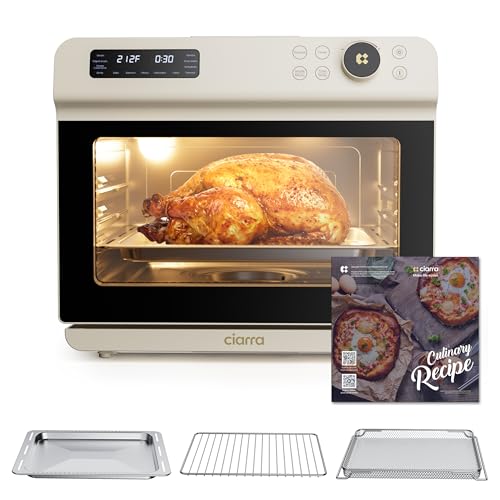
CIARRA 12-in-1 Countertop Steam Oven with Air Fryer
The cheapest way into steam plus convection in one box, with the usual caveat that twelve modes means several of them are the same element at a different number.

Tovala Smart Oven Pro
Steam and convection in a small footprint. The meal kit scanning is optional and the oven works as a normal combi without it.

Breville Combi Wave 3-in-1
One box replacing a microwave, an air fryer and a countertop oven, which is the case for it in a kitchen that has run out of counter.

Ninja Combi 14-in-1 Multicooker and Air Fryer Oven
Ninja's indoor combi: steam and convection together in a countertop box, and the one Ninja to look at if you want steam rather than another basket fryer.
Prices when last checked. They change often.
Frequently asked questions
Do I need to refill the water reservoir before every single cook?
Only for cycles that use steam, and most combi ovens track remaining water and warn you before it runs dry mid cycle. A convection only roast uses no water at all, so the reservoir only matters for steam and combination modes. Most reservoirs on countertop combi machines hold enough for a single steam heavy session, so checking the level before starting a bread bake is worth the ten seconds it takes.
Does steam mode make the oven harder to clean?
Generally the opposite. Steam loosens baked on residue and grease inside the cavity, which is why several combi ovens, including options built around the CIARRA 12-in-1 countertop steam oven, include a dedicated steam cleaning cycle that runs the injector specifically to soften buildup before you wipe it out. The water reservoir itself needs regular rinsing to avoid mineral scale, which is the one extra maintenance step a conventional oven does not have.
Can I bake a cake in steam plus convection mode?
Most bakers use convection only for cakes, since a cake relies on a dry heat setting the batter's structure through evaporation at the edges, and too much ambient moisture can leave a gummy crumb. Steam is far more valuable for bread, where a moist crust extends oven spring, and for proteins and vegetables where drying out is the risk rather than the goal. Check the specific recipe rather than assuming steam helps every baked good equally.
Is a combi steam oven the same thing as an air fryer with a water tank?
No. An air fryer moves hot air fast over food to crisp the surface and generally has no way to inject actual water vapor into that airflow. A combi oven's steam system is a separate function, generating and pumping steam into the chamber independent of the convection fan, which is why machines like the Ninja Combi list steam and air fry as genuinely different modes rather than variations of the same heating method.
Does injected steam raise humidity enough to slow crisping on purpose?
Yes, which is exactly why steam only and convection only exist as separate modes rather than one blended setting. Running steam during a cook that wants a crisp surface, like roasted vegetables or crispy skin poultry, actively works against browning, since the surface needs to be dry for a Maillard reaction to happen. Save steam for the interior moisture jobs and switch to convection only when crisping matters more.
How hot does the injected steam actually get?
It depends on the mode. Low temperature steam used for proofing or gentle reheating typically runs well under the boiling point of water, closer to 100 F to 160 F, while steam used alongside high heat convection for bread or roasts operates at or near 212 F, the boiling point of water at normal atmospheric pressure inside the cooking chamber. The oven's control panel sets which range a given mode uses, and the difference between the two is the entire reason steam only and combination modes exist separately.
Sources
Published figures, quoted as published. We do not generate our own time and temperature data.
How we research: we compare manufacturer specifications, owner manuals, published USDA and FSIS figures and recurring themes in verified owner reviews. We do not cook test batches or run instruments, and nothing here is professional food safety advice. When a figure is not published by a source we trust, we say so rather than estimate one.