Anova Precision Cooker 3.0 review: is 1100 watts and WiFi worth $169.00
The Anova Precision Cooker 3.0 is a 1100 watt WiFi immersion circulator priced at $169.00, and that wattage is enough to bring a 12 quart bath up to temperature and hold it through an overnight cook without straining.
The Anova Precision Cooker 3.0 costs $169.00 and sits in the middle of Anova's own lineup: more powerful and more connected than the $68.00 Anova Nano, and a fraction of the price of the continuous-duty Anova Pro at $268.00. It is built for someone who cooks sous vide most weeks rather than occasionally, wants to start a bath from a phone before leaving for work, and needs enough wattage to recover quickly after dropping in a cold roast. We have not tested this unit in person; the specifications, control behavior and clamp design below come from Anova's published listing and the manual, cross-checked against patterns that show up repeatedly in owner reviews.
What does $169.00 actually buy on this circulator?
The core numbers are straightforward: a 1100 watt heating element, WiFi plus app control rather than the Bluetooth-only pairing on cheaper circulators, and a stainless steel body rated for the splashing a clamped unit takes over months of use. Anova's own line uses this model as the default full size circulator, positioned above the Nano on power and below the Pro on duty cycle. At $169.00 it is priced closer to the Nano than the Pro.
| Specification | Value |
|---|---|
| Power | 1100 W |
| Control | WiFi and app |
| Build | Stainless steel |
| Typical bath size | Up to 12 qt |
| Price | $169.00 |
Is 1100 watts enough to run a 12 quart bath overnight?
Wattage matters at two different moments in a cook, not one. The first is come-up time: how fast the circulator brings a cold bath, plus whatever cold food just went into it, up to the target temperature. The second is holding: how much power the element needs to replace heat lost to the container walls and the surrounding room once the bath is already at temperature. A 1100 watt element has enough margin for both jobs in a 12 quart container, which is roughly what a household cooking for two to four people needs for a full dinner including a couple of side vegetables in separate bags. Pairing the circulator with a fitted lid, such as the properly sized bag for the cut going in and a container built for the clamp, does more to protect that margin than any wattage number on its own, because evaporation is what forces the element to work overtime on a long cook. For a cut-specific estimate of how long a given thickness takes to reach bath temperature, the sous vide time calculator runs the same conduction math this site uses everywhere else.
- 1100 W recovers a 12 qt bath after a cold roast faster than the Nano's 750 W element
- An insulating sleeve or a hinged lid reduces the cycling that eats into that margin on cooks longer than four hours
- Vegetables that need 183 F or higher for pectin breakdown pull more sustained wattage than a 131 F steak bath
What is the real difference between this and the cheaper Anova Nano?
The gap is not cosmetic. The Anova Nano runs 750 watts against 1100 here, connects over Bluetooth rather than WiFi, and is rated for baths up to 8 quarts rather than the roughly 12 quart range the 3.0 comfortably handles. Bluetooth means the phone controlling the Nano has to stay within roughly the range of a home WiFi router's single room, since Bluetooth does not relay through a home network the way WiFi does. That is fine for someone in the kitchen or the next room and a real limitation for someone who wants to check a cook from work. Buy the Anova Nano instead if the goal is finding out whether sous vide cooking fits your kitchen at all before spending more, or if the household rarely cooks bath volumes above two or three portions at a time. The $101.00 difference in price buys wattage headroom and remote control, and neither of those matters if the answer to the first question turns out to be no.
What does the clamp actually fit, and what does not work?
The clamp on the 3.0 is designed for a straight-walled pot or a dedicated container with a flat vertical side, since the mechanism tightens against that wall to hold the circulator upright and stable while the pump runs. A stockpot with sloped or curved sides, common on cheaper cookware, can leave the clamp loose enough that the circulator tips during a long cook, which is a recurring complaint in owner reviews that traces back to container choice rather than a defect in the clamp itself. A dedicated container such as the EVERIE 12 quart container is built with straight walls specifically for this kind of clamp, and it is the more reliable fix than trying to wedge a stockpot's sloped sides into a tight enough grip. Depth matters too: the element needs enough clearance below the clamp to stay fully submerged even as water evaporates over a multi-hour cook, so a shallow pot forces more frequent topping off than a properly sized container does.
When should you buy the Pro or the Joule Turbo instead?
The Anova Precision Cooker Pro costs $268.00 and is rated for continuous duty rather than occasional dinners, which is the actual difference from the 3.0: it is built to run every day, including 48 hour cooks, without the element or motor being pushed past what it was designed to sustain long-term. Buy the Pro instead if sous vide is a daily habit rather than a weekend one, or if the baths regularly run past 24 hours. The Breville Joule Turbo is the other alternative worth naming, at $237.07 for the same 1100 watt output in a smaller body with no display of any kind: every setting is entered through the app. Buy the Joule Turbo instead if counter and drawer space is the binding constraint and you are comfortable never touching a physical control on the device itself. Neither alternative beats the 3.0 on price, so the decision to spend more only makes sense if continuous duty or size is the actual problem being solved.
Does WiFi control change anything about food safety?
Not the underlying rule, no. A sous vide temperature is only safe when it is paired with a minimum hold time long enough to pasteurize the food at that temperature, and those figures come from the USDA FSIS Appendix A lethality tables, which this page does not reproduce. WiFi control on the 3.0 makes it easier to confirm a bath actually reached its set point before the clock on that hold time starts, since the app shows the live reading rather than requiring a walk to the kitchen. It does not shorten the hold time itself, and a circulator with a WiFi connection that drops mid-cook is no different from a circulator with no connection at all: the bath keeps running on its own controller regardless of whether a phone is watching it. The published safety guidance is covered in more depth in the pasteurization guide and the safety rules guide.
Who should actually buy the Anova Precision Cooker 3.0?
Anyone already sure sous vide is a regular part of how they cook, who wants enough wattage margin for a full dinner in a 12 quart bath and the option to start or monitor that cook remotely. Pair it with the EVERIE 12 quart container kit for the lid, rack and insulating sleeve that protect the wattage margin discussed above, and a Thermapen ONE to confirm doneness on the way out of the bag rather than trusting the set point alone. For sealing the food that goes in, the Anova Precision Vacuum Sealer Pro handles both dry cuts and lightly marinated ones with its wet mode, without the cost of a full chamber machine that only pays off once liquids become a regular part of the job.
Gear that fits these numbers
Everything mentioned on this page

Anova Precision Cooker Nano 2.0
The cheapest way to find out whether you actually like sous vide. Slower to come up to temperature, and it holds a set point just as well once it gets there.
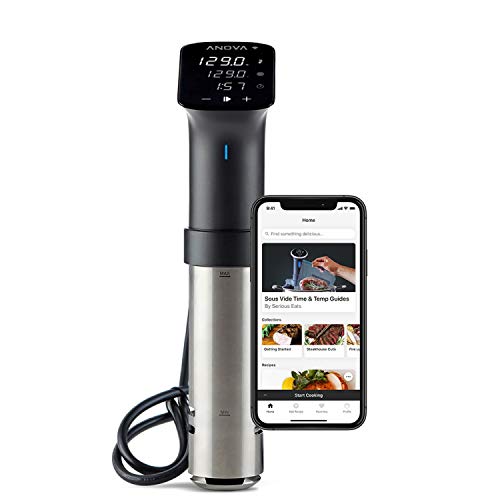
Anova Precision Cooker Pro
Rated for continuous running rather than occasional dinners, which is what separates it from the consumer models when you cook 48 hour briskets or run a bath every day.
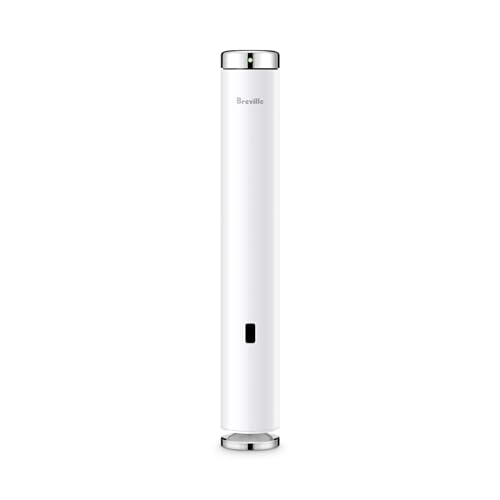
Breville Joule Turbo Sous Vide
Small enough to live in a drawer and strong enough for a full bath, with the tradeoff that there is no display on the device: the phone is the interface.

EVERIE 12 Quart Sous Vide Container with Hinged Lid
A lid cut for a circulator is the single upgrade that makes long cooks practical: it stops evaporation, which is what drops the water line and trips a low water alarm at hour nine.

EVERIE 12 Quart Sous Vide Container Kit
Container, hinged lid, divider rack and insulating sleeve together. The sleeve matters more than it sounds: less heat leaving the walls means the element cycles less and holds tighter.

ThermoWorks Thermapen ONE
One second and half a degree. On a page about pasteurization that accuracy is not a luxury, it is the difference between a figure meaning something and not.

Anova Precision Vacuum Sealer Pro
A wet mode that pulls a shorter, gentler vacuum is what lets an external sealer handle a marinated steak without sucking liquid into the pump.
Prices when last checked. They change often.
Frequently asked questions
Does the Anova Precision Cooker 3.0 need WiFi to run a cook?
No. The circulator has its own onboard controller and can be set and started using the buttons on the device itself, with no phone or network required. WiFi and the app add remote starting, remote monitoring, and notifications when the bath reaches temperature, but none of that is required for the unit to heat water and hold a set point on its own.
What size container does the Anova 3.0 actually need?
Anova markets the 3.0 around a 12 quart bath, which comfortably fits a full dinner's worth of bagged food plus room for water circulation. A smaller stockpot works for one or two portions, but crowding bags together blocks circulation and creates uneven cooking, which is the more common complaint in owner reviews than any limitation of the circulator's own power.
Is 1100 watts overkill for a household of two?
Not really, because wattage mostly affects how fast the bath recovers after cold food goes in, not how much food fits. A smaller circulator like the Nano works fine for two portions, but the 3.0's extra headroom means less waiting for the bath to come back up to temperature and less strain during longer holds, which matters even at small batch sizes on a busy weeknight.
How does the Anova 3.0 compare on price to the Anova Nano?
The 3.0 costs $169.00 against $68.00 for the Nano, a $101.00 gap that buys 1100 watts instead of 750, WiFi instead of Bluetooth-only control, and a larger practical bath size of roughly 12 quarts instead of 8. The Nano is the better buy for someone testing whether sous vide fits their routine before committing more money.
Does the Anova 3.0 include a container or bags?
No. The circulator ships as a standalone unit that clamps to the side of an existing pot or stockpot. A dedicated container, lid, rack and vacuum sealer bags are separate purchases, and skipping the lid in particular is the most common reason owners report water loss and uneven temperatures on cooks longer than a few hours.
Is the temperature accurate enough to trust for pasteurizing chicken breast?
The published specifications position this as a precision circulator built to hold a set temperature tightly, which is the entire premise of sous vide cooking. Trusting any specific hold time still means following the USDA FSIS Appendix A lethality tables for the chosen temperature rather than a rule of thumb, since pasteurization is a function of time and temperature together, not temperature alone.
Will the clamp on the Anova 3.0 fit a standard stockpot?
It fits most stockpots with straight vertical walls, but pots with sloped or rounded sides can leave the clamp too loose to hold the circulator steady through a long cook. A dedicated sous vide container with flat sides, such as the EVERIE 12 quart container, gives the clamp a more reliable grip than most general-purpose stockpots and reduces the chance of the unit shifting during an overnight bath.
Sources
Published figures, quoted as published. We do not generate our own time and temperature data.
How we research: we compare manufacturer specifications, owner manuals, published USDA and FSIS figures and recurring themes in verified owner reviews. We do not cook test batches or run instruments, and nothing here is professional food safety advice. When a figure is not published by a source we trust, we say so rather than estimate one.