Probe placement guide: where to actually put a thermometer
Insert the probe at the thickest part of the food, away from bone and away from the pan or bag wall, then push it through past the center and withdraw slowly while watching the display: the lowest number it shows on the way out is the actual core temperature. In dry heat, expect roughly 2 to 3 F of carryover on a thin cut, 5 to 8 F on a medium roast, and 10 to 15 F on a large roast, so pull the food before the number you are aiming for.
Most bad thermometer readings are not the thermometer's fault. They come from probing the wrong spot, reading a number before it settles, or forgetting that food kept cooking after it left the heat. The technique is the same whether the display is on a Thermapen ONE or a fifteen dollar dial: find the thickest part, avoid bone and the pan side, push the probe through the center and pull it back out slowly, and trust the lowest number, not the first one. Get that part right and the rest of this page is just detail.
Where should the probe actually go?
Aim for the thickest part of whatever you are cooking, and stay away from two things: bone and the pan or bag wall. Bone conducts heat differently from muscle, usually faster along its length, so a probe resting against or near a bone reads a temperature that belongs to the bone, not the meat around it. A reading taken too close to a hot pan surface, a bag wall touching the side of a sous vide container, or the metal of a baking sheet picks up heat from that surface rather than from the food itself, and it will read higher than the actual center. The thickest point of the cut is the last place to reach temperature, which is exactly why it is the only point worth trusting: everywhere thinner is already there or past it.
- Thickest part of the cut, measured through the middle rather than at an angle
- At least half an inch clear of any bone
- Away from direct contact with a pan, rack, or bag wall
- For a roast or a whole bird, that usually means the inner thigh or the deepest part of the breast, not the surface closest to the oven rack
Why do I get a different number every time I move the probe?
Because most of what a probe touches on the way in is not the coolest point. Push the probe all the way through the food, past the center, and then withdraw it slowly while watching the display the whole way. Somewhere on the way out, the number will drop to a low point and then start climbing again as the tip nears the surface: that low point is the true core temperature, and it is easy to sail right past it if you pull the probe out in one motion and only glance at the display once. A single quick jab that stops moving the instant a number appears is the single most common way people get an inaccurate reading, because that first number is rarely the lowest one the food will show.
- Push through past the center, do not stop at the first resistance
- Withdraw slowly, watching the display continuously rather than checking once
- The lowest number on the way out is the core: if the display starts climbing again, you have already passed it
- Repeat at a second spot near the thickest part if the food is irregular, and trust whichever spot reads lower
Does a slow thermometer actually give a wrong number?
Yes, and this is where equipment choice stops being a preference. A thermometer that takes four seconds to settle on its final reading will show a number that is still moving if you read it at two seconds, and that number reads high on the way down to a lower core temperature because the sensor has not caught up yet. The Thermapen ONE settles in about a second, the ThermoPop 2 takes two to three seconds, and the Classic Thermapen takes about three. All three are accurate once they settle; the difference is how long you have to hold still and wait before the number on the display can be trusted, which matters most during the withdraw-and-watch technique above, where a slow probe makes it much harder to catch the true low point before you have already moved past it.
| Thermometer | Settle time | Rated accuracy |
|---|---|---|
| Thermapen ONE | About 1 second | Plus or minus 0.5 F |
| ThermoPop 2 | 2 to 3 seconds | Plus or minus 0.9 F |
| Classic Thermapen | About 3 seconds | Plus or minus 0.7 F |
What is carryover cooking, and does it happen in a water bath?
Carryover is the temperature rise that keeps happening after food leaves the heat, because the outer layers are hotter than the core and heat keeps moving inward until everything equalizes. In a water bath there is no carryover at all: nothing in a sous vide setup like the Anova 3.0 is ever hotter than the target temperature, so once the core reaches that number there is nowhere for extra heat to come from. Dry heat is different, because the surface of a roast or a seared steak sits well above the target the entire time it cooks, and that stored heat keeps migrating inward for several minutes after the food comes out.
| Cut size | Expected carryover |
|---|---|
| Thin cut (a chop, a steak under an inch) | 2 to 3 F |
| Medium roast (a chicken, a small roast) | 5 to 8 F |
| Large roast (a turkey, a large prime rib) | 10 to 15 F |
Wired or wireless: which probe fits how you actually cook?
A single instant read thermometer answers the question once, at the moment you check it, which is exactly right for the withdraw-and-watch technique above. A wireless probe left in the food the whole time answers a different question: it tracks the climb continuously so you are not opening an oven or a combi door every few minutes to spot check. The MEATER Pro Duo runs fully wireless with no cable at all, which matters inside a closed air fryer basket or oven where a wire has nowhere to go. The Typhur Sync and its four probe version use slim probes on a cable back to a base, which leaves a smaller hole in a vacuum bag than a thick instant read probe would, and the CHEF iQ Sense pairs three thin probes to a WiFi hub so you can watch the climb from another room. None of these replace the placement rule at the top of this page: a wireless probe stuck too close to bone or the pan wall is just as wrong as a wireless one.
Gear that fits these numbers
Everything mentioned on this page
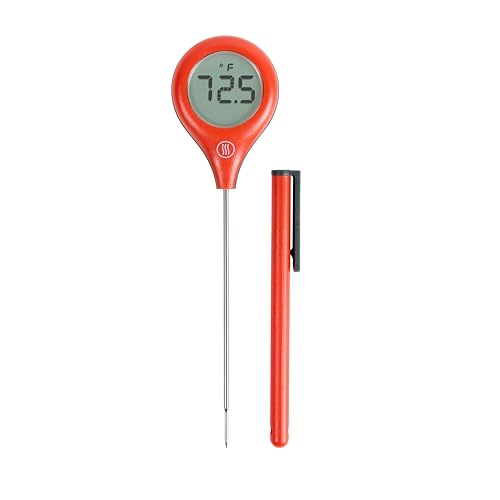
ThermoWorks ThermoPop 2
A third of the Thermapen price for most of the useful accuracy. The right pick if you are buying your first real thermometer.
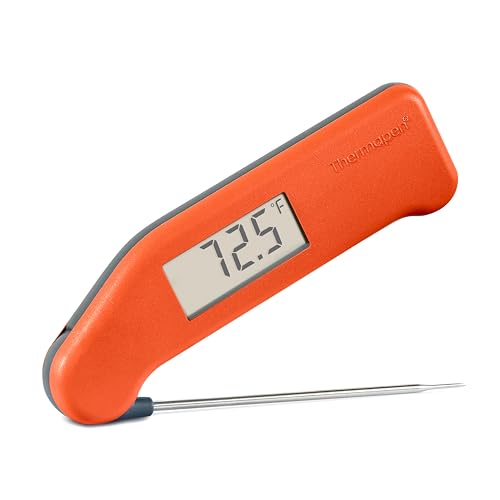
ThermoWorks Classic Thermapen
The older Thermapen, slower than the ONE and still more accurate than almost everything else on a kitchen counter.

MEATER Pro Duo Wireless Thermometer
Fully wireless probes with no trailing cable, which is what you want in an air fryer basket or a closed combi oven.

Typhur Sync Gold Wireless Thermometer, 2 Probes
Slim probes leave a smaller hole, which matters more in a vacuum bag than it does in a roast.

Typhur Sync Gold Wireless Thermometer, 4 Probes
Four probes means you can watch several cuts in one bath and see the slowest one, which is the one that decides when the cook is safe.

CHEF iQ Sense Smart Wireless Thermometer, 3 Probes
Three thin probes and a WiFi hub, so you can leave the house during a long cook and still see the curve.

Anova Precision Cooker 3.0
The default full size circulator: enough wattage to bring a 12 quart bath up quickly and hold it, with app control for long overnight cooks.
Prices when last checked. They change often.
Frequently asked questions
Why does my probe read lower near the bone on a bone-in cut?
Bone conducts heat differently from surrounding muscle, and in most home cooking it heats and cools faster along its length than meat does, so a probe resting against bone can read either higher or lower than the meat around it depending on the cook. Either way it is not measuring the muscle you actually care about. Keep the tip at least half an inch clear of any bone and take the reading from the thickest part of the meat itself.
Should I trust the first number that appears on the display?
Not automatically. A probe reading depends on both the sensor settling and where exactly the tip sits, and the first number often appears before either condition is fully met. Push the probe through past the center and withdraw it slowly while watching the display continuously, and trust the lowest number it shows rather than the first one that pops up. This matters more on a slower thermometer that takes several seconds to settle.
Does carryover happen during sous vide cooking?
No. A sous vide bath holds the water at the target temperature the entire cook, so nothing surrounding the food is ever hotter than that target, and there is no stored heat left to migrate inward once the food comes out of the bag. Carryover is specifically a dry heat phenomenon, caused by a hot oven or pan surface that sits well above the target the whole time it cooks.
How much earlier should I pull a large roast from the oven?
Expect roughly 10 to 15 F of carryover on a large roast such as a whole turkey or a big prime rib, meaning the core will keep climbing that much after it comes out of the oven. Pull it that far below your final target temperature and let it rest, then confirm with a probe at the thickest part before serving. A thin cut carries over far less, typically only 2 to 3 F.
Is a cheap thermometer good enough if I probe correctly?
Good technique matters more than the price of the thermometer, but a slow or inaccurate one still limits how much that technique can help. A thermometer that takes four seconds to settle will show a moving number if read at two seconds, and that number reads high compared to where it is actually headed. A budget thermometer with a genuine one to three second settle time and a stated accuracy figure is enough; the technique on this page is what actually fixes most bad readings.
Can a wireless probe left in the oven the whole time replace spot checking?
It replaces the need to open the door repeatedly, since a wireless probe tracks the climb continuously and sends it to a phone or base display. It does not replace correct placement: a wireless probe pushed too close to bone or resting against a pan wall reads just as wrong as an instant read thermometer would in the same spot. Place it at the thickest part, away from bone and the pan, the same as any other probe.
Sources
Published figures, quoted as published. We do not generate our own time and temperature data.
How we research: we compare manufacturer specifications, owner manuals, published USDA and FSIS figures and recurring themes in verified owner reviews. We do not cook test batches or run instruments, and nothing here is professional food safety advice. When a figure is not published by a source we trust, we say so rather than estimate one.