Jerky safety and temperature: why drying alone is not enough
Drying alone does not make meat safe to eat. The meat needs to reach its safe minimum internal temperature, 160 F for beef and 165 F for poultry, either before or after drying, and a dehydrator's air temperature reaching that number does not guarantee the meat inside actually got there, which is why a probe thermometer check is part of the process rather than optional.
This is the one sentence on this page that matters more than every other one combined: drying alone does not make meat safe. A dehydrator removes moisture, and removing moisture is not the same thing as killing pathogens. The published guidance is to bring meat to its safe minimum internal temperature, 160 F for beef and 165 F for poultry, either before drying begins or after it finishes, verified with a probe thermometer like the Thermapen ONE rather than assumed from the dehydrator's dial. A machine whose air reaches 160 F does not guarantee that a specific strip of meat inside it ever reached 160 F at its own core; those are two different numbers measured two different ways.
Does drying meat in a dehydrator make it safe to eat?
No. This is worth stating plainly because it runs against a common assumption: drying removes water, and removing water slows or stops the growth of many organisms over time, but it does not kill the pathogens that may already be present on raw meat before it goes into the machine. Making jerky safe requires a separate step, heating the meat to its safe minimum internal temperature, and that step has to actually happen, either before the meat goes into the dehydrator or after it comes out, rather than being assumed to happen automatically as a side effect of drying.
What is the actual safe temperature for jerky, and when do I need to hit it?
The published guidance for meat and poultry jerky is to bring the meat to its safe minimum internal temperature, 160 F for beef and 165 F for poultry, at some point in the process, either before drying or after it. This differs from the numbers used for a whole steak or a roast, where whole muscle beef reaches its safe minimum at a lower 145 F with a three minute rest: jerky is sliced thin and dried rather than cooked and rested the way a roast is, so the published jerky guidance calls for the higher ground-meat-equivalent temperature instead. Reaching it once, by either path, satisfies the requirement; there is no extra hold time on top of it once the strip is at temperature.
| Protein | Safe minimum internal temperature |
|---|---|
| Beef, pork, and other red meat jerky | 160 F |
| Poultry jerky | 165 F |
Can I just trust the dehydrator's temperature dial to get the meat there?
No, and this is the specific mistake this page exists to correct. A dehydrator's dial or display shows the temperature of the air moving through the machine, not the internal temperature of a specific strip of meat sitting on a tray inside it. Air at 160 F does not instantly bring a piece of meat to 160 F; how fast the meat itself gets there depends on strip thickness, how much airflow reaches it, and how long it sits in that air. The only way to know a given strip actually reached temperature is to check it directly with a probe thermometer such as the ThermoPop 2 or the Thermapen ONE, inserted into the thickest part of the thickest strip in the batch, since that strip is the one most likely to still be short of temperature when thinner strips around it have already gotten there.
Should I heat the meat before drying or after drying?
Both are published approaches, and the choice mostly comes down to which fits your equipment and your process better. Heating before drying means bringing sliced or ground meat to temperature in a pan, an oven, or a pot of simmering marinade before it ever goes on the dehydrator tray, so the meat is already safe and drying is purely about moisture removal from that point forward. Heating after drying means running the dehydrator first and then finishing the dried strips in an oven hot enough to bring their core to temperature, which some dehydrator manuals also describe as a post-dry heat treatment step. Either order works as long as the temperature is actually verified with a probe at the end, since skipping verification is what turns either method into a guess rather than a safe process.
Does marinating meat before drying change any of this?
Marinating does not replace the temperature step, and it introduces its own timing consideration: raw meat sitting in marinade needs to stay out of the danger zone, 40 F to 140 F, for no more than two hours total before it is either cooked or refrigerated, the same published limit that applies to any raw meat sitting at room temperature. Marinate in the refrigerator rather than on the counter, and treat the marinating time as separate from, and in addition to, the temperature step the meat still needs to reach before or after drying.
What about smoked jerky made in a smoker instead of an indoor dehydrator?
This page covers indoor drying with a dehydrator such as the Excalibur Select Series, the Cosori 6 tray, or the smaller Cosori 5 tray, and an oven finish where needed. Smoked jerky made in an actual smoker is a different process with its own airflow, temperature curve, and timing considerations, and that guidance lives on SmokerCalc rather than here. The core safety principle carries over regardless of the equipment: the meat still needs to reach its safe minimum internal temperature at some point, verified with a probe, whether the heat source is a dehydrator, an oven, or a smoker.
Gear that fits these numbers
Everything mentioned on this page
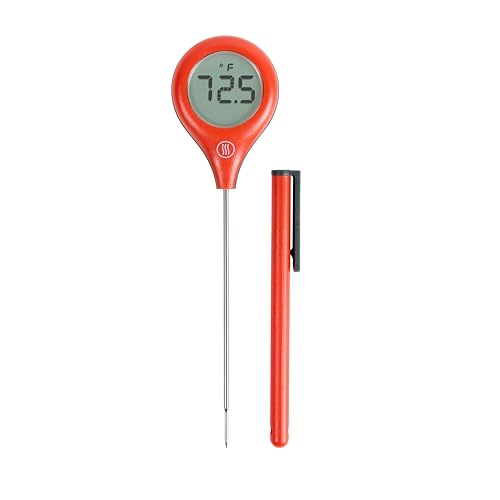
ThermoWorks ThermoPop 2
A third of the Thermapen price for most of the useful accuracy. The right pick if you are buying your first real thermometer.

Excalibur Select Series Food Dehydrator
The cheaper Excalibur, with the same horizontal airflow that makes the brand worth the premium in the first place.

Cosori Food Dehydrator, 6 Stainless Trays
A rear mounted fan dries every tray at the same rate, which is why you do not have to rotate trays the way stacked round dehydrators demand.
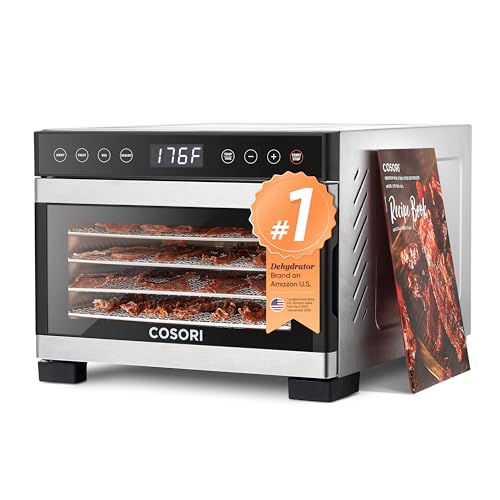
Cosori Food Dehydrator, 5 Stainless Trays
The small one, and still stainless trays rather than plastic, which matters at the 160 F jerky temperature.
Prices when last checked. They change often.
Frequently asked questions
Is dehydrator air temperature the same thing as the meat's internal temperature?
No, and confusing the two is the most common jerky safety mistake. Air temperature describes the environment moving through the machine, while internal temperature describes the actual core of a specific strip of meat, and the two do not automatically match just because the dial is set to a given number. Strip thickness, airflow, and time all affect how quickly a piece of meat catches up to the air temperature around it, so the only reliable way to know the meat got there is to check it directly with a probe thermometer.
Can I make jerky safely in a regular oven instead of a dedicated dehydrator?
Yes. An oven can both dry meat and bring it to its safe minimum internal temperature, since most home ovens can hold a temperature well above the 160 F or 165 F target needed. The same rule still applies regardless of which appliance does the drying: the meat needs to actually reach its safe minimum internal temperature, verified with a probe at the thickest strip, rather than assumed from the oven's set temperature.
Does store-bought pre-sliced meat for jerky still need this temperature step?
Yes, the source of the meat does not change the requirement. Raw beef or poultry, however it was sliced or by whom, still needs to reach its safe minimum internal temperature, 160 F for beef or 165 F for poultry, at some point before it is eaten as jerky. Pre-sliced convenience only saves the cutting step; it does not substitute for the heat treatment.
Is poultry jerky handled any differently from beef jerky?
The process is the same, but the target temperature is higher: 165 F for poultry compared to 160 F for beef. Poultry carries its own specific pathogen concerns that justify the higher published safe minimum internal temperature across every form of poultry, not just jerky, and there is no lower target for poultry regardless of how it is prepared or dried.
If I smoke jerky in a smoker, do the temperature rules still apply?
Yes, the underlying requirement that meat reach its safe minimum internal temperature does not change based on the heat source. Smokers introduce their own airflow and temperature behavior that a dehydrator does not have, and detailed smoker-specific guidance is covered separately on SmokerCalc rather than here, but the core rule carries over: verify the meat actually reached temperature with a probe rather than assuming the smoker got it there.
Is it safe to marinate meat overnight in the refrigerator before drying it into jerky?
Yes, refrigerated marinating is safe and common, since food held below 40 F is outside the danger zone and the two hour limit that applies to raw meat at room temperature does not apply the same way in the refrigerator. Marinating time is separate from the temperature step: refrigerated marinating handles flavor and food safety during that stage, while the meat still needs to separately reach its safe minimum internal temperature before or after drying.
Sources
Published figures, quoted as published. We do not generate our own time and temperature data.
How we research: we compare manufacturer specifications, owner manuals, published USDA and FSIS figures and recurring themes in verified owner reviews. We do not cook test batches or run instruments, and nothing here is professional food safety advice. When a figure is not published by a source we trust, we say so rather than estimate one.