How to dial in espresso, one variable at a time
Dialling in means fixing your dose and target yield, then adjusting grind size alone until the shot reaches that yield in 25 to 32 seconds for a normal 1:2 ratio, and only then tasting. An 18 gram dose brewed to a 1:2 ratio yields 36 grams of liquid espresso; changing grind and dose together at the same time gives you a shot you cannot learn anything from.
Dialling in espresso is a one variable at a time process: pick a dose, pick a target yield, then move the grind size alone until the shot reaches that yield in the time window you want, and only then taste and judge. Espresso is measured by weight in and weight out, never by volume, because crema volume swings with roast date and bean origin and tells you nothing reliable about extraction. An 18 gram dose brewed at a 1:2 ratio should yield 36 grams of liquid espresso, typically landing between 25 and 32 seconds, and every adjustment from there is a single knob, turned once, tasted once.
What does 'dialling in' actually mean?
Dialling in is the process of finding the grind size that makes a specific dose, brewed to a specific ratio, come out in a target time on your specific machine and your specific beans. It is not a fixed number you look up, because the same grind setting behaves differently on a fresh bag of beans than on one three weeks old, and differently again on a Breville Barista Express than on a Gaggia Classic Evo Pro. What stays constant is the method: change one thing, watch what happens, then change the next thing. Change grind and dose in the same shot and you have no way to know which change caused which result, so the shot teaches you nothing.
- Fix the dose first, in grams, weighed on a scale
- Fix the target yield as a ratio of that dose
- Adjust grind size only, until the shot reaches that yield in the time you want
- Taste last, once time and yield are where you want them
Why does espresso get measured by weight instead of volume?
A scale with a timer, like the Timemore Basic 2.0 or the Bookoo scale, reads a shot the same way every time regardless of what the crema looks like. Crema volume depends heavily on how recently the beans were roasted and where they came from, so two shots pulled to the identical 36 grams of liquid can look completely different in the cup while tasting nearly identical, and two shots that look the same in volume can differ by ten grams of actual liquid. Weighing dose in and yield out removes that variable entirely, which is why every serious espresso method, from a home machine to a competition bar, is built around grams and seconds rather than a fill line on a cup.
What ratio should you actually target?
A 1:2 ratio is the common starting point: an 18 gram dose brewed to 1:2 yields 36 grams of liquid espresso. The espresso ratio calculator runs any dose against any ratio if you are not starting from 18 grams. Ristretto sits at 1:1 to 1:1.5, normale at 1:1.5 to 1:2.5, and lungo at 1:2.5 to 1:4, and the table below turns those ranges into grams for an 18 gram dose specifically.
| Style | Ratio | 18 g dose yields | Typical result |
|---|---|---|---|
| Ristretto | 1:1 to 1:1.5 | 18 to 27 g | Thick, sweet, concentrated. Hides well under milk. |
| Normale | 1:1.5 to 1:2.5 | 27 to 45 g | The default espresso range most recipes assume. |
| Lungo | 1:2.5 to 1:4 | 45 to 72 g | Lighter body, more extraction, easier to push into bitterness. |
What does flow rate actually tell you, and how do you fix it?
Flow rate is simply the yield divided by the number of seconds the shot ran, and it is the number that tells you which direction to move the grind. Above roughly 2.2 grams per second, water is moving through the puck too quickly, which means the grind is too coarse or the puck is channelling, water finding a low resistance path through a gap rather than passing evenly through the whole bed. Below roughly 0.9 grams per second, water is moving too slowly, which means the grind is too fine or the dose is too high for the basket. A shot landing between those two numbers, at the yield and time you targeted, is in the range worth tasting.
- Shot too fast, sour, thin: grind finer, one step at a time
- Shot too slow, bitter, over extracted: grind coarser, one step at a time
- Time is right but the taste is still off: the grinder itself may be the actual limit, see why the grinder matters most
What is the actual dialling in sequence, step by step?
Start with a dose you plan to keep fixed, most commonly 18 grams, and a target yield from the ratio you want, most commonly 36 grams for a 1:2 normale. Grind at whatever setting your grinder is currently on, dose, tamp with consistent pressure using something like a calibrated spring loaded tamper, and pull the shot while timing it. If the shot reaches 36 grams in under 25 seconds, grind finer and repeat. If it takes longer than 32 seconds to reach 36 grams, grind coarser and repeat. Change the grind setting by one step at a time and re-pull; do not touch the dose or the ratio while you are chasing the time window, because changing two variables in the same shot means you no longer know which one moved the result. Once the shot lands in the 25 to 32 second window at your target yield, taste it, and only then decide whether you actually want a different ratio or dose for the next round.
Gear that fits these numbers
Everything mentioned on this page
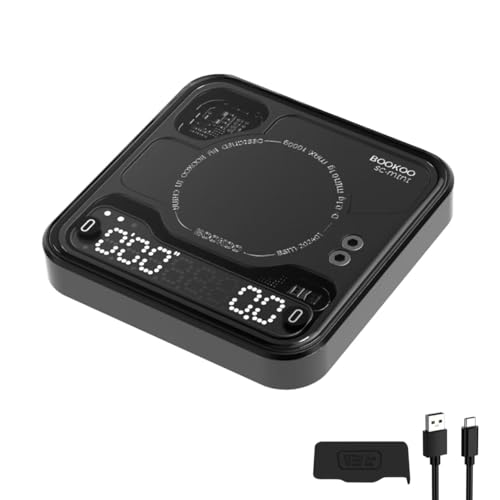
Bookoo Espresso Scale with Timer
Auto start on first drip, which sounds like a gimmick until you have fumbled a timer with a portafilter in one hand.

Breville Barista Express Espresso Machine
The machine that made home espresso normal. Built in grinder, manual tamp, and a steam wand you have to learn rather than a button.

Gaggia Classic Evo Pro Espresso Machine
A commercial 58 mm portafilter in a home machine, endlessly modifiable, and completely dependent on you owning a real grinder.

Normcore 58 mm Spring Loaded Tamper
A calibrated tamper removes tamp pressure as a variable, which is worth doing before you start chasing grind settings.
Prices when last checked. They change often.
Frequently asked questions
How long does it take to dial in a new bag of beans?
Usually two to five shots if you change one variable at a time and keep good notes on grind setting, time, and yield. Beans roasted within the last week or two often need a slightly finer grind than beans several weeks old, since fresher beans release more carbon dioxide and that gas pushes back against water flow. Expect to nudge the grind again over the life of a bag as the beans continue to degas.
Why does the same grind setting pull differently on different days?
Humidity is the usual culprit: grounds absorb ambient moisture, and a humid day can make an identical grind setting behave slightly finer because the grounds pack differently in the basket. Bean age also shifts things day to day as a bag continues to degas after roasting. Neither is a sign anything is broken; it is why grind setting is a moving target you check periodically rather than a number you set once and forget.
Should I change my tamp pressure to fix a fast shot?
No, change the grind instead. Tamp pressure affects how evenly the puck resists water, but once you are tamping with consistent, firm pressure every time using a calibrated tool, pressure stops being a useful variable to chase. A calibrated spring loaded tamper removes tamp force as a variable entirely, which leaves grind size as the one dial actually worth adjusting.
What if my shot channels no matter how I adjust the grind?
Channelling usually means the grounds are not evenly distributed in the basket before the tamp, not that the grind number itself is wrong. Stirring the dry grounds with a distribution tool before tamping breaks up the clumps that create channels. A bottomless portafilter lets you watch the shot as it runs, so you can see a channel forming as a fast stream or a spray rather than guessing from the taste alone.
Can I dial in using volume instead of weight if I do not own a scale?
You can pull a shot by eye, but you will not be able to tell whether a change in taste came from a real change in extraction or just from a fuller looking crema, since crema volume varies with roast date independent of what actually extracted. A basic scale with a timer costs under sixty dollars and removes that entire category of confusion, which is why it is the first accessory worth buying after the grinder itself.
Does the target time change for a ristretto or a lungo?
The 25 to 32 second window remains a reasonable general target across styles for an 18 gram dose. A ristretto reaching a lower yield in that same window will taste noticeably thicker and more concentrated, while a lungo pulled to a much higher yield in the same window is unusual and usually means the grind needs to go coarser to let more water through in a similar time. Match the time window to the yield you are actually targeting rather than treating 25 to 32 seconds as fixed regardless of ratio.
Sources
Published figures, quoted as published. We do not generate our own time and temperature data.
How we research: we compare manufacturer specifications, owner manuals, published USDA and FSIS figures and recurring themes in verified owner reviews. We do not cook test batches or run instruments, and nothing here is professional food safety advice. When a figure is not published by a source we trust, we say so rather than estimate one.