
Breville
Breville Barista Express Espresso Machine
The machine that made home espresso normal. Built in grinder, manual tamp, and a steam wand you have to learn rather than a button.
A standard espresso runs a 1:2 ratio, so an 18 gram dose yields 36 grams of liquid espresso in roughly 25 to 30 seconds. Ratios at or below 1:1.5 are ristretto, thicker and sweeter, while 1:3 and beyond is a lungo with more extraction and a thinner body.
The formula
yield grams = dose grams x ratio flow rate = yield grams / seconds style by ratio: 1:1 to 1:1.5 ristretto 1:1.5 to 1:2.5 normale 1:2.5 to 1:4 lungo beyond 1:4 closer to filter coffee
Espresso is measured by weight in and weight out, not by volume, because crema volume varies wildly between beans and tells you nothing. Everything downstream of that, grind, tamp, temperature, is adjusted to hit the target yield in the target time.
Gear that fits these numbers
Grinder first, scale second, machine third. A modest machine fed by a good grinder beats an expensive machine fed by a bad one, every time.
The machine that made home espresso normal. Built in grinder, manual tamp, and a steam wand you have to learn rather than a button.

The cheapest grinder that genuinely holds an espresso grind range. Below this, a good machine is fed by a grinder that cannot dial in.

Brew ratio is a weight ratio, so a 0.1 gram scale with a timer is the cheapest real upgrade to your espresso.

A calibrated tamper removes tamp pressure as a variable, which is worth doing before you start chasing grind settings.

Stirring the dry grounds breaks up clumps that otherwise become channels, and a channelled shot tastes thin no matter how well you tamped it.
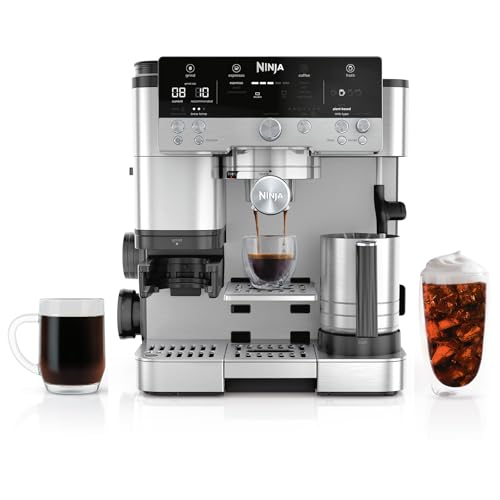
The cheaper Luxe Cafe, and the entry point to a machine that grinds and brews espresso and also makes a pot of coffee.
Prices when last checked. They change often.
Volume is useless here. Crema is foam, and how much of it a bean produces depends on roast date, roast level and origin, so two shots with identical liquid content can fill visibly different amounts of a cup. Weight in and weight out is the only reproducible description of a shot, which is why a 0.1 gram scale with a timer is the cheapest meaningful upgrade to almost any setup.
Once you know dose, yield and time, flow rate falls out, and it tells you more than the time alone. A fast shot means water is moving through too easily: the grind is coarse, or the puck has channelled. A slow one means the bed is too restrictive. What it cannot distinguish on its own is a genuinely fine grind from a channelling puck, which is what a {{/best/best-espresso-grinder/|bottomless portafilter}} is for.
Dialling in is a one variable at a time process. Fix the dose and the target yield, then move the grind until the time lands where you want it, then taste. Changing grind and dose together produces a shot you cannot learn anything from.
A 1:2 ratio is the standard starting point, meaning an 18 gram dose yields 36 grams of liquid espresso. Pull that in roughly 25 to 30 seconds and adjust the grind until the time lands there. From that baseline, tighten toward 1:1.5 for a thicker sweeter shot or open toward 1:3 for more extraction and a lighter body.
For a 1:2 ratio, roughly 25 to 32 seconds from the moment the pump starts. Ristretto ratios run shorter at 20 to 25 seconds and lungos longer at 32 to 45. Time on its own is not the target though: it is the number you adjust the grind to hit once the dose and the yield are fixed.
Either the grind is too coarse, or the puck is channelling so water is finding a low resistance path instead of saturating the bed. A flow rate above about 2.2 grams per second points at one of the two. Grind finer first. If the shot is still fast and tastes thin and sour, distribution is the culprit.
For espresso, yes, and by a wide margin. A machine can only push water through whatever bed the grinder produces, and a grinder that cannot hold a consistent fine setting makes dialling in impossible regardless of what it is attached to. A modest machine with a good grinder beats the reverse arrangement consistently.
A distribution tool with fine needles that stirs the dry grounds in the basket before tamping. It breaks up clumps that would otherwise become channels, and a channelled shot tastes thin no matter how carefully you tamped. It costs very little, takes ten seconds, and is the highest value accessory after a scale.
How this calculator works: it applies the formula above to the numbers you enter. Where a figure is published by the USDA or FSIS we quote it and name the source. Where a figure is derived from a physical model we say so and state the assumptions. Where we have no defensible figure the calculator returns nothing and tells you why, rather than guessing. This is researched general information, not professional food safety advice.