
Kenley
Kenley 1 Gallon Fermentation Crock
A water channel lid lets carbon dioxide escape while nothing gets back in, which is the whole trick of an open crock ferment.
Most vegetable ferments run at 2 to 2.5 percent salt, measured against the combined weight of vegetable and water, so 1,000 grams total takes 20 to 25 grams of salt. Lower is faster and milder with less margin; higher is slower, firmer and keeps longer.
The formula
salt grams = (vegetable grams + water grams) x (percent / 100) bands: 1.5% fast and mild, watch it daily 2.0% the usual default 2.5% slower, firmer, more margin in a warm kitchen 3.5% long keeping, noticeably salty 5.0% a brine cure rather than a ferment
The percentage is taken against the total, not against the water alone, because in a dry salted ferment like sauerkraut there is no added water at all: the salt draws brine out of the vegetable itself. Taking it against the total gives one number that works either way.
Gear that fits these numbers
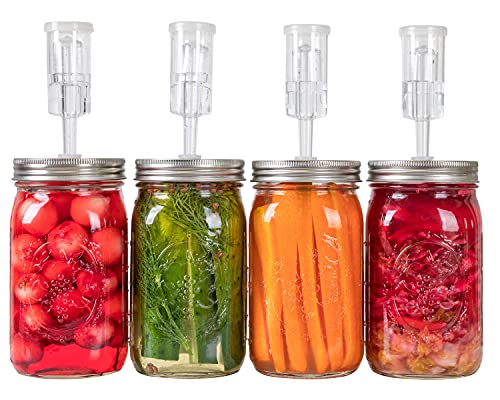
An airlock lets carbon dioxide out without letting air back in, and a weight keeps the vegetable submerged. Those two things prevent most of the ways a ferment goes wrong.
A water channel lid lets carbon dioxide escape while nothing gets back in, which is the whole trick of an open crock ferment.
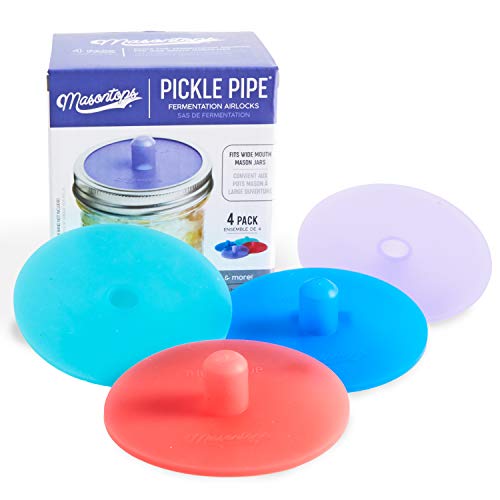
A one piece silicone airlock with nothing to disassemble, which is why these survive in kitchens where three part airlocks get lost.

Anything above the brine grows mould. A weight is the cheapest insurance against losing a whole jar.
Stainless rather than plastic, for brines acidic enough to matter over a long ferment.

Tenth gram resolution matters the moment you weigh salt as a percentage: 2 percent of 800 grams is 16 grams, and 1 gram resolution is an 6 percent error.
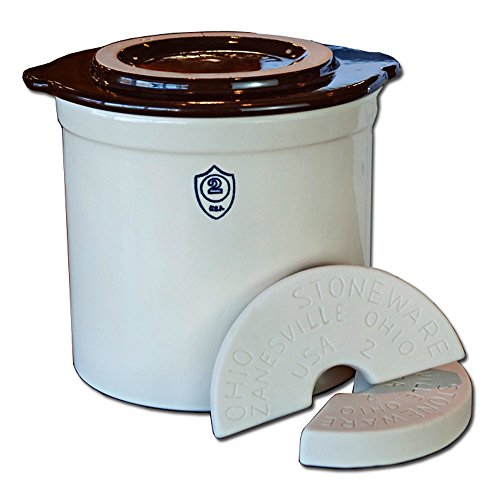
Two gallons of American stoneware, for the point where you ferment by the case rather than by the jar.
Prices when last checked. They change often.
Sauerkraut is the clearest case. You salt shredded cabbage, pound it, and the salt draws enough liquid out of the cabbage to cover it. No water is added at all, so a percentage of the water would be a percentage of nothing. Taking the salt against the combined weight gives one rule that works for a dry salted ferment and for a brined one, which is why every reliable recipe is written this way.
Salt is not there for flavour, or not only. It selects for lactic acid bacteria, which tolerate salt well, against the moulds and other organisms that do not. More salt means a slower, safer, firmer ferment. Less salt means a faster, softer, more fragile one. That trade is the entire reason for the bands, and it is why a pickle recipe runs higher than a sauerkraut recipe: cucumbers go soft if the salt is too low.
Between 2 and 2.5 percent of the combined weight of vegetable and any added water, so 20 to 25 grams per kilogram of total. Lower percentages ferment faster and taste milder but carry less margin against unwanted growth, while higher percentages slow the process, keep the texture firm and last longer in storage.
Of everything, meaning the vegetable plus any added water. In a dry salted ferment like sauerkraut there is no added water at all, because the salt draws brine out of the cabbage. Taking the percentage against the total is the only version of the rule that works for both dry salted and brined ferments.
Any salt without iodine or anti-caking agents. Iodine inhibits the bacteria you are trying to encourage, and anti-caking agents cloud the brine. Plain sea salt, kosher salt or pickling salt all work. Because you are weighing rather than measuring by volume, the crystal size does not matter at all.
Almost always because something floated above the brine. Lactic fermentation is protected by being submerged in an acidic, oxygen-poor liquid, and anything poking out of it is sitting in air. A glass weight and an airlock lid fix this. A ferment that smells of mould or solvent goes in the bin rather than being rinsed.
By taste and smell, not by a date. It should smell sour and clean and taste pleasantly acidic. Warm kitchens finish in days and cool ones take weeks, so a fixed timetable is misleading. Once it tastes the way you want, move it to the refrigerator, which slows the process to a crawl rather than stopping it.
How this calculator works: it applies the formula above to the numbers you enter. Where a figure is published by the USDA or FSIS we quote it and name the source. Where a figure is derived from a physical model we say so and state the assumptions. Where we have no defensible figure the calculator returns nothing and tells you why, rather than guessing. This is researched general information, not professional food safety advice.