Best fermentation crock for sauerkraut and kimchi
The Kenley 1 Gallon Fermentation Crock ($56.89) is the best all-around fermentation crock: its water channel lid lets carbon dioxide escape while keeping air and mold spores out, and one gallon holds a full head of cabbage worth of kraut without crowding the jar.
For most people fermenting at home, Kenley 1 gal crock at $56.89 is the crock to buy. A water channel lid does the actual work here: it lets the carbon dioxide a ferment produces escape while nothing from the air gets back in, which is the entire mechanical advantage a real crock has over a jar with a rubber band on top. One gallon is also the right volume for a normal cabbage: buy a head, shred it, salt it, and it mostly fills the jar without leaving so much headspace that the brine struggles to stay above the vegetable.
If you are not sure you will keep fermenting past your first batch, Kenley half gal crock at $47.39 is the lower-cost way to find out. If you are already fermenting by the case, Ohio Stoneware 2 gal at $87.10 is genuine American stoneware built for that volume.
The three tiers
Every roundup here is built as three genuinely different answers rather than one flat ranking, because that is how people actually shop: a first purchase, a considered upgrade, and a ceiling. The expert pick is not the best pick for most readers, and the section below says who should skip it.
Best starter size
Half a gallon is about one large cabbage's worth of kraut, small enough to find out whether fermenting is a habit you'll keep before you commit shelf space to gallons of jars.
Skip it if: Not for anyone who already knows they want to batch-ferment for a family or to gift jars: you will outgrow half a gallon within a couple of batches and end up buying the full gallon anyway.
Best all-around
The default full-size crock: a water channel lid, weights, and a pounder included, sized for a normal cabbage without the jar sitting half empty.
Skip it if: Not for a tiny kitchen with no dedicated counter or pantry spot; a gallon of stoneware needs a permanent place to sit undisturbed for a week or more.
Best for volume
Two gallons of American-made stoneware, for fermenting by the case rather than the jar: enough capacity to put up a season's worth of kraut or pickles in one batch.
Skip it if: Not for a first-time fermenter, and not for anyone short on space: two gallons of stoneware is heavy, does not move easily once full, and takes up a permanent footprint rather than tucking away between batches.
Gear that fits these numbers
The three picks side by side

Kenley Half Gallon Fermentation Crock
Half a gallon is about one large cabbage, which is the right first batch size before you find out whether you like sauerkraut enough to make gallons.

Kenley 1 Gallon Fermentation Crock
A water channel lid lets carbon dioxide escape while nothing gets back in, which is the whole trick of an open crock ferment.
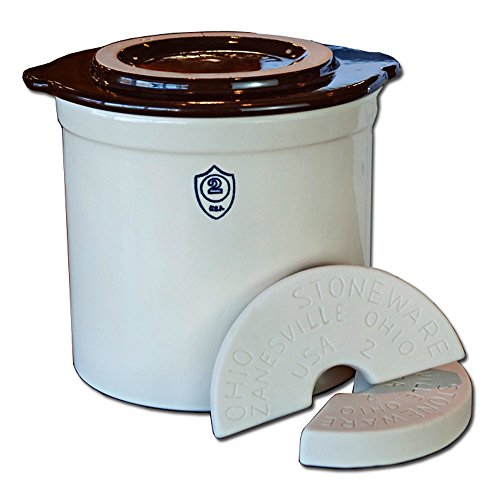
Ohio Stoneware 2 Gallon Crock Kit
Two gallons of American stoneware, for the point where you ferment by the case rather than by the jar.
Prices when last checked. They change often.
What actually makes a crock work?
The mechanism is simpler than it looks. A traditional fermentation crock has a moat, or water channel, built into the rim. The lid sits down into that channel, and the water seals it. Gas from the ferment pushes up and bubbles out through the water, but nothing from the room air can push back in the other direction. That one-way seal is what an open crock is actually selling you: it is not the stoneware that matters, it is the channel.
Pickle Pipes and stainless fermentation lids do the same job on a wide-mouth mason jar using a silicone or check-valve airlock instead of a water channel. They are cheaper, they take up less space, and for a quart or half-gallon batch they work just as well. A crock earns its price at volume: past about a gallon, a proper crock is easier to pack down and easier to keep everything under the brine than a jar.
| Product | Capacity | Seal type | Price |
|---|---|---|---|
| Kenley half gal crock | 0.5 gal | Water channel | $47.39 |
| Kenley 1 gal crock | 1 gal | Water channel | $56.89 |
| Ohio Stoneware 2 gal | 2 gal | Water channel | $87.10 |
| Pickle Pipes | Wide-mouth jar | Silicone airlock | $23.99 |
| Jillmo lids | Wide-mouth jar | Stainless check valve | $16.99 |
How much salt goes into a crock ferment?
Salt percentage, not a fixed spoon measurement, is what decides whether a ferment turns out right. Weigh the vegetable and any added water together, then salt to a percentage of that combined weight. Most cabbage ferments sit around 2 percent; firmer vegetables like whole cucumbers usually want more. The exact bands for common vegetables are in our fermentation salt percentage calculator, and the sauerkraut figures specifically are worked out on the sauerkraut salt percentage page.
- Weigh salt rather than measuring it by volume: a tablespoon of kosher salt and a tablespoon of table salt are not the same weight.
- A 0.1 gram kitchen scale is precise enough to hit a target percentage on a home-sized batch; see our best kitchen scale roundup for the reasoning.
What stops mold from ruining a batch?
Keeping the vegetable under the brine is the rule that actually matters in an open crock, more than the crock itself. Anything poking above the liquid surface is exposed to air, and that is where mold and yeast films grow. Glass fermentation weights hold the shredded or whole vegetable down below the brine line for the full length of the ferment, which is why the good crocks ship with weights included rather than leaving you to improvise with a plate and a rock.
A water channel lid handles the other half of the job: it keeps airborne mold spores and fruit flies from landing on the surface in the first place. Between the weights and the lid, a properly loaded crock needs almost no attention for days at a time.
What size crock do you actually need?
Size the crock to the vegetable, not the other way around. A single large head of cabbage, roughly three pounds after trimming, produces close to a gallon of shredded kraut once it is salted and pounded down, which is why Kenley 1 gal crock is sized the way it is. A half gallon suits a smaller cabbage or a single jar of kimchi, worked out on the kimchi salt percentage page. If you are putting up several heads of cabbage at once, or fermenting a full case of cucumbers for pickles, that is when two gallons of stoneware in Ohio Stoneware 2 gal stops being overkill and starts saving you from running two crocks side by side.
How we chose
These picks come from published capacities, lid mechanisms and included accessories, cross-checked against recurring themes in verified owner reviews about seal quality and whether the included weights actually fit the jar. We have not fermented in each of these crocks ourselves, so treat the size and seal-type comparisons here as the starting point for your own batch, not a substitute for watching your own brine level during the first week.
Gear that fits these numbers
Everything mentioned on this page
Kenley Half Gallon Fermentation Crock
Half a gallon is about one large cabbage, which is the right first batch size before you find out whether you like sauerkraut enough to make gallons.
Ohio Stoneware 2 Gallon Crock Kit
Two gallons of American stoneware, for the point where you ferment by the case rather than by the jar.
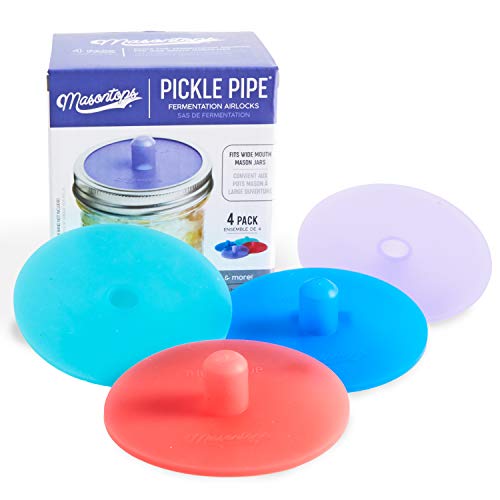
Masontops Pickle Pipes Airlock Fermentation Lids
A one piece silicone airlock with nothing to disassemble, which is why these survive in kitchens where three part airlocks get lost.
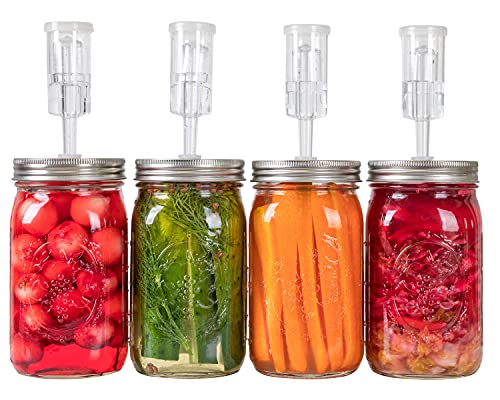
Jillmo Stainless Fermentation Lids, 4 Pack
Stainless rather than plastic, for brines acidic enough to matter over a long ferment.

SOLIGT Glass Fermentation Weights, 4 Pack
Anything above the brine grows mould. A weight is the cheapest insurance against losing a whole jar.

Etekcity 0.1 Gram Food Scale with Bowl
Tenth gram resolution matters the moment you weigh salt as a percentage: 2 percent of 800 grams is 16 grams, and 1 gram resolution is an 6 percent error.
Prices when last checked. They change often.
Frequently asked questions
Do you need a real crock, or does a mason jar with an airlock lid work just as well?
For a quart or half-gallon batch, a wide-mouth jar with a silicone or check-valve airlock lid works just as well as a crock and costs a fraction as much. A dedicated crock earns its price at larger volumes, generally a gallon and up, where its wider mouth and water channel lid make it easier to pack the vegetable down and keep everything under the brine than a narrow jar does.
How long does sauerkraut need to ferment in a crock?
A basic sauerkraut typically ferments for one to four weeks at room temperature, with flavor developing gradually the longer it sits. There is no fixed cutoff: taste it starting around the one-week mark and keep going until the sourness and crunch match what you want, then move it to the refrigerator to slow the fermentation down.
What happens if the vegetable is not fully under the brine?
Anything exposed to air above the brine line is where mold and yeast films are most likely to grow, since the anaerobic environment below the liquid is what keeps competing organisms from taking hold. A fermentation weight, or a plate weighed down with a jar of water if you do not have a dedicated one, keeps the vegetable submerged for the full length of the ferment.
Can you ferment in plastic instead of stoneware or glass?
Food-grade plastic works for fermenting, and many commercial operations use it, but it scratches over time and can hold odors and staining from previous batches. Stoneware and glass are nonporous and easier to clean thoroughly between ferments, which is why most home crocks are made from one or the other rather than plastic.
Why does a crock need a water channel lid instead of just a regular lid?
Fermentation produces carbon dioxide as a byproduct, and a sealed lid with no way for that gas to escape can build enough pressure to push the lid off or crack the jar. A water channel lets the gas bubble out through the water while keeping outside air, dust and mold spores from getting back in, which is the specific job an ordinary lid cannot do.
Is a bigger crock always the better buy?
No. A crock that is too large for the batch leaves excess headspace above the brine, which makes it harder to keep everything weighted down and submerged. Size the crock to roughly match the volume of vegetable you plan to ferment at once, and buy a second crock later if you start batching larger quantities rather than fermenting a small batch in an oversized jar.
Sources
Published figures, quoted as published. We do not generate our own time and temperature data.
How we research: we compare manufacturer specifications, owner manuals, published USDA and FSIS figures and recurring themes in verified owner reviews. We do not cook test batches or run instruments, and nothing here is professional food safety advice. When a figure is not published by a source we trust, we say so rather than estimate one.