
BOMATA
BOMATA Large Kitchen Scale, 0.1 Gram
Tenth gram resolution across a full 11 pound range, which most precision scales give up.
A 5 percent brine is 50 grams of salt per litre of water, which is the usual strength for poultry and pork for 2 to 12 hours depending on thickness. Always weigh the salt: kosher, table and flaked sea salt differ enough in crystal size that the same tablespoon can hold nearly twice the salt.
The formula
standard brine: salt grams = water grams x (percent / 100) equilibrium brine: salt grams = (meat grams + water grams) x (percent / 100) An equilibrium brine cannot over-salt: given enough time everything in the container reaches the same concentration.
Percentages by weight are the only portable way to write a brine. Volume measures depend on crystal shape, and the gap between fine table salt and flaked kosher salt approaches a factor of two, which is the whole recipe rather than a rounding error.
Gear that fits these numbers
A scale that reads to a tenth of a gram costs less than the meat it stops you ruining, and a lidded commercial tub is the container most brining actually happens in.
Tenth gram resolution across a full 11 pound range, which most precision scales give up.

A cheap commercial tub that doubles as a sous vide bath if you cut or buy a lid for it.

Tenth gram resolution matters the moment you weigh salt as a percentage: 2 percent of 800 grams is 16 grams, and 1 gram resolution is an 6 percent error.

Where ice cream bases, brines and stock live between steps. Cheap enough that you stop rationing them.

Square packs bags better than round, and clear polycarbonate lets you see the water line without lifting the lid.
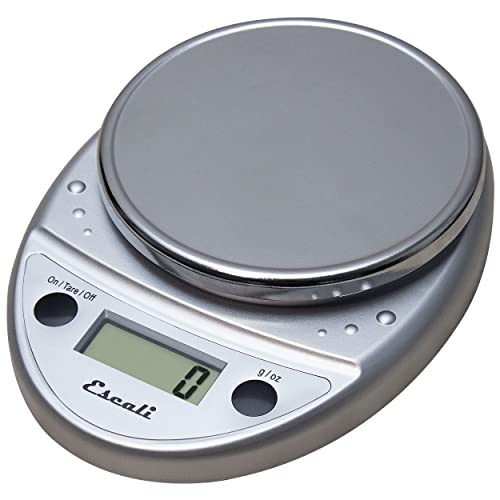
The default cheap kitchen scale. One gram resolution is fine for brines and useless for espresso.
Prices when last checked. They change often.
A standard brine is a strong solution and a clock. Salt keeps moving into the meat for as long as it sits there, so the concentration and the time together decide the result, and leaving it too long is a real failure mode.
An equilibrium brine takes the percentage against the total weight of meat plus water instead. Because there is only ever as much salt in the container as you want in the finished product, it cannot over-salt: the two sides simply reach the same concentration and stop. It is slower and it is much harder to get wrong, which is why every long cure is written this way.
Salt is sold in wildly different crystal shapes. Fine table salt packs densely, flaked kosher salt traps air, and coarse sea salt sits somewhere between. The same tablespoon can therefore hold anywhere from about 14 to about 19 grams depending on which box is open, and that spread is larger than the difference between a good brine and an inedible one. Weigh it. The same reasoning drives {{/calculators/fermentation-salt/|fermentation salt percentages}}.
Fifty grams of salt per 1,000 grams of water, which is 50 grams per litre. It is the usual working strength for poultry and pork, held for anywhere from an hour for thin cutlets to twelve hours for a whole bird. The percentage is taken against the water alone unless you are making an equilibrium brine.
Concentration and intent. A brine at around 5 percent seasons and helps retain moisture over hours. A cure runs at higher salt for days and changes the texture and the keeping qualities of the meat. Above roughly 8 percent you are curing, and above that most recipes are written as equilibrium percentages because the timescales are long.
No. A brine that has held raw meat contains everything that was on that meat, so it is raw poultry in liquid form. Discard it. Reusing brine to save salt trades a few cents against a genuine cross contamination risk, and the second batch also brines unpredictably because the concentration has already shifted.
Yes, always. A brine is not a preservative at these concentrations, and a container of meat in salty water on the counter sits squarely in the 40 F to 140 F range the USDA calls the danger zone. The published limit for total time in that range is two hours, which a brine will exceed immediately.
Time scales with thickness rather than weight, for the same reason cooking times do: salt has to diffuse from the surface to the centre. Doubling the thickness roughly quadruples the time needed for the middle to reach the same concentration. An equilibrium brine removes the guesswork, because leaving it longer stops mattering.
How this calculator works: it applies the formula above to the numbers you enter. Where a figure is published by the USDA or FSIS we quote it and name the source. Where a figure is derived from a physical model we say so and state the assumptions. Where we have no defensible figure the calculator returns nothing and tells you why, rather than guessing. This is researched general information, not professional food safety advice.