Best vacuum sealer bags for external and chamber machines
Wevac 11 by 150 Inch Vacuum Sealer Rolls ($31.99) are the best overall vacuum sealer bags for an external machine: buying by the roll drops the per-bag cost enough to change how freely you seal food, and the embossed channels work in any external sealer.
For most external sealer owners, Wevac 150 ft roll at $31.99 is the better buy than a box of precut bags: a 150 foot roll cuts the per-bag cost enough that you stop rationing bags on small jobs. If cutting and sealing your own length is more hassle than it is worth, Wevac quart bags at $24.29 is the right default for single portions. And if you own a chamber machine and want to seal liquids, marinades or soup, you need Chamber pouches specifically: smooth chamber bags, not embossed roll stock, are what a chamber machine is designed around.
The three tiers
Every roundup here is built as three genuinely different answers rather than one flat ranking, because that is how people actually shop: a first purchase, a considered upgrade, and a ceiling. The expert pick is not the best pick for most readers, and the section below says who should skip it.
Best precut default
Precut quart-size bags are the right size for single portions with zero cutting or measuring, so there is nothing to get wrong on your first few seals.
Skip it if: Not for anyone sealing large or oddly shaped items regularly; a fixed bag size wastes film on small jobs and cannot stretch to cover a big one.
Best first-party fit
The first-party roll for FoodSaver machines, worth the premium over a generic roll specifically if your sealer is fussy about bag thickness or width tolerance.
Skip it if: Not worth the extra cost if you own a generic or off-brand external sealer; a compatible generic roll like Wevac performs the same job for less.
Best for chamber machines and liquids
Smooth, thick pre-cut pouches built specifically for chamber vacuum sealers, which is what makes sealing soup, brine or a marinating steak possible without a mess.
Skip it if: Not for anyone with an external suction sealer: smooth chamber bags will not evacuate at all in an external machine, only embossed film with channels does that job.
Gear that fits these numbers
The three picks side by side

Wevac Pre-Cut Vacuum Sealer Bags, Quart, 200 Count
Pre-cut quart bags are the right default for single portions: cutting from a roll costs you a seal at each end and about four inches of film.

FoodSaver Custom Fit Vacuum Sealer Rolls
The first party roll, worth the premium only if your machine is fussy about bag thickness.

Avid Armor Chamber Vacuum Sealer Pouches, 3.5 mil
Chamber bags are smooth and cheaper per bag than embossed film, and they only work in a chamber machine. Mixing the two up is the most common first week mistake.
Prices when last checked. They change often.
Why do vacuum sealer bags look different from each other?
The surface texture is not cosmetic, it is functional. Embossed bags, like Wevac 11 in rolls and Wevac 150 ft roll, have a channel pattern pressed into the film so an external sealer's pump can draw air out through the bag opening even after the film collapses against the food. Smooth chamber bags, like Chamber pouches, have no need for that: a chamber machine pulls the vacuum on the entire sealed box rather than sucking through a narrow opening, so a smooth bag seals fine inside one and actually costs less per bag than embossed film.
- Mixing the two up is the most common first-week mistake: a smooth bag in an external machine will not pull a vacuum at all.
- See our how vacuum sealers work guide for the mechanical difference in full.
Roll stock or precut bags, which should you buy?
Buying a roll and cutting your own length costs a little more attention up front but saves real money over time, since Wevac 150 ft roll works out to a noticeably lower per-bag cost than an equivalent box of precut bags once you are sealing regularly. Wevac quart bags trades that saving for convenience: no cutting, no measuring, and a size that fits most single portions without wasted film. If you seal a wide variety of sizes, from a single chicken breast to a whole tenderloin, a roll is the more flexible choice because you cut exactly what each job needs.
| Product | Type | Fits | Price |
|---|---|---|---|
| Wevac 11 in rolls | Embossed roll, 2 pack | External sealers | $20.99 |
| Wevac 150 ft roll | Embossed roll | External sealers | $31.99 |
| FoodSaver rolls | Embossed roll | FoodSaver external sealers | $26.99 |
| Wevac quart bags | Precut, 200 count | External sealers | $24.29 |
| Chamber pouches | Smooth pouches, 3.5 mil | Chamber sealers only | $31.99 |
How do you seal a liquid or marinade without a mess?
An external sealer pulls air through the bag opening, and a liquid at that opening gets pulled straight into the pump along with the air, which is the classic mess a beginner makes trying to seal a marinating steak. There are two real fixes: freeze the liquid solid first so an external sealer has nothing wet to pull, or seal it directly in a chamber machine using Chamber pouches, since a chamber machine evacuates the whole sealed box rather than drawing through the bag mouth. Our vacuum sealing liquids guide covers both approaches in detail.
How much bag do you actually need for a given cut?
Undersizing a bag is the second most common mistake after mixing up embossed and smooth film. A single steak needs roughly 8 inches of clear film above the food for an external sealer to get a clean seal, worked out on the vacuum bag size for a single steak page. Chamber sealing needs less clearance since the whole chamber is evacuated at once rather than air being drawn out through the opening, which is one more reason roll stock is more forgiving than a fixed precut size when you are not sure exactly how much film a cut will need.
How do you avoid wasting bags on failed seals?
A failed seal almost always comes down to something caught in the seal area rather than a defective bag. Wipe the last inch of film dry before sealing anything wet or greasy, since moisture, oil or food particles at the seal line stop the heating element from fusing the film properly. Leave the bag opening flat and free of wrinkles as it goes into the sealer, since a folded corner creates a tiny channel that lets air back in even after the machine reports a successful cycle. And give a freshly sealed bag a light squeeze once it cools before putting it in the freezer: a seal that is going to fail usually shows a slow leak within the first minute rather than holding for days and failing later.
How we chose
These picks come from published bag thickness, roll length and machine compatibility, cross-checked against recurring themes in verified owner reviews about seal failures and whether a given roll actually fits a specific sealer's chamber and cutter. We have not sealed food in each of these bags ourselves, so if a specific machine is fussy about film thickness, the first-party roll from that brand is the safer starting point even at a higher price.
Gear that fits these numbers
Everything mentioned on this page
Wevac Pre-Cut Vacuum Sealer Bags, Quart, 200 Count
Pre-cut quart bags are the right default for single portions: cutting from a roll costs you a seal at each end and about four inches of film.
FoodSaver Custom Fit Vacuum Sealer Rolls
The first party roll, worth the premium only if your machine is fussy about bag thickness.
Avid Armor Chamber Vacuum Sealer Pouches, 3.5 mil
Chamber bags are smooth and cheaper per bag than embossed film, and they only work in a chamber machine. Mixing the two up is the most common first week mistake.
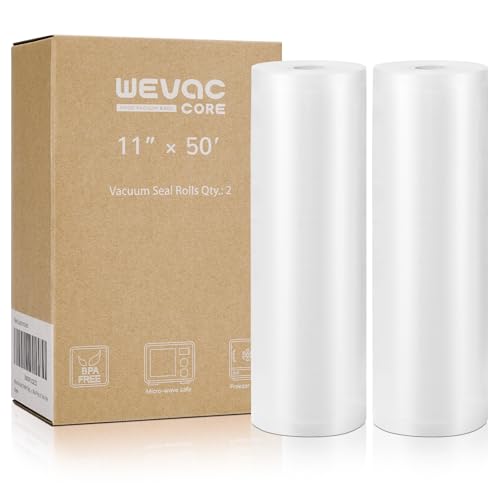
Wevac Vacuum Sealer Rolls, 11 by 50 Inch, 2 Rolls
Embossed channels are what let an external sealer pull air out at all. A smooth chamber bag in a suction machine simply never evacuates.
Prices when last checked. They change often.
Frequently asked questions
Can you use chamber vacuum sealer bags in an external machine?
No. Chamber bags are smooth on both sides with no embossed channels, so an external sealer that draws air out through the bag opening has no path for air to travel once the film collapses against the food, and the vacuum simply fails. Embossed bags with a channel pattern are required for any external suction machine.
How much does buying a roll save over precut bags?
Buying roll stock and cutting your own bags typically works out to a meaningfully lower cost per bag than an equivalent box of precut bags of similar total length, since you are not paying for a factory-cut and pre-sealed edge on every bag. The tradeoff is a small amount of extra time cutting and sealing one end yourself before use.
Are generic vacuum sealer bags as good as the brand name?
For most external sealers, a compatible generic embossed roll performs the same sealing job as the first-party brand at a lower price. The exception is a machine known to be particular about film thickness or width tolerance, where the manufacturer's own rolls are more consistently sized and worth the premium to avoid seal failures.
Why does a vacuum-sealed bag sometimes fail to hold its seal?
The most common causes are moisture, grease or food particles caught in the seal area when the bag was sealed, using a smooth chamber bag in an external machine or the reverse, or leaving too little clear film above the food for the seal bar to close on cleanly. Wiping the bag opening dry before sealing solves most of these on its own.
Do vacuum sealer bags need to be freezer safe?
Any bag marketed for vacuum sealing food is built to handle freezer temperatures without becoming brittle, since removing air is one of the main reasons people vacuum seal in the first place. A bag that is not rated for vacuum sealing at all, such as a generic zip-top bag, is more likely to crack or tear once frozen.
Can you reuse a vacuum sealer bag?
A bag that only held dry, non-greasy food and was cut and resealed cleanly can sometimes be washed and reused, though the seal area is weaker each time it is cut and resealed. Bags that held raw meat, fish or anything with fat and liquid should not be reused, since thoroughly cleaning the inside of a narrow bag is difficult and reused bags carry a higher risk of contaminating the next food sealed in them.
Sources
Published figures, quoted as published. We do not generate our own time and temperature data.
How we research: we compare manufacturer specifications, owner manuals, published USDA and FSIS figures and recurring themes in verified owner reviews. We do not cook test batches or run instruments, and nothing here is professional food safety advice. When a figure is not published by a source we trust, we say so rather than estimate one.