Egg jammy: the temperature
Jammy egg is 146 F to 150 F at the core. Set white, thickened yolk. The USDA safe minimum internal temperature for this category is 160 F, so this band sits below the published figure and is a texture preference rather than a safety claim.
Where jammy sits
Set white, thickened yolk. The whole range of bands for egg is below, so you can see where this one sits relative to both the neighbouring textures and the published safe minimum.
| Band | Core temperature | What it means |
|---|---|---|
| Runny yolk, loose white | 143 to 145 F | The classic 63 degree egg. |
| Jammy (this page) | 146 to 150 F | Set white, thickened yolk. |
| Hard set | 158 to 165 F | Fully set yolk. |
| USDA safe minimum | 160 F | Egg dishes. Published figure, not ours. |
Reading the temperature properly
Measure at the thickest part, away from bone and away from the pan side. Push the probe through to the far side and draw it back slowly, watching for the lowest reading: that low point is the core. A thermometer that takes four seconds to settle will read high if you pull it at two, which is most of the argument for a fast instant read over a cheap one.
Gear that fits these numbers
What this job needs
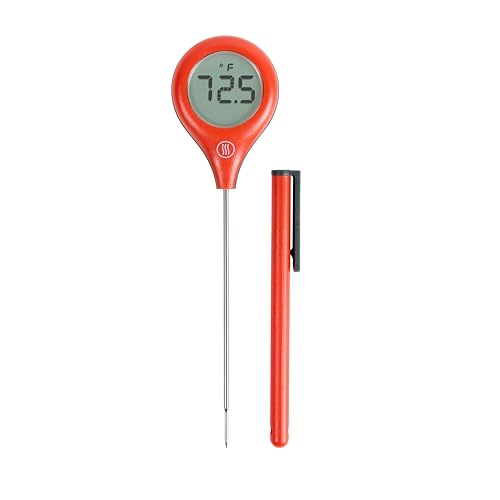
ThermoWorks ThermoPop 2
A third of the Thermapen price for most of the useful accuracy. The right pick if you are buying your first real thermometer.

Typhur Sync Gold Wireless Thermometer, 2 Probes
Slim probes leave a smaller hole, which matters more in a vacuum bag than it does in a roast.

Anova Precision Cooker 3.0
The default full size circulator: enough wattage to bring a 12 quart bath up quickly and hold it, with app control for long overnight cooks.
Prices when last checked. They change often.
Frequently asked questions
What temperature is jammy egg?
146 F to 150 F at the core, measured at the thickest point. Set white, thickened yolk. Take the reading with an instant read thermometer rather than by time or by touch: a two degree error is visible on the plate at these temperatures.
Is that the same as the USDA temperature?
No. The USDA safe minimum internal temperature for this category is 160 F, and this band is below it. Cooking below the published figure is a choice people make deliberately in sous vide, where a long hold at temperature does the work instead, but that hold time comes from the FSIS Appendix A tables and not from us.
Where do the numbers on this page come from?
PUBLISHED USDA safe minimum internal temperatures, alongside texture bands that are clearly marked as preference rather than safety. Nothing here comes from cooking test batches in our own kitchen, and we do not claim otherwise. Where the USDA or FSIS publishes a figure we quote it and link the source. Where we have no defensible figure we say so rather than estimate one.
Sources
Published figures, quoted as published. We do not generate our own time and temperature data.
How we research: we compare manufacturer specifications, owner manuals, published USDA and FSIS figures and recurring themes in verified owner reviews. We do not cook test batches or run instruments, and nothing here is professional food safety advice. When a figure is not published by a source we trust, we say so rather than estimate one.